
Cadbury launches new ad for bigger bars

Cadbury have launched the latest addition to their Cadbury Dairy Milk Joyville campaign which focuses on their new range of larger chocolate bars.

The 30 second spot was developed by Saatchi & Saatchi, the campaign will also include online, in-store and out of home ads.

Marketing spoke to Cadbury’s GM of marketing chocolate, Ben Wicks, last month about the campaign itself, which focuses on the introduction of new rounder-shaped chocolate pieces, the inclusion of whole nuts in all nut varieties, bigger packets, and a new resealable pack.

The changes are the most significant Cadbury Dairy Milk has make to its product in 123 years.

“We’re always thinking, ‘how do we offer a better experience to our customers?’, so in the dialogue that we have, we introduced to them, around 18 months ago, this rounder, more generous shaped piece, and they responded really positively too it,” Wicks says on the changes.

Wicks also explains that Cadbury’s ‘Joyville’ will continue to feature in its advertising for a while to come.

“If you think about the Joyville campaign, it’s a bit like a book. So far there has been half a dozen chapters [and] there will be a new chapter from Joyville that celebrates these changes that we are making.


Bureau of Meteorology website open to advertising

The Bureau of Meteorology will be the first Australian Government agency to carry advertising on its website, following a one year trial announced in the 2012 Federal Budget.

Digital Network Sales (DNS), a wholly-owned subsidiary of PermissionCorp, has been awarded a major contract to manage the online advertising for the Bureau of Meteorology, one of the most popular websites in Australia and the number one site for weather information, especially via mobile devices.

Bob Cheng, founder and managing director of PermissionCorp says of the decision: “We are honoured that the Bureau has awarded the tender to DNS to manage its online advertising. BOM is undoubtedly one of the most iconic, credible and widely-used sites in Australia. Our clients will now be able to reach a significant number of Australian consumers and businesses that use the site regularly,” he said in a statement.

The Bureau’s website is one of the most frequently visited sites in Australia, with 3.3 billion pageviews each year. At any one time there are around 25,000 unique users on the site, which spikes during severe weather.

Jeff Glazer, a director at PermissionCorp, says, “Since this is the very first Government Department to allow commercial online advertising, we believe advertisers will gain significant awareness. On average, BOM users spend around 16 minutes on site, offering advertisers a compelling opportunity to increase exposure.”

The integrity of the Bureau’s brand and reputation is paramount, says DNS. In preparation for this landmark decision to allow commercial advertising on this Australian Government website, an online advertising policy has been developed and reviewed by the Interactive Advertising Bureau of Australia to ensure that any advertising on the site meets high standards and user expectations.


New youth title aims to break mould with single-ad, mobile-led strategy

Youth publisher Sound Alliance aims to flip web publishing on its head with the launch of a new mobile-first, one-ad-per-page pop culture title offering advertisers integrated content options.

Junkee, a site aimed at bringing a more discerning pop culture voice to the youth audience, will adopt a ‘native advertising’ model by offering options that integrate ads into the site’s editorial and aesthetics.

The model is similar to that operated by social news site BuzzFeed, which reportedly charges around $100,000 for four or five pieces of branded content. US-based news site Gawker also offers native, or tightly integrated, ad options.

Junkee will limit banner advertising to one ad per page and design its desktop and tablet properties to look similar to its mobile site, which it estimates will initially account for 50% of its 18 to 29 year-old traffic.

Sound Alliance CEO Neil Ackland believes that, contrary to popular opinion, the youth audience will engage with advertising online, provided it’s relevant and interesting.

“Online advertising generally has become commoditised and cluttered and has done a poor job of delivering a strong branding message,”Ackland says. “Junkee.com is a product that moves us in a different direction.

“We talk to advertisers all the time and the message is loud and clear, they want to engage with audiences by creating compelling, shareable content – not just banner advertising. What brands do, rather than what they say, is becoming the message, especially when targeting 18-29 year olds.”

Launch advertisers for the new title, which will sit alongside FasterLouder, inthemix, SameSame and other titles under Sound Alliance’s million-viewers-per-month network, include Telstra, Rekorderlig Cider and QT Hotel.

Junkee aims to offer youth a “fresh take on pop culture with smart, funny and insightful pieces from some of Australia’s best established and up-and-coming writers”. It’s positioned as a “cultured take on culture”, covering TV, film, politics, music, style and opinion.

Mobile traffic overtook desktop traffic across Sound Alliance’s titles in recent months, meaning the publisher boasts 500,000 plus monthly unique browsers via mobile channels. “This is a profound shift in user behaviour, which will only accelerate, so we are fully embracing the change in our product design, content and advertising model,” Ackland says.

“We’ve flipped the traditional approach to web publishing on its head so we can attract the audience where we know they are – on mobile.”

Sound Alliance claims the site is the first media title in Australia to adopt a mobile-led design strategy, as well as the first to introduce one ad per page and native advertising philosophies.

Desktop display ad growth slows, while mobile surges 220%

Online ad spend grew 18% year on year to hit $3.3 billion in 2012 with mobile and video showing the strongest growth.

IAB Australia’s ‘Online Advertising Expenditure Report’ (OAER) shows a 220% surge in mobile advertising, representing expenditure of $86.2 million, and a 30% jump for video, which reached $90.3 million.

Mobile’s growth has been reminiscent of the early days of online advertising, but should start to slow Gai Le Roy, Director of Research for IAB Australia comments. “The inexorable rise of mobile, video and search is showing little sign of abating and we are delighted that the online industry is continuing to beat all reported market predictions about lower growth rates,” Le Roy says.

“While mobile is currently experiencing a surge, we expect it will settle into strong and sustained growth rates, just as general online advertising expenditure did in 2000 after an extraordinary period of growth.”

Comparatively, growth for display and classifieds ads has pared back, dropping to 10% and 9% respectively, while search and directories grew 27% year on year. Search and directories remain the largest contributor to ad spend accounting for 54%. General display advertising accounted for 26% and classifieds for 20%.

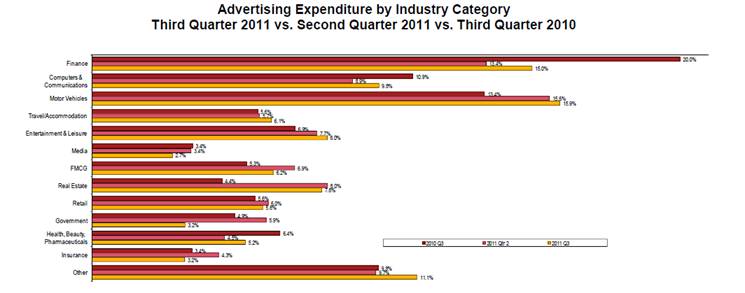
Motor vehicles, finance and real estate continued to dominate the market, but retail and FMCG showed the biggest increases, reflecting the continuing shift of advertising dollars in those sectors to online.

Based on submissions from publishers, 58% of mobile advertising for quarter four of 2012 was allocated to smartphones versus 42% to tablets, and 56% was general display while 44% was search. Total expenditure for the three months ended 31 December 2012 was $33.8m, a growth of 55% over the previous quarter.

As a whole, online advertising expenditure reported an 11% increase over the previous quarter to reach $899m for the final period of the year.

CPM remains the dominant pricing methodology across the industry, increasing to 63% of general display advertising expenditures, with 37% being direct response based.


Five best practices for rich-media advertising

Let’s face it. Beating up on the 19-year-old banner ad is a popular pastime. But like a sports great that few initially thought would last the season, rich media banner ads have lasted to become of the most powerful components of any digital campaign mix. Indeed the banner ad has through continual transformation become one of the most effective tools for getting strong campaign results, particularly when backed with a solid media strategy, innovative creative, and selective use of emerging technologies.

Of course, like any campaign tool, some rich media ads perform better than others. Five common traits we commonly see among more successful banner ads are:

1. The ad works in harmony with editorial content

Ads placed on sites with related editorial content are usually timelier and more relevant to readers, and almost always produce better results. Few surprises there. Browse Vogue Living on your tablet device and you are more likely to register a rich media ad for Coco Republic, especially if it promotes a new range exclusive to online readers. In contrast, a Mortein fly spray ad on the same site will hit more viewers’ well-developed banner ad blindspot.

While there are multiple ways of achieving ad and content harmony, from premium buys to campaigns tailored to compliment niche sites, there is a growing trend towards using data and technology to tighten the link between the ad and content. Such ads automatically draw content from what the viewer reads, or has read recently, and uses this to shape the banner ad they see. For example, an ad might pull in the price of a vehicle the viewer is researching, cross-reference that with current personal loan interest rates, and show the same vehicle is available for a low $99 a month by financing through XYZ Bank. For the viewer, the ad is simple, straightforward and relevant, without being technologically overpowering or disruptive.

2. The ad earns consumer attention

Better banner ads earn consumer attention. Whether through eye-catching animation, a slightly controversial viewpoint, an inviting call to action or a compelling storyline, such brands cut through the advertising clutter and stand out amongst the page content.

Of course, earning consumer attention is the secret sauce of advertising and never easy to pull off. But too often with banner ads, a creative concept is well thought out purely from an interaction and dwell perspective. And despite great rich advertising content, the prompt to initially engage the viewer seems an afterthought.

Better ads follow the ‘reverse rodeo’ rule. That is, the rule of thumb that an online ad has just eight seconds to grab a viewer’s attention. At nine seconds, the consumer scrolls or clicks away and the engagement opportunity is lost. Newer ad formats that keep the ad in the reader’s line of vision as they scroll down a page, might have a slightly longer chance to grab attention – although not by much. As with any content, you must grab viewer attention quickly, or not at all.

Better banner ads do this by providing a clear, enticing and sometimes playful request for the consumer to engage. Whether your ad invites viewers to play to win as a McDonalds’ ad did, offers a free trial to a nearby gym as the Good Life health group did, or simply titillates as Chanel did with stylised videos of models toying with oversized perfume bottles – all with above-benchmark results, it just needs to hit the right spot for your target audience.

3. The ad makes best use of available data to better reach their target audience

Behavioural, geographical and demographic relevance are just as powerful as contextual relevancy, and good ads make use of these – never making their online ads work harder than they need to.

Data-driven online advertising or dynamic creative optimisation arrived in 2012, and will only get bigger and more sophisticated in 2013 as advertisers come to better understand how they can deliver more targeted ads while avoiding any consumer privacy concerns. That means there is little reason not to customise every ad you serve to the end consumer, at least in some way. Results already show that doing so lifts just about every measurable metric available.

4. The ad entices viewers to dwell

Once better ads conquer ad and content harmony, and then earn viewer’s attention with a targeted, relevant and compelling creative, they then go a step further – enticing viewers to spend quality time with their brand. Sure, that’s simpler said than done but there are many trade secrets that can help ads keep viewers lingering longer.

Technology advances and growing broadband penetration mean rich media banner ads can often hold as much content and interactivity as a microsite, creating enormous opportunities for ads to increase dwell time. Polite loads, sub SWFs, streaming video, you name it – there are some amazing ways to pack your ad with minutes (and even hours) of new experiences that keep viewers interacting.

Ads that hold more relevant or appealing content to interact with almost always achieve longer dwell times and higher dwell rates. Consumers also respond to them better as the ad isn’t a trapdoor away from the destination they chose to visit in the first place.

Creating customised content for your ads can be as simple as repurposing your existing website content and additional post-production for video. Exclusive, online-only (sometimes banner only) content can work incredibly well too. There is also something powerful about limited availability content, which appeals to a viewer’s innate interest in being one of the few to see something someone else hasn’t.

5. The ad gets them talking

A final common trait of successful banner ads is the action or reaction they spark. Consumers who engage with better ads feel empowered or motivated to spread the word about the brand, product, service or simply fantastic ad, effectively multiplying paid media dollars to a whole new set of consumers the original media buy may have missed.

Keep in mind, it is brand building ads rather than straight product promoting ads that typically inspire viewers to hit the ‘like’ social button or tweet it to their networks. That’s why an ad like Fiat’s cheeky ‘House Arrest’ ad starring Charlie Sheen can explode on the Twitter-verse or YouTube while very few straight up, out-of-the-box product promotions ever will.

Nonetheless, if you want them to talk about your brand, always make it easy for them by providing simple links to popular social networks. It’s easy to do and many viewers now expect it.

Of course, it takes more than tips and advice to create truly stand-out banner ads. But by check-listing your next rich media ad against these best industry practices, your ad will at least be on the right path to banner ad success. And for an ad type that’s supposedly going nowhere fast, that’s certainly worth keeping in mind.


Ryan K Manchee, DG MediaMind’s resident technology visionary and creative strategist, contributed to this article.


Did you know: in each issue of the print edition, Marketing includes the very best opinion articles curated from our huge industry blogging community, as well as exclusive columnists writing on the topics that matter? Becoming a subscriber is only AU$45 for a whole year, delivered straight to your door. Find out more »

Google’s paid shopping listings boost CTR, cheaper than text ads: study

Google’s paid shopping listings, which are set to come into effect in Australia this week, boost the share of clicks on product listings by 210%, a study has found.

Global analysis conducted by digital ad platform provider Marin Software found click share of Product Listing Ads (PLAs) as a percent of total search clicks increased 210% in the past year.

Google transitioned Google Shopping to a commercial model in October 2012 in a number of markets, and has scheduled the switch in Australian for 13 February. The change means that previously free listings will now only be available on a paid basis via an enhanced sponsored placement similar to AdWords.

The new system has paid dividends for retailers and boosted consumer engagement, says Nick Gill, managing director, Marin Software Australia. “Google’s decision appears to be paying off with increased user engagement and advertiser investment,” Gill says. “During the fourth quarter of 2012, we saw some retailers allocate as much as 30% of their spend towards PLAs.”

According to Marin’s findings, advertisers increased their share of search budgets directed towards PLAs by nearly 600% in the last quarter of 2012. The study indicates users of Google search are seeing PLAs more often, and are increasing their engagement with the ad format. In the last quarter of 2012, the impression share of PLAs jumped 60% as holiday shoppers used the ads to make purchase decisions.

Concerns have been voiced that if not used correctly, the ads could become costly for retailers. But PLAs ended 2012 with a higher click-through rate (CTR) than text ads, and an average cost lower than of traditional text ads, Marin found.

Read: “The transition is both a challenge and an opportunity for retailers” – Mark Gray, managing director, Australia and Asia Pacific, ChannelAdvisor.

pla_trends_infographic

Data black hole looms: two-thirds would block personal data tracking

Two-thirds of consumers would say no to internet tracking if a ‘do not track’ feature was easily available, suggesting that a data ‘black hole’ could soon open up under the digital marketing industry.

The finding, from Ovum’s global ‘Consumer Insights Survey’, led the technology analyst to predict turbulence for the internet economy, as consumers around the world start to tire of their personal data being collected across the internet.

Consumers will increasingly seek out tools that allow them to remain invisible and impossible to target online, Ovum says. This hardening of consumer attitudes, coupled with tightening regulation, could diminish personal data supply lines and have a considerable impact on targeted advertising, CRM, big data analytics, and other digital industries.

“Unfortunately, in the gold rush that is big data, taking the supply of ‘little data’ – personal data – for granted seems to be an accident waiting to happen,” principal analyst at Ovum, Mark Little, says. “However, consumers are being empowered with new tools and services to monitor, control, and secure their personal data as never before, and it seems they increasingly have the motivation to use them.”

Recent data privacy scandals such as WhatsApp’s use of address books, Instagram’s updated terms of service which staked rights on users’ pictures, and the continuing controversy over privacy and data use policies on Facebook and Google websites have fuelled consumers’ concerns over the protection of their personal data.

Ovum’s survey found that only 14% of respondents believe that internet companies are honest about their use of consumers’ personal data, suggesting it will be a challenge for online companies to gain trust.

Internet companies should introduce new privacy tools and messaging campaigns designed to convince consumers that they can be trusted, and improve transparency of data collection, Ovum says.

“Internet companies need a new set of messages to change consumers’ attitudes,” Little adds. “These messages must be based on positive direct relationships, engagement with consumers, and the provision of genuine and trustworthy privacy controls.

“Most importantly, data controllers need a better feel for the approaching disruption to their supply lines, and must invest in tools that help them understand the profile of today’s negatively-minded users – tomorrow’s invisible consumers.”

68% of respondents across 11 countries would select a ‘do-not-track’ feature if it was easily available. The study covered communication trends, social networking, internet applications, pay-TV subscriptions and online media with a panel of over 11,000 from Europe, Asia, North America, and South and Central America.


Google to slug retailers with paid Shopping listings starting next month

Retailers will soon have to pay for listings in Google Shopping results, as well as come to terms with a new algorithm, with the web giant set to start roll out of its commercial model for product listings in Australia on 13 February. Up to now the listings have been free of charge.

The model, which ranks products based on a combination of relevance and bid price, caused rumblings among retailers in the US around a year ago when the algorithm-based system confused advertisers and ushered in price bidding wars similar to AdWords.

The transition is both a challenge and an opportunity for retailers, but could make listings very costly, says Mark Gray, managing director, Australia and Asia Pacific, at ecommerce software provider ChannelAdvisor.

“If used incorrectly, it can become very costly very quickly,” Gray says. “What we’ve seen in the US is that it definitely added additional cost, however we have seen across our client base if it’s used properly the conversions have gone up.”

By incorporating its free listing model into a cost-per-click paid search program, through Product Listing Apps (PLAs), Google is essentially rolling its product comparison engine into its AdWords platform, allowing retailers to sit rich images, product information and promotions alongside their paid search campaigns.

According to Google, the system will benefit both shoppers and merchants: “Having a commercial relationship with merchants will lead to better, more up-to-date product data – which will mean better shopping results for users and in turn, higher quality traffic for merchants,” the company’s VP of product management for Shopping, Sameer Samat, wrote in a blog post.

“Shoppers will find products in one convenient place and quickly be able to compare features, find the best prices, read reviews, and identify great merchants – while advertisers will be given more granular control over product listings and traffic.”

One of ChannelAdvisor’s clients, online hardware and home improvement store ToolKing.com, saw conversion rates rise by more than 50% and average order value increase by almost 15% after listing with PLAs.

Gray points out the system enables retailers to target ads at certain audiences, and doesn’t force all listings to be paid for. “Not every item will be displayed with product listing ads. It’s only going to be displayed if the retailer wants it to and is willing to pay for it.”

The first changes are scheduled to take place on 13 February, when visually cleaner results for shopping queries, including new commercial formats on Google.com that display products in a single unit, will replace current search results. These new commercial formats will be labelled as ‘sponsored’ and appear in the space currently occupied by AdWords ads. The transition is expected to be complete by the end of quarter two this year.

ChannelAdvisor and other ecommerce solution suppliers provide solutions that synchronise price, quantity and other points of information with Google Shopping and other ecommerce platforms like Amazon.


Q&A with John Mescall, McCann: branded content and being more viral than Rihanna

“Money cannot buy exposure online, not real exposure. Money buys banners, money buys pre-rolls that people don’t watch.”

Marketing sat down with McCann executive creative director John Mescall, the writer behind viral success ‘Dumb Ways To Die‘, while conducting interviews for a feature on branded content in the February-March issue. (On sale 5 February! – Ed). But why not share the parts that didn’t make it into the feature due to word limits? This edited transcript of the interview contains some fascinating viewpoints from Mescall on:

  • Why the microsite is dying,
  • how to be disruptive online, an environment where interruption doesn’t work
  • how to be ‘human’ on social media, and
  • why branded content will eventually stop working.

Marketing: There’s been a lot of discussion around branded content and its recent resurgence. Where do you think it’s headed?

JM: I’m getting the very strong sense that branded content is heading towards less an entertainment model and more… I think the ethos of journalism and storytelling is becoming more prominent. Everything is advertising now, I think, is the starting point for most agencies, which is really interesting. And what we’re finding is there almost is no delineation between branded content and advertising. Everything is broken down. We’re in this weird transitional period of where do ads start and where do they finish?

People want to control the content and they want to view it through their own social media, pages and non-commercial platforms. So branded content I think now has to be way less commercial than it was even two years ago. The expectation, a couple of years ago, was if you make an ad funny enough, interesting enough, people will go to watch it somewhere. Remember the rise of the microsite? Every campaign had a microsite and you had to go to it. People aren’t wanting to do that anymore. They’re refusing to travel to you. So people want to find your content and share it among themselves at not just their own leisure but they want to control it, they want to own it, they want to be seen to as coming to you. They don’t want to go to you anymore.

How do you define the difference between an ad and branded content?

It needs to have worth beyond the marketing message, which is hard to do because most marketing people want clarity of message. They want the message front and centre because the advertising model – people don’t pay attention to it. So you need to be very clear and you need to be disruptive, and you need to hit people. Branded content, it’s a completely different psychology, you’ve got to take the opposite approach. You need to have the confidence that you’re sneaking up on people, and again, it’s people – ultimately they tolerate advertising but generally don’t like it, and branded content, not many people have got it right yet. It’s a difficult thing to do. And I think a lot of advertising people probably are less able to get that right than others. There are really huge content companies right now that employ hundreds of writers who don’t come from an advertising background. Their background is journalism, their background is documentaries, their background is writers, their background is filmmakers. The way we grew up in advertising is almost different. So advertising is reinventing itself, and marketing departments and marketing people have to reinvent themselves as well.

What’s the reason that it’s reinventing itself?  What’s the pressure that’s forcing that to happen?

I think the media model has changed so radically. You only need to see the trouble the TV networks are in. It wasn’t that long ago that TV networks, they controlled the agenda. They were patriarchal, dominating. They decided what we were going to watch, when we were going to watch it and what they said goes. ‘Still the One’ – Channel Nine for years, their psychology was based on control and power: “Everyone watches us. You must be with us. We control what you watch.” And very quickly that changed on them and I think they’re struggling to cope, because their whole psyche needs to change. All of a sudden they’re not in control anymore. All of a sudden people decide what they watch and when they watch it.

There are always three jobs for a marketer: What do we say? How do we say it? But more importantly, where do we say it? How do we get people to engage with that message? It used to be easy and it’s not anymore. You’ve got to work in a world where you do not have control. That’s hard. People like to say: “I control the marketing budget”. Brand custodianship – all the language is around control, and the media model breaking down to one of democratisation means you don’t have that control anymore. So you need to create things that you know will take on a life of their own, yet somehow still hold your brand message. It means your brand has to be stronger than ever to survive. Nike can survive in this world because they have been so strong on brand and they’ve built their brand not through tactical product messages, but [through branding]. Brands that are very clear about what they stand for, and actively allow consumers to participate, survive. Those who want to control the conversation, they can’t operate in this environment. It’s a chaos model. You can exert influence, you cannot exert control.

Piranha

Does the interruption model work at all anymore?

No. Look, it still does in offline media, but not online. In fact, it has the opposite effect. How many times in your life have you ever clicked on a banner ad, seriously? Interruption doesn’t work online, and right now we’ve got this hybrid model where we’re a bit online and a bit offline, but disruption is clearly only something that works in offline media.

Will there always be a place for it offline?

Of course. I mean not everything is online and we still have to live our lives. And there is probably always going to be outdoor advertising. Until we all live our lives in cubes, I suspect there will always a place for that. And maybe that’s not necessarily disruption but it’s creating a unique voice for yourself. How do you be disruptive in an online world? You really need to stand for something. You really need to own something. It’s not about shocking you or surprising you or stopping you. It’s about having a unique voice. I think people online like to find unique, they like to find things of personality and authenticity, and a lot of brands aren’t authentic. They exist quite well in advertising environments because they just buy pages in a magazine. But when you have to stand on your own two feet and live organically online, you really need to be something. You need to stand for something. Money cannot buy exposure online, not real exposure. Money buys banners, money buys pre-rolls that people don’t watch. It’s a unique voice and a unique way of putting yourself across. You’ve got to be more human online, I think. People react well to personality. The advertisers that have had success have a very unique tone of voice that people cannot just relate to, but it almost helps them define themselves. People forwarded ‘Dumb Ways To Die’ because it made them look clever. “Look what I’ve found. This is funny.” They knew their friends would find it funny so they sent it, so therefore they’re a little bit funnier.  Nike do well because they’re cool. You send something cool on, you will be cool. That’s kind of the way it works. A brand needs to have real human qualities that reflect well on you as a person in order for you to engage with it online and then share it.

What form do you think branded content will take in the future? How large scale will it become?

It makes sense for large global brands to look at things like films. The issue we’re going to have is a lot of brands just do not have the kind of message at the moment that’s going to work with branded content. Washing liquid, that’s tricky. There are probably three ways you can go. You can be just pure entertainment, and that’s the last refuge when your subject matter is of no interest to people. Train safety: no one cares. Laundry powder: no one cares. So entertainment is really all you’ve got because people don’t really want to engage with the actuality of your message.

If you have something that’s of interest, such as automotive… people are really interested in cars, in the performance of cars, what they look like, how they were made. Branded content there can take you inside. You can have very immersive, longer format branded content around things that are of interest already to people. You can give them a deeper experience into it. I think you need to be realistic about what your brand message is because not everything is intrinsically interesting. If it’s intrinsically interesting, you can go long format. If it isn’t, you’ve got to be super entertaining in a way that wraps the core message around something that’s super shareable.

We’ve come from a model where there’s lots of quick interruptive advertisements – short ads, magazine ads, posters… lots of quick messages. Branded content by definition is a slower experience, it’s immersive. So there is only so many you can let into your life in a day. It can’t be for everyone. That’s impossible. It just couldn’t work. There are only so many hours in the day that you can view a marketing message. It’s probably always going to be a tool that you use sparingly. It will eventually stop working. If everyone tried to do it, it couldn’t work. There’s only so many hours in the day.

Dumb Ways to Die

So what’s next after branded content then?

Branded content is just one tool. It’s not the everything. There is always going to be some form of paid interruptive advertising, because the model we’ve still got is: you want it for free, you’ve got to sit through some form of advertising. And it’s quite hard to break that down because ultimately someone has got to pay the bills, someone wants to make money.

Early on there was this notion of the internet being this wonderful free thing… it’s not anymore. Someone always wants to make a buck. Someone has got to pay for this. When YouTube started out, it was awesome and free, and it’s still free, but you see a lot of marketing messages on there – it’s advertiser’s paradise. They’re probably a really good example of how you need to establish credibility first and then you can start to introduce advertising to it.

But YouTube is an interesting hybrid model where it’s not TV – people watch it more than free-to-air TV and pay TV. Kids now, they don’t sit down and watch TV, they just sit down and watch YouTube. That’s just how they  use it. It’s the world’s largest broadcaster, and there is paid advertising on it, there is incidental advertising, there’s branded content, there’s everything. It’s almost perfectly reflective of where we’re at, at the moment. It’s chaotic. It is becoming something. You can only guess at what is becoming. I don’t think anyone knows.

Is one of the directions we’re heading ‘experiences’? You can create online content with entertainment value, but is it as powerful to the consumer as being involved in an experience?

Experiences are really powerful tools. Coke is doing it a lot. Red Bull. Every brand’s dream is to have participants in the brand. If you’re a passive consumer of a brand, it’s kind of a weak relationship. If you’re an active participant, it’s very strong, very powerful. So a lot of brands are looking at ways to get consumers actively participating in either the brand or something the brand has created. And then they use that experience to then publicise. It’s the classic model: you do something that’s intrinsically interesting, you allow people to participate and then you allow them to participate after the fact by creating shareable content from it that they then obviously on-share. That’s kind of the current marketer’s dream model.

Should branded content play a part in every campaign, even if it’s only a supporting role?

Yeah, I think it should. I think you need a very, very good reason not to be bringing your campaign to life online, and the only way to do that is through well-crafted branded content, because we know it’s not an interruptive advertising medium.

Do web audiences just want to watch video?

You’ve got to go to them. Create a really interesting set of GIFs for Tumblr, and they will use that. They won’t go to campaign microsite dot com slash whatever. You go into the places they’re going and they will [interact with it] – because they want to take it, own it, put it on their Facebook page and share it with everyone they know, and say ‘Look at what I did. Look at what I found’.

They want to bastardise it. They want to change it. They want to share it. They don’t want to go to a place. And again, it’s not an age thing, it’s a psychographic. Everyone is different. There are 60 year olds who are living their entire lives online and there are 20 year olds who are closing their Facebook pages now and deliberately moving offline. Everyone is different. But it’s important for brands… if they’re not seriously looking at how to do this now, they need to very soon, because the old ways will be taken off them.

Space

Behind the creation of ‘Dumb Ways To Die’: Mescall on how Tumblr and Reddit contributed, why North American animals were deliberately chosen for the clip and on beating Rihanna in the viral charts.

Marketing: What was the seeding strategy behind ‘Dumb Ways To Die’?

We went really hard on Tumblr, because that right now is a medium that’s really underutilised by marketers. There’s not a lot of good marketing on Tumblr, and it’s a format that people love to share from. So we made the campaign ridiculously shareable. We put the song on Sound Cloud as well as iTunes, because some people just like to buy from iTunes and some like free. Some people try and push Reddit, they would try and get on the front page of Reddit. We just let it happen organically which is much stronger.

A lot of brands disable comments, which is a crazy thing to do. The more the merrier. We’ve encouraged parodies, we’ve encouraged copies. ‘Shareability’ – you need great content but also you need to set it free and you need to be in the mediums that most people want to share from. If the only place you could view this was at dumbwaystodie.com, it wouldn’t work.

Was the online influencer a part of the strategy?

No. The very first person we leaked it to was a journalist who we knew would understand the thinking behind the campaign from the very first – create a positive impression around it. We didn’t send it to any online influencers at all. We didn’t have to. We knew that once people saw this as graphic designers, as creative people, they would like it enough to share it because we worked really hard on the quality of the content. Pushing onto influencers can work, particularly if the content isn’t good enough to just organically get shared but in this instance, we knew we didn’t need to. And it’s far stronger when you don’t have to.

On that first weekend it was the most shared on Unruly Media’s viral charts. It was shared more than Rhianna’s new film clip.

Beating Rhianna was great. That weekend was just watching it go. It was on the front page of Reddit for eight hours on the Saturday and we thought God… 

This is interesting because it’s a song about rail safety. You can go insane reading YouTube comments – it’s the most inane place on Earth, but a very good percentage of people were understanding the message, which is good. You don’t want ‘shareability’ and exposure for the sake of it. You need your message to be shared. The rail deaths are 40 seconds of the three minutes, “You buried it at the end” [people said] but that’s 40 whole seconds of preaching about rail deaths. If you just bought a 45-second ad there is no way that would have worked with 40 seconds of rail deaths.

It’s been shown in schools all over the world, which is really interesting. It’s becoming a teaching tool, which we didn’t see coming. This was a campaign just aimed at Melbourne, but the interesting thing is you cannot quarantine the internet – it’s global. You can’t do something for Australia, you can’t do something for Melbourne. You have to accept the content you make can and will be viewed by everyone in the world. And it’s funny, the more people from outside Australia view it, the more people from inside Australia will want to view it. People are attracted to success online.

We deliberately put North American animals in there. Deliberately, because we knew if we did that we would get quick numbers, and quick numbers means Australian kids are going to want to watch it more. We’ve been criticised a bit: ‘We don’t have moose in this country’ and ‘why aren’t they kangaroos?’. That is why. But everyone knows what a moose is, everyone knows what a rattlesnake it.

That works for just about any piece of content. It needs to have universal appeal. The story must appeal to everyone. And a good story does. A good story, you forget where it’s based; it’s not about where, it’s about what, it’s about a story.

Tracks

The message was quite laconic too because you didn’t actually say ‘don’t play on the tracks’. It says it for itself.

It’s interesting, we never actually say don’t do it. Never. We allow people to know that’s a dumb thing to do, and no one wants to be dumb. Again, if we told people don’t do it, it wouldn’t have worked as well. Again, it’s a control model. Advertising is control. Do this, buy this, don’t do that, own this, do this now, call us now… Whereas the content model is all around an experience and the message, but not telling you. It’s involving you and showing you and making you feel something. It’s not telling.


MediaMind’s favourite online ads of 2012

In the final days of the 2012, what better way to celebrate than to look back at some of this year’s strongest digital ads? Using creativity, innovation and results as our yardstick, here are our team’s top nine digital ad picks of the year.


Mazda2 homepage takeover with synchronised units

The creative team at JWT hit first gear with this homepage takeover ad in which robotic arms deftly deconstruct and reassemble the entire page to showcase the new Mazda2, itself newly reassembled with less weight and more power. Developed with the brand’s fun-to-drive spirit in mind, the takeover promotes the model’s new slimmed-down design and slimmed-down pricing for the ad’s audience. (View demo.)

Click the images to view a demo of the ads.

Mazda


Nissan Qashqai with 360-degree webcam

Nissan

OMD developed a winning strategy for the launch of the new Qashqai integrated 360-degree webcam that synergised the innovative spirit of the brand. The goal was to trigger the interest of users and encourage them to experiment with the brand using a game-style PC-mobile combination. This helped to position the brand as one that strives on technology and innovation. Consumers in Spain loved this ad, for obvious reasons. (View demo.)


Samsung Smart TV

Samsung Smart TV

The main concept behind the Samsung Smart TV creative was to showcase its unique user interface, together with the enriching content internet-connected TV offers. Using subtle speech bubbles, videos and hand icon representation to simulate the motion and voice control experience ‘online’, Samsung achieved strong brand awareness and recall for its new Smart TV. The success of the concept is reflected in the benchmark-breaking results of the campaign. (View demo.)


CBS Volvo S60 in-stream video

Volvo

The ad unit for Volvo’s all-new S60 was the perfect extension to its ‘Naughty’ campaign giving users the chance to be naughty themselves. They could drive the car over the banner leaving behind a pattern of tire marks as well as kick up dirt, gravel and oil across the screen. This was really great execution, purposefully provocative and polarising, forcing people to think of Volvo in unexpected ways. It also effectively positioned the Volvo S60 as racier and more powerful than any previous Volvo model. (View demo.)


REI homepage takeover with carousel

REI

BBDO developed a ‘gear that inspires’ strategy targeting outdoor enthusiasts who have a symbiotic and emotional relationship with their gear: they expect gear to continually evolve through technology and their gear challenges them to reach goals they’ve set for themselves. The goal was to emphasize REI’s deep understanding of this relationship and their ability to provide gear outdoor enthusiasts want and need in every situation mother nature brings their way. (View demo.)


Samsung ‘Take Part’ Olympics expandable ad

Samsung Take Part

Calling all Olympic Games fans across the globe. Samsung, the official wireless partner of the London 2012 Olympic Games, built this expandable banner ad to promote their Olympic Games app, ‘Samsung Take Part 2012′. The app allowed you to play games and compete with friends. (View demo.)


Gatorade ‘Win From Within’ synchronised banners

Gatorade

Iris Worldwide developed ‘Win from Within’ as part of Gatorade’s 2012 brand campaign in a bid to build awareness and consumer education of the G-Series Pro range. Utilising Gatorade’s British Cycling and Triathlon assets, they built a range of talking banner suites to showcase the science behind the range, while integrating teasers for three new videos, to encourage interaction on specific cycling and triathlon websites and ultimately drive purchase of the range via Gatorade’s online store. (View demo.)


The Campaign homepage takeover and trip to win

The Campaign

To promote the release of Warner Bros’ new election comedy The Campaign, starring Will Farrell and Zach Galifianakis, creative agency Substance, working with PHD, designed and built a sliver format for the MSN Sports homepage. The aim was to showcase the trailer and encourage users to vote for their favourite character by simply clicking on their face. Results were collected in almost real time and the units ‘remembered’ which character the user voted for so that on viewing the ad for a second time, they would get a ‘personal thank you’ message from the candidate. (View demo.)


Danone VPAID

Danone

Danone wanted to increase the engagement of its creatives on the Internet, so they agreed on testing new formats that increase its levels of interaction. The new VPAID (video player ad interface definition) interactive pre-roll was a perfect solution that converts a linear spot into something new. The user can now interact, learn more about the product and get discounts for testing. (View demo.)

The takeaway into 2013 is this: when you add great creativity to cutting-edge ad technology, the sky is the limit for what you can do to engage your audience. Top agencies are getting increasingly smart about their use of media, creative and data for enhanced campaign performance. Whether it’s rich media, video, dynamic ads, mobile or other emerging media, marketers must keep experimenting, making sure they take advantage of cross-channel opportunities technology makes available.


The future of online advertising – automated trading and you

In the finale of our serial feature on automated trading, we look at the privacy issues arising and the pitfalls they’re creating for brands and brand environments. In a landscape that changes as quickly as the online world does, mired in the complexities of an increasingly data-driven advertising market, can Australia’s lawmakers keep up, how much responsibility should industry take and who’s looking out for the consumer?

Before delving into this piece, we highly recommend reading Part One (or at least the glossary of terms at the end). Also in this series: Part Two, on DSPs and marketers, Part Three, focusing on media agencies, and Part Four, on publishers.


“Proposed Privacy Law is out of touch with business and the digital economy”. That was the title of a media release issued by the Australian Data-driven Marketing and Advertising Association (ADMA) around the middle of 2012, referring to draft legislation put before parliament after a six-year review of Australian digital privacy laws that would see all marketing and advertising messages required to carry opt-out options.

The Association has “significant concerns” about the proposed legislation; it would like it to be less technology specific. “The legislation has been designed for the last decade and includes restrictions that will hinder the ability for Australia to build a digital economy and compete in the global marketplace,” says ADMA CEO Jodie Sangster.

The beginning of the six-year review predates the rise of social networks such as Facebook and Twitter and technologies such as real-time bidding in online advertising. Many questions are raised: in a landscape that changes as quickly as the online world does, mired in the complexities of an increasingly datadriven advertising market, can Australia’s law-makers keep up, how much responsibility should industry take and who’s looking out for the consumer?

A piece of the PII

Current law in Australia addresses the types of information that can be collected and used by marketers. In online advertising, the most common mechanism for collection of user data is the oft-mentioned but little-understood cookie – a small text file stored in the user’s browser written by websites the user visits, thereby tracking that user’s online activities. It could be that she read a news article about football, or that she logged into her Hotmail account. Richard McLaren, Mi9’s chief data and technology officer, explains: “There is a reasonably strict definition in law of personally identifiable information (PII), which is essentially information that can identify you as a unique person. It’s something like an address, a name, social security number… anything that picks you out as an individual.” It’s the ‘non-personal’ information that advertisers and publishers can use, and what they’re really interested in – a user’s interest in buying a SUV, socioeconomic class, city of residence – especially for brand advertising.

But it’s in that distinction – the irony of what defines personal information – that David Vaile of the University of Sydney’s Cyberspace Law and Policy Centre and board member of the Australian Privacy Foundation sees issue. On the one hand, some data, such as the behavioural data that is so valuable to the real-time bidding model of advertising trading, is not defined as being personally identifiable, and does not fall under the legal definition of PII. But at the same time, the industry clamours to harvest it. “There’s a deceptive and inconsistent logical sleight of hand going on, because [those in the industry] then go and say, ‘We know enough about this person to know what’s happening inside their head and send an advertisement that will hopefully find favour, and maybe even slip under their radar if the package is right. But we say that this is not personal information’.”

What is valuable to advertisers and therefore publishers are characteristics of an audience that are targetable, rather than personally identifiable, McLaren points out. The idea that advertisers are interested in individuals (in an online display advertising context) does not make economic sense, and what may seem like an advertisement that is very specific to you when you’re browsing the web, is in fact applicable to many. “By and large, when people talk about targeted advertising, they’re really on the order of tens or hundreds of thousands of individuals,” says McLaren. Sometimes, we’re not as unique as we feel.

Opt in, opt out

For Vaile and the Australian Privacy Foundation, one of the fundamental issues is respect for the user, manifested in the transparent and open collection of permission and freedom to choose the information provided. Industry practice, that follows current laws, generally operates on the implicit collection of permission. For example, visiting a website acts as implicit permission, as described in that website’s terms and conditions, for the website’s publisher and its partners to collect visitors’ information – your consent is assumed unless it is explicitly withdrawn.

At any one time during a visit there may be a dozen or more third-party services occurring in the background, ranging from Google Analytics and social media services, to services involved in the serving of targeted advertising such as those by supply-side platforms and advertising exchanges. Vaile recommends installing a browser plug-in such as Ghostery, which alerts users to the third-party services occurring in the background as they browse the web.

The crux of the issue, says Vaile, is that users are largely oblivious to the activities occurring behind the scenes as they travel the web, as well as the fact they’re giving permission for it all to happen.

“We should have much greater transparency and permission seeking. What Ghostery has revealed is, basically, invisible industries going on not seeking people’s permission,” he says. One of the questions currently up in the air is whether Australia will follow a path similar to the US, where business is favoured, or the UK and Europe, which has introduced regulations requiring web companies to obtain explicit consent before storing cookies.

The grace period came to an end in June this year, and the European Commission is taking five countries – Belgium, the Netherlands, Poland, Portugal and Slovenia – to the European Court of Justice, seeking fines in the tens of thousands of euros per day of noncompliance.

Can the Australian industry self-regulate?

When dealing with data, consumer privacy is foremost in the industry’s mind, says Paul Fisher, CEO of the Interactive Advertising Bureau (IAB) Australia. “Everything that is done with that data has to be done, firstly, in total compliance with existing legislation. Secondly, the industry has got to come up with best practice guidelines and self-regulatory guidelines, which we’ve done, for example, with online behavioural advertising.” He cites the Australian Digital Advertising Alliance, which last year published a multi-industry best practice guideline for online behavioural advertising – an effort that he predicts will evolve to apply to ad exchanges and automated trading.

“We have a very good track record of selfregulation in this industry,” says Fisher. “And I think we would like to continue self-regulating to protect consumers while also protecting business.”

Those two things are not mutually exclusive.

“They actually have to go hand in hand. When consumers feel protected, and they feel in control of their data and their privacy, then they are quite willing for that data to be used in exchange for free services and free content,” says Fisher.

Vaile disagrees that the industry can regulate itself, and that it’s doing enough to inform users of what information is being collected and get their permission. He has no sympathy for an industry that “started off from a fundamentally disrespectful assumption that permission-based marketing is a pain because some people might say no.

“If industry wanted to say that self-regulation is the answer to this, then they need to pull their socks up and say something where [consumers are able to] make their own choices, and maybe to accept, to opt in to services where they think they’re respectable, they’re out in the open, they’re members of industry associations, and they give enough information to decide.”

McLaren sees it as a matter of economics, and also points out that Australian legislation doesn’t necessarily protect Australian users browsing websites hosted in the US, or any other country.

“We have a consenting, understanding, informed consumer willing to have some of their behaviours noted in order to be served more relevant advertising in a way that allows us to provide better free content. Somehow impeding that seems to be contrary to the free market, to be honest, and contrary to the competitiveness of Australian businesses.”

The way the cookie crumbles

For now, it seems, ADMA will be parking the bus in Canberra. Sangster says, “We need legislation that recognises the fresh and innovative ways that the digital economy can both protect the consumer and allow businesses to innovate, understand their customers and deliver on their expectations and needs.”


Real-time brand optimisation to transform online ads in 2013

Next year will see online advertisers work more closely with research agencies to match ad formats with campaign goals and optimise on the fly, according to Millward Brown.

The research agency’s digital and media predictions for 2013 predict a year of collaboration between researchers and media agencies with ‘real-time brand optimisation’ of campaigns set to go mainstream.

Tweaking campaigns on the fly, up-weighting successful campaign elements and down-weighting low performers, will move from a ‘nice to have’ to an essential feature of digital campaign delivery and evaluation, the researcher forecasts.

“Advertisers have now moved beyond the click, and require insight into the brand impact of their online activity alongside their click data,” Guy Turton, an analyst for the company writes.

“We are seeing growing demand for actionable in-campaign insight and we are also seeing advertisers reap the rewards.”

The integration of behavioural and attitudinal data to maximise brand impact while also delivering cost efficient clicks, will see research and media agencies work more closely than ever before, Turton predicts.

This will force creative agencies to respond more quickly to these insights, by reworking inefficient creative on the fly, and prompt media agencies to find new ways to leverage relationships with publishers so that in-market observations can become in-market optimisations.

Millward Brown’s research also points to different impacts on awareness and brand measures from different online ad formats. If driving brand awareness is the objective, ‘billboard’ and ‘wallpaper’ units are key, rather than standard ‘skyscrapers’ and ‘leaderboards’.

By contrast, if the campaign’s objective is to drive preference, wallpapers can have a negative impact, by bombarding an audience in an intrusive fashion, causing irritation.

Media planners will also need to consider micro factors such as creative strength, website context and frequency effects, the prediction suggests, indicating that there is no standard template for campaign planning against a specific objective.

In the Australian market, ‘omnichannel marketing’ was identified as an area of key growth as brands invest in social and mobile campaign that blend with offline brand experiences. These strategies will see companies turning existing datasets into active targeting engines that will capture meaningful moments of engagement that can be referenced and built upon during subsequent interactions.

Mark Henning, Australian director of media and digital solutions at Millward Brown says, “The Australian digital media market is growing at a rate of knots. We expect 2013 to be another dynamic year for online display, mobile and social media. Consumers have ever higher expectations of intelligent digital advertising approaches, and marketers will need to deliver more sophisticated campaigns to keep pace with what works.”

Other digital and media trends highlighted in the predictions include:

  • Facebook’s monetisation drive will provide new, richer advertising opportunities for brands
  • Social media listening evolves from monitoring to insight
  • Emergence of ‘mobile remotes’ make them a central pillar of smart communications plans
  • The great paywall makes for a scarcity of premium eyeballs
  • Social TV grows up: Becomes part of the narrative rather than a conversation about the narrative
  • More meaningful mobile engagement via apps and actions

“We will see even more innovative and strategic online planning in 2013, as advertisers strive for a deeper understanding of how format impacts brand building. In-context eye tracking of digital ads will help more brands identify the best formats for a particular campaign message and visual, and media buyers will compare effectiveness learning with format CPMs to identify value in the marketplace,” the prediction concludes.