Dove’s ‘real beauty’ Photoshop tool crushes the air-brush

Photo manipulators beware. Skincare giant Dove has gone to great lengths in order to push its decade-long ‘Real Beauty’ campaign.

Their motto has always been to ‘change the status quo and offer in its place a broader, healthier, more democratic view of beauty’, and this time around Dove is sending a direct message to the artists that manipulate photos by releasing a Photoshop action (a tool) called ‘Beautify’, a downloadable file that applies an effect with a single click.

Established in Photoshop, the action reverts images to their original state and overlays a banner proclaiming, “Don’t manipulate our perceptions of real beauty”, if an air-brusher is about to distort an image.

But it’s not all smooth sailing, with program downloading issues via Reddit being prevalent, while the action fails to revert any changes when dealing with a multiple-layer image.

There have also been groups targeting Dove’s real motive behind the action with  Dove’s parent company, Unilever, not appearing to be taking the real beauty message so seriously in communications for its Axe/Lynx brand, or its Fair & Lovely  skin whitening cream.


Nestlé is most socially and environmentally-friendly food corporation: Oxfam

As part of its ‘Behind the Brands’ campaign, charity group Oxfam rated the top ten corporations in the food and beverage market on seven issues.

These included: ensuring the rights of the workers and farmers growing their ingredients, how they protect women’s rights, management of land and water use, climate change, and the transparency of their supply chains, policies and operations.

The Swiss-packaged food group Nestlé registered an overall score of 54%, ahead of Unilever on 49% and Coca-Cola on 41%.

Yet, according to Oxfam’s report sheet, the following companies failed the test: PepsiCo on 31%, Mars on 30%, Danone on 29%, Mondelez on 29%, General Mills on 23%, Kellogg on 23% and Associated British Foods (ABF) on 19%.

“Some companies recognise the business case for sustainability and have made important commitments that deserve praise,” says Jeremy Hobbs, executive director for Oxfam International.

While Nestlé celebrates for now, Hobbs admits that all they still have much to do to overturn “a 100-year legacy of relying on cheap land and labour”, and that all ten corporations needed to do so much more.

Secrets also emerged during the polling with some enterprises reticent to disclose information about their agricultural supply chains, although Nestlé and Unilever were most open about the countries they sourced from.

In another damning finding, Oxfam also noted that not one of the ten companies had adequate policies in place to protect local communities from land and water grabs, in light of them obtaining commodities (palm oil, soy, sugar) which have been linked to land rights violations.

ABF’s Patak and Amoy brands performed worst, mainly for their lack of a public policy on fair business arrangements with suppliers, yet applauded the company’s Twinings tea brand for commitments to a living wage for workers.

“No brand is too big to listen to its customers,” says Hobbs. “If enough people urge the big food companies to do what is right, they have no choice but to listen.”


IAB Awards 2012 winner – Cornetto Enigma

Category: Product Launch

Product: Cornetto Enigma

Client: Unilever

Agency: Soap Creative, with Mindshare and Ensemble

It's a winner

Background

Unilever was launching the Cornetto Enigma, a new cone with a soft centre, into the Australian market and had to do so using an existing TV spot that featured a giant loveable bear. The launch campaign needed to drive sales of the Cornetto Enigma among the target 18-to-30 demographic with an equal male to female split.

Objectives

The campaign’s objectives were to successfully launch the Cornetto Enigma into the Australian market, to drive awareness and sales of the new product and to differentiate it from its competitor (Drumstick) in the local market. The campaign was required to utilise the existing global TV spot, while ensuring it had resonance and traction within Australia.

Strategy

Soap Creative knew that it had to find a way to both entertain and engage the demographic to create an emotional connection to the brand, and ultimately drive sales.

The agency also understood that it had to find an innovative way to leverage the existing TV spot and link the creative to the product to produce a multi-platform campaign that would cut through the competition and work as an integrated campaign.

Subverting research that indicated that Australians were a nation that struggled to express their feelings, the core campaign was built around the notion that the Enigma Bear, and by extension the soft centred ice-cream cone, would encourage Australians to reveal their soft side.

Execution (revealyoursoftside.com)

There were two main streams to the campaign: experiential and above the line, pushing to digital. The campaign took linking to the TVC to a whole new level by including a Shazam call to action in all TV spots, inviting viewers to ‘Shazam’ the song used in the commercial. With plenty of research in market indicating that the target demographic were frequently using multiple screens at any one time, the catchy tune provided an opportunity to leverage this identified behaviour and extend the creative across platforms. ‘Shazam-ing’ then took users to a mobile optimised site where they could send customised ‘soft side’ video messages via mail, MMS or social media channels.

This tapped into the target audience’s desire and proven behaviour of creating unique peer-to-peer mementos and receiving recognition for it. As the ‘soft side’ messages worked across web, email and mobile, it also delivered on the demographic’s expectation that things work across each and every device.

To bring the concept of revealing the soft side of Australians to life, a series of experiential events took place at key music events during the summer, where the target audience were highly represented and the consumption of large quantities of ice-cream was a natural fit.

In a clever use of technology, an Xbox Kinect-powered interactive installation enabled the audience to dance in front of the Kinect and see themselves transformed into the Enigma  Bear live on the big screen. This was then packaged as online content. Social media was ramped up with fan acquisition and engagement programs, including giving away Soft Side Bears and uploading all the sampling photos to the Facebook page.

All activities were supported by rich-media banners, including an interactive YouTube placement where people had the chance to play a classic arcade game with the Enigma Bear.

If the video below does not properly display, please refresh this page.

Streets Cornetto: Enigma Campaign: Long Version from Soap Creative on Vimeo.

Results

The launch campaign achieved impressive engagement and bottom line results: 55,000 new Facebook fans were added and 50,000 ‘Shazams’ of the television commercial set a record high for its use in Australia. Over 70,000 people viewed the video on YouTube with 270,000 eyeballs of the Kinect Installation video.

The use of the Enigma Bear to encourage Australians to embrace their ‘soft side’ clearly resonated with the audience, with 13,500 soft messages sent from the mobile site.

While the campaign scored 250,000 rich media impressions, it also hit the client’s bottom line. Sales in grocery for the quarter of launch were $8.8 million, the highest since 2007 and up from $6.6 million in the previous quarter. Sales of multi-packs were the highest on record and more than double the previous year’s results. Similar results were achieved in out of home, petrol and convenience stores, with the largest quarterly sales values and market share in over two and a half years.

The innovative use of technological integration via Shazam through the campaign earned respect from the judges, who acknowledged it was key to the viral campaign that had a real impact on sales. One judge commented: “What could have been a cookie cutter brand character was successfully imbued with humour and inventiveness across multiple platforms.” Further, the panel felt that the campaign had skilfully ensured that the Enigma Bear appealed to the equal male/female 18-to-30 target demographic, which was impressive in itself given the fact they were working with a large cuddly bear that may traditionally skew to the female audience.

The campaign’s smart leverage of the TVC across the marketing spectrum had the effect of deepening engagement and played a significant role in driving sales across retail categories. The panel liked the way the TV spot seamlessly drove the audience to the social media activities and onto the experiential activities of the events, and vice versa.

As a product launch case study, the campaign demonstrated how smart strategic thought can transcend any constraints inherent with the need to use global creative to produce a locally compelling and intelligent campaign that more than delivered.


Reveal your soft side


Unilever strikes branded content deals with Viacom and News Corp

Unliever is set to venture further into branded content, striking deals with Viacom and News Corporation to help it connect with consumers online.

The FMCG giant, which recently partnered with News Corp’s Fox Studios to become global sponsor of Kiefer Sutherland series ‘Touch’, will sponsor made-for-web women’s dramas and classic footage, according to Brand Republic. The deals are similar to the sponsorship of TV soap operas in days gone by and will also see the brand sponsor a YouTube content channel celebrating extraordinary stories about women – WIGS. Marketed by News Corp, WIGS was created by filmmakers Jon Avnet and Rodrigo Garcia and delivers scripted drama series and short films starring well-known actresses such as Jennifer Garner, Julia Stiles, and Virginia Madsen.

The sponsorship of TV shows has been a widely-used marketing tactic since the advent of television, and according to Unilever’s chief marketing officer, Keith Weed, it’s simply an old art shifting into the digital space. “In reality, it’s going back to the early days of TV channels when the likes of Persil and Omo and others were sponsoring the 30-minute soap opera, but now we are doing it in the digital space,” Weed told the Financial Times.

Unilever plans to use the sponsorships to engage with consumers for brands such as Simple, Nexxus haircare, and Bertolli frozen food. Magnum has also been a brand pushed using sponsorships of online video content, with a new Facebook app from Paramount that allows consumers to access three hours’ worth of clips from the company’s well-known films, such as Grease and Top Gun, sponsored by the product.

The move illustrates the increasing demand for professional content on sites such as YouTube and Facebook, as marketers turn to online video as the next point of engagement.


Unilever and Fox strike landmark global ad deal for ‘Touch’

The new generation of smart TVs infiltrating our living rooms raises serious questions about the future of the advertising model traditionally associated with the small screen, but Unilever thinks it may have found the answer to this challenge in the form of a global partnership with Fox Studios.

The joint venture will see ad content integrated with the launch of a global drama series starring Kiefer Sutherland, launched in over 100 countries simultaneously.

According to Adweek, the move is a landmark advertising pact that will see Unilever advertising in more than 100 countries and a global marketing effort across Europe, Asia, Latin America and the US.

Touch, starring Sutherland as the father of an 11-year-old boy who can predict the future, will launch globally on March 19 backed by advertising for the consumer giant’s Rexona brand deodorant products (called Sure in the UK, Degree in the US).

Fox’s president of international television Marion Edwards says the new venture is intended, in part, to combat the issue of non-US fans accessing content via the internet before it airs on TV, due to US premieres traditionally occurring weeks or months ahead of the rest of the world: “People feel so connected now, and they can, via the internet, know exactly what’s happening in the US,” he tells Adweek.

“They can access episodes immediately after they air here. They can follow on Twitter. It’s all part of this huge informational universe where everyone feels very up to the moment.”

Senior VP of global media for Unilever, Luis DiComo, says Unilever was keen to leverage this connectedness as a megaphone to help them talk to a broader audience: “This type of global sponsorship enables us to connect and engage consumers around the world with one culturally relevant content platform.”

“[The show] will touch all areas of the globe and have characters speaking in their native languages for authenticity, which was a unique approach and obviously quite relevant to Unilever.”

Adweek speculates that launching shows in this manner could give TV networks a greater ability to capture ad dollars from global clients. Fox has hinted at creating a template from this experience to work with other clients on similar deals for certain regions or worldwide.

As part of the launch, Unilever will sponsor an international media tour involving Sutherland, exclusive online content from the show and a global Facebook page, rather than multiple regional pages for a single TV show.

Touch‘s tagline is ‘The world is connected. But only his son sees how.’

Unilever aiming to reinvent consumption

FMCG megalith Unilever sits in a significant position. Not just because of its massive, worldwide reach and range of brands, but also because of the ambitious and specific targets it has set for revenue and corporate social responsibility. CEO Paul Polman has told GreenWise Business the company has a “unique opportunity to reinvent consumption,” with ambitious goals of both halving its environmental impact while doubling its size.

If it achieves the targets it has set over the next decade, its sheer size means the contribution it will make towards a more sustainable global economy will be nothing short of mammoth. If it fails to meet those targets, it could irreparably damage the public’s perception towards socially responsible initiatives by business.

Containing more than 50 targets, the overall aims of the ‘Sustainable Living Plan‘ are to help more than one billion people improve their health and wellbeing, to halve the environmental impact of its products, and to source 100% of agricultural raw materials sustainably. All by 2020.

To sell the plan to investors, Unilever CEO Paul Polman admits the only way was to add another goal, to double the size of the business: “At the end of the day we have to convince our investors that it’s also a good business model for growth. That’s why I always emphasise that we’re doubling our business, otherwise it doesn’t work.”

But despite Unilever’s immense size, Polman points out that the main measure of success will be when such initiatives spread to other businesses: “In our own factories, we’re responsible for around three million tonnes of CO2. But if we add in suppliers and consumers, it’s around 300 million. Now, we’re on track to reduce our own emissions by 50-60%, but if we take the whole value chain and achieve cuts of just 10%, that adds up to 10 times what we can do ourselves.”

Developing economies hold the key, says Polman: “There’s incredible consumer demand coming onstream from countries like China, India, Indonesia, Brazil – partly because of population growth, partly because of rising standards of living. Now, if it’s mindless consumption like we see in the West, it’s not going to be very pretty. So we have a unique opportunity to reinvent consumption, to bring about what we could call ‘mindful consumption’.”

The last couple of years have seen Unilever begin corporate brand promotion in Australia during advertising for its brands (Proctor & Gamble have followed suit), as it has done internationally. Polman sees the umbrella brand becoming even more prominent in the future, and predicts that by 2020 consumers will look past the individual brands to what values the company stands for.

Polman calls out the cynics and sceptics in the press and elsewhere, but with such a specific list of targets, 2020 will be make or break for the company, and possibly for the face of corporate social responsibility as well.


Homepage image courtesy of oneVillage Initiative, via Flickr.
Universal charm – Unilever brand profile

This feature first appeared in the September 2010 issue of Marketing magazine.


From pioneering welfare capitalism, to alleged objectification and discovering real beauty, Matt Granfield sees the world through Unilever’s all-seeing eye.

“The headless, pumped-up strippers that populate the Lynx site take us right back to the 1970s in terms of the way they commodify women’s bodies. They are as unenlightened as any I have seen in a long time.”

Lynx, of course, is the spray deodorant for teenage boys – it’s one of Unilever’s best-selling products and a source of Cannes advertising gold. The words are those of Dr Leslie Cannold – the ethicist, lecturer, author and feminist icon recently voted by The Age as being one of Australia’s top 20 public intellectuals. They echo one of the most common criticisms against this Anglo-Dutch megabrand – that it does a lot of good marketing work with a lot of products, but, every so often, one brand drops the ball and lets the whole team down.

Unilever would point out that as a company it has a long history of good corporate citizenship and progressive attitudes towards women. Its very first product was a soap invented in the 1890s to “lessen work for women”. Its recent ‘Dove Campaign for Real Beauty’ was launched to help widen the definition of beauty and offer a more diverse representation than the “stereotypical images that women and girls are bombarded with every day”. It won hearts and minds the world over and the brand’s support for eating disorder charity The Butterfly Foundation has garnered universal praise.

But a company with so many niches, so many markets and so many touch points can’t possibly please all the people all the time. As well as Lynx and Dove, it owns Lipton and Domestos, Continental and Omo, Streets ice-cream, Jif surface cleaner, Flora margarine, Vaseline, about half of everything else that ends up in your supermarket trolley each week and a veritable tonne of overseas products you haven’t even heard of.

Its products get used two billion times a day by more than 150 million people. Unilever’s turnover is as big as Coke and McDonald’s… combined. It consumes natural resources at a rate that would make BP blush. Surprisingly though, for a brand as busy as Unilever, there are few serious blights on its corporate report card. If it were a kindergarten student, it would probably get the principal’s award for good behaviour (not to mention attendance – it employs 174,000 people in 100 countries). Apart from the odd bit of headless misogyny and occasionally ending up on the pointy end of Greenpeace’s stick, Unilever remains reasonably controversy-free.

In fact, unlike some of its multinational, multibillion-dollar competitors and distant cousins, Unilever’s problem isn’t staying out of the news; it’s getting noticed at all. It may be responsible for some of the most memorable advertising campaigns in Australia’s history, its products may be ubiquitous; but as a brand unto itself, it has been largely unseen. Until now…

Marketing magazine speaks to Unilever Australasia chairman Sebastian Lazell and vice president of marketing David McNeil about the company’s strategic direction, takes them to task on the accusations of sexist hypocrisy and unravels the threads behind some of the brand’s greatest marketing campaigns.

A brief history of Unilever

In the 1890s, British businessman William Hesketh Lever, founder of Lever Bros (the ‘lever’ bit in Unilever), wrote down his ideas for Sunlight Soap – a revolutionary product in an age where showers hadn’t been invented, a bath was something you did on your birthday and electric washing machines were as common and as much fun as a trip to the dentist. His goal was “to make cleanliness commonplace, to lessen work for women, to foster health and contribute to personal attractiveness, that life may be more enjoyable and rewarding for the people who use our products”.

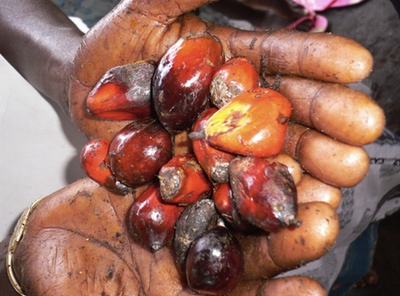
William Lever was quite good at making cleaning products it turned out, and Sunlight quickly became one of the first globally marketed consumer commodities. Up until that point most soap was made from rendered beef fat, but Lever was using palm oil, which, apart from being better for lathering, also featured the convenience of not having to boil cows. Animal liberationists were few and far between back then and university students who would otherwise have arranged inconvenient demonstrations against cow-boiling outside the factory had more important things to campaign for, like women’s suffrage, so the karmic benefits were somewhat lost at the time.

There were other pay-offs to using palm oil though: apart from being cheap, readily available and lusciously latherable, a tonne of palm oil smelled a hell of a lot better than a tonne of melting cow. Which meant people didn’t mind working in Lever’s factories as much. And not only did they not mind working in the factories, they were also open to the idea of living nearby.

Taking that into consideration, Lever decided to buy 56 acres of land near Liverpool and turn it into a Utopian worker village named ‘Port Sunlight’ (which, you have to admit, has a nicer ring to it than Williamlevertown). Between 1899 and 1914, 800 houses were built to support a population of 3500 people, along with a gigantic soap factory, a hospital, schools, a concert hall, an open-air swimming pool, church and a temperance hotel (Edwardian England speak for ‘pub with no beer’).

In building an entire town to support his enterprise, Lever’s goals were “to socialise and Christianise business relations and get back to the office, factory and workshop that close family brotherhood that existed in the good old days of hand labour”.

Port Sunlight was an exercise in profit-sharing, he said. Rather than hand out bonus cheques at the end of the year, he thought it was better to create a socially responsible, sustainable community that benefitted everyone.

“It would not do you much good if you send it down your throats in the form of bottles of whisky, bags of sweets or fat geese at Christmas,” he wrote.

“On the other hand, if you leave the money with me, I shall use it to provide for you everything that makes life pleasant – viz nice houses, comfortable homes and healthy recreation.”

Even the Government was impressed. At the opening of a recreation and dining hall for men, then Prime Minister William Gladstone was moved to declare that he had “found living proof that cash payment is not the only nexus between man and man”.

The workers were happy too, although two years after the temperance hotel opened a referendum showed that 80 percent of villagers wanted it to sell alcohol and Lever reluctantly bowed to the wishes of his workers.

It seems a quaint and not entirely unfamiliar story – other leading industrialists of the time, such as Henry Ford, were also setting up welfare capitalism programs (Ford even had a ‘Social Department’ with 50 investigators who spied on workers and withheld their profit-share if they were caught drinking too much or gambling). And while these early ideals of conservative labour Utopia seem archaic – Orwellian even – they played an important role in shaping the corporate philosophy of the organisation, one which is centred on social awareness and environmental sustainability being a key to profits.

The philosophy works now – in 2010 the company has an annual turnover of around AUS$60 billion – and it worked back then too. Lever Brothers was raking it in. By 1900 the company had added the Lifebuoy, Lux and Vim brands to its line-up and subsidiaries were set up in the US, Switzerland, Canada, Australia and Germany. By 1911, palm oil plantations had been set up in the Solomon Islands and Africa and the next couple of decades saw Lever Brothers buy out other major European soap makers, including Pears.

In 1930 Lever Brothers merged with Dutch food company, Margarine Unie (one of the world’s other biggest users of palm oil) and became Unilever.

As one of the world’s first ‘modern’ multinational corporations, Unilever certainly had a strange mix of product lines. Soap and margarine go together about as well as Jif and Continental instant mash. But it was this diversity that provided a platform for growth. Over the next few decades the company branched out even further, buying and diversifying. In 1959, Unilever acquired McNivens ice-cream in Australia followed by Streets and Sennitts. In 1963, the business acquired Rosella Foods. Five years later the John West operation began in Australia and in 1971 Unilever acquired Lipton Tea. By 1980 soap and margarine accounted for just 40 percent of profits worldwide.

In 1989, the home and personal care businesses of Lever & Kitchen and Rexona merged in Australia to form L&K: Rexona, which later changed to Lever Rexona. In 2000, Lever Rexona merged with Unilever Foods to form what is now Unilever Australasia. The brand is notoriously shy on revealing exactly how much money it makes in this country, but if you remember the fact that its global turnover is roughly equal to that of Coke and McDonalds combined, you can start to get a sense of the impact that it has in the marketplace.

The Unilever brand

Unilever’s corporate philosophy is this: “We help people feel good, look good and get more out of life with brands and services that are good for them and good for others.”

Australasian vice president of marketing David McNeil says the company philosophy hasn’t changed much over time and, despite the huge number of brands in its portfolio, the core values can be distilled into a simple ideal.

“Unilever as a company has got a pretty simple message that it’s taking to people: as a company we believe we can help to create a better future every day for everybody,” says McNeil.“We’re a food company and a home and personal care company. We’re in 120-plus countries around the world, and have been for so long that we’re best placed to be able to make that promise to society, and that’s what we believe we’re in business to do, and that’s what our products are all collectively aimed at accomplishing.”

Unilever Australasia chairman Sebastian Lazell recognises that although most Australians have long known the brand’s trademarks, including Lipton, Rexona, Lynx and Streets, an overall understanding of what the Unilever brand stands for has traditionally been much more limited.

“Unilever has had a fantastically long heritage in Australia. It’s been in this country since the very end of the 19th century and is linked to some of the strongest brand offerings within Australian consumer life,” says Lazell.

“However, one of the things we recognised was that very few consumers could actually piece brands they knew and loved together and link them to a company.”

McNeil says that to address the issue of overall Unilever brand recognition, the company had to take a more direct approach to marketing itself as a group. The most obvious embodiment of that strategy was an action as simple as putting its trademarked ‘U’ logo on product television commercials.

“Unilever is transacting with consumers or having engagements with consumers two billion times a day around the world; it’s just an arithmetic truth of the number of countries that we’re in, the number of products that we sell and the number of consumers that are purchasing and using those products.

“The view was that with those two billion occasions, because we are doing a lot in the area of nutrition, in hygiene and so on, that you add up all of those two billion occasions around the world, and Unilever is in the rare position of any other company to take all of these little actions and add them up to a very big global difference.

“But what we found in many countries around the world, including Australia and New Zealand, is that consumers’ familiarity with the products that make up the Unilever company was not very well-known at all, and so the capacity for consumers here to have a number of small actions adding up to a big difference was being hampered by the fact that Unilever was seen and known as a company, but not as the parent of so many popular brands,” continues McNeil.

“One of the initiatives we’ve been doing since March is tagging all of our television commercials with a little brand sign-off, a Unilever brand sign-off, that is intended to just slowly make consumers aware that each of these different brand propositions are brought to you by the one place, and so if they care to check the packaging on our different products, and want to make a bigger difference with these small actions, then they know where to do that.“At the moment, it’s restricted just to our TV commercials, but over time our intention is to build consumers’ awareness of the association between our brands and Unilever.”Just like the company itself, the Unilever logo is a unified pastiche of products that combine to create a strong brand identity built around sustainability and social responsibility.

The company calls it “an expression of vitality, which is at the heart of everything we do”. Each icon within the logo represents an aspect of the business and “shows our commitment to adding vitality to life”.


Highlights and memorable campaigns

Unilever is currently the eighth biggest media spender in Australia and the second biggest in New Zealand. If you’ve watched TV or driven down a highway in the last 100 years, you’ll be familiar with its ads.

Universal McCann does all of its media buying and planning, and it’s a relationship McNeil says is “very happy” and “very collaborative”. When it comes to above the line creative work though, it typically shuns the big global advertising agencies in favour of half a dozen or so key below the line and digital partners, which are used to deploy the marketing communication strategies that are, for the most part, developed overseas.

Speaking about his favourite Australian campaigns of the last few decades, McNeil says there are a few clear standouts, including those for Paddle Pop, Magnum, Lynx, its laundry detergents and, in a sign of the times, a Facebook page for ice-cream brand Bubble O’ Bill, which was started by a fan.

“From a local base, I think one of Unilever’s most successful exports has been Paddle Pop,” says McNeil.

“Paddle Pop is a brand that was invented in Australia around 55 years ago and it has continued to be a very, very popular ice-cream brand in Australia for generations of kids and adults alike. It was born and bred in Australia, but is now in 20 countries around the world and is fast becoming one of the most popular brands in Asia and in parts of Europe.

“The Paddle Pop Lion has been linked with the brand almost since its inception and the Lick-a-Prize consumer promotion started in Australia and has been [run] on and off for the last 25 years. It’s something that the team here came up with, and is now a cornerstone of kids’ ice-cream for Unilever around the world.

“Another one also in ice-cream is the Magnum brand, which was developed in Europe, but a campaign run around 10 years ago called ‘Magnum Seven Deadly Sins’ originated here by the marketing and R and D team locally,” continues McNeil. “It quickly became the most successful ice-cream campaign ever run within Unilever in terms of sales. It ran in several countries in Europe in particular, but it was an idea that was born and started here in Australia.”

When it comes to sustainable business strategy and marketing combining, McNeil says one campaign that was probably less recognised from a public point of view was Unilever’s commitment to reducing the size of its detergent packs.

“Last year, on all of our laundry detergents, we started an industry-wide campaign to cut in half the size of the boxes and the amount of products and chemicals necessary to use in people’s laundry detergents with our Omo and Surf brands. That created a groundswell of change last year for good in terms of the reduction of trucks that are used, reduction of chemicals that are used and the reduction of packaging materials that are used,” he says.

“We went from a box that was one kilogram and reduced it by 50 percent, down to 500 grams, and still provided the same cleaning power for consumers. That degree of reduction all in one go was the most extensive that we’ve seen around the world.”

Universally changing laundry detergent packaging sizes around the globe was obviously a massively complex logistical process for Unilever and the environmental effects have been far reaching. However, McNeil says one of the most interesting changes to take place in his world in recent times has been the use of social networks in marketing strategy. One brand in particular, Bubble O’ Bill, has become huge on Facebook – taking everyone by surprise.

“We’ve been using social media and social networking sites as part of our marketing quite extensively in the last three years as a way for us to be able to have a dialogue with consumers on a cost-effective basis about brands in our portfolio that haven’t necessarily enjoyed big budget advertising spends.

“Bubble O’ Bill, for example, now has 540,000 friends – making it, I’m led to believe, the number one branded Facebook page in Australia. And it’s been growing at nearly 100,000 fans every few months. It just seems to be rising and rising, and that’s without us really doing much of anything.

“It’s just grown organically. The page was started by this one fan, this guy who just loved Bubble O’ Bill and then eventually we caught wind of the popularity that he was building and decided to get in behind him and to try and help out a little bit by being more active ourselves and helping the page along.

“But really, there’s very little money being directed that way from us. It’s just a lot of conversation, which incidentally is, culturally within my team, becoming a very important source for us to do consumer research, to just watch and listen to the conversations that are happening and to pick up things about our products and our brands that people are saying. It has proven to be hugely insightful for my team and me.”

McNeil says he was surprised an ice-cream brand “in the middle of the pack” in terms of sales garnered such a following on Facebook, but he is being deliberately careful not to try and ‘fix what’s not broken’ by messing around with the Facebook page too much.

“It definitely floored us that there could be anywhere near the following that it’s become; that’s been completely unpredicted,” he says. “But I think marketers have to think very carefully about helping and, in an effort to try and accelerate something that has a steam of its own, I think we in marketing can also get in the way. So my position on Bubble O’ Bill is that there are a lot of people out there enjoying the freedom to have the conversations that they want in the way they want it to happen, and we’re just pretty happy that that’s going on, and for now that’s about as far as we plan to push it.”

And the prize goes to…

In terms of advertising awards, Unilever has a reasonable trophy cabinet, but McNeil says one of his favourite award-winning Australian campaigns was one that ran in 2005 for Lynx.

Titled ‘LYNX Jet’, it was an integrated campaign that envisioned an airline run by the brand, with an emphasis on ‘personal’ customer service and a unique sort of inflight entertainment, which included attractive, scantily clad female cabin crew spanking, pillow fighting and hula-hooping. The campaign ran in print media, television, ambient and direct channels, and at one stage involved the leasing of Jetstar aeroplanes flying to the Gold Coast for schoolies week, complete with hot hostesses in yellow uniforms.

The campaign generated more than 260,000 unique visitors to the LYNX Jet website and, according to advertising agency Lowe, generated a 14.2 percent increase in market share, bringing the brand up to a dominating 84.5 percent. It also won the Grand Prix in the Cannes Media Lions, along with two Gold Lions in the Lions Direct awards and a Promo Lion in the sales promotion category. You can watch Lowe’s case study on the campaign at www.vimeo.com/12758394.


Dove versus Lynx

They say that with great power comes great responsibility and, in Unilever’s case, its global dominance puts a massive weight on its shoulders. As a company with a long, proud history of social and environmental goodwill, it takes its mantra of creating “a better future every day for everybody” quite seriously. William Lever’s philanthropy in Edwardian England was noted globally, and in 2010 the senior executives still sing from the same song sheet (even if the words are no longer hymns).

Dove’s ‘Campaign for Real Beauty’ is perhaps Unilever’s best-known societal changeprogram. To quote the Campaign for Real Beauty website: “The Dove Campaign for Real Beauty is a global effort launched in 2004 to serve as a starting point for societal change and act as a catalyst for widening the definition and discussion of beauty. The campaign supports the Dove mission: to make more women feel beautiful every day by widening stereotypical views of beauty. The brand’s commitment to the mission starts with using real women, not professional models, of various ages, shapes and sizes to provoke discussion and debate about today’s typecast beauty images. Employing various communication vehicles, including advertising, a website, billboards, events, a self-esteem fund and more – the campaign invites women to join in a discussion about beauty and share their views with women around the world.”

Perhaps the most well-known execution of the campaign was a 2006 viral video entitled ‘Dove Evolution’, which showed an ‘ordinary’ woman being made up and Photoshopped to look like a supermodel on a typical fashion billboard. If you haven’t seen the video, search YouTube for ‘Dove Evolution’ – you’ll be the 11 million and somethingth viewer.

The video has won numerous awards, including two Cannes Gold Lions, and the program has drawn near universal praise from body image groups, including Australia’s own The Butterfly Foundation, which receives support and funding from the ‘Dove Self-Esteem Fund’.

The campaign has also, however, garnered strong condemnation from marketing critics, academics and women’s rights groups for its apparent hypocrisy. Virtually no one thinks the campaign has been a bad idea, but the criticism is that it’s hypocritical of Unilever to claim that it is trying “to make more women feel beautiful every day by widening stereotypical views of beauty” in one program, while at the same time parading scantily clad models around in television commercials, websites and magazine ads for its Lynx brand.Dr Leslie Cannold is a leading ethics academic and women’s rights author. She cites ‘The Lynx Effect’ campaign website (http://lynxeffect.com.au), which features multiple images of headless bikini models and a section where members of the public can write their name on a model’s bare cleavage, naked thighs or stomach, as a standout example of hypocrisy. She also questions whether or not the company’s intentions with Dove are truly world changing, or just a disingenuous way to make more money.

“I think we always need to be cynical about the motivations of pro-social corporate activities. The raison d’être of business is to turn a profit, and it is therefore fair to assume that most of what corporations do is intended, directly or indirectly, to achieve that aim,” says Dr Cannold.

“The Lynx ads suggest we have good reason to be cynical about the Dove ads, and accompanying fiscal support for positive body image programs. If Unilever is willing to ruthlessly exploit the headless bodies of women to sell Lynx, why should we believe the Real Beauty campaign is anything other than a cynical attempt to exploit community dismay about such exploitation to serve its bottom line.

“The Lynx ads give us good reason to think, in other words, that the only reason Unilever is taking the Real Beauty line is because it’s a good way to sell product to women, not because they really care that young women come of age with positive body image and self-esteem.

“The headless, pumped-up strippers that populate the Lynx site take us right back to the 1970s in terms of the way they commodify women’s bodies. They are as unenlightened as any I have seen in a long time and could not form a sharper contrast with the right-on ideas that permeate the Real Beauty campaign.

“I challenge Unilever to explain how these images are in any way different to those condemned in the Real Beauty campaign. How they are not part of the advertising onslaught that the Real Beauty campaign condemns for pressuring girls and contributing to their unrealistic ideal of beauty and their unhealthy belief that unless they look like a supermodel they have little to offer men or the wider world,” adds Dr Cannold.

And she isn’t alone in her criticism. Rachel Hills is a journalist, blogger and widely-published freelance writer, specialising in social analysis. She also feels that Unilever’s Lynx commercials are a step back in time, and anything but the “starting point for societal change” the company preaches in its Campaign for Real Beauty.

“[They] play into women’s body insecurities,” she says. “But they do it in relatively subtle and complicated ways. It’s not about the fact that these women are beautiful, or even that they’re sexualised. It’s about the way they perpetuate the idea that women have to be attractive in order to be valuable, and that they have to be attractive in a very specific, narrow way.

“Interestingly, I think this is something that impacts young men as much as it does young women. You rarely find someone with a narrower definition of what’s attractive than an insecure teenage boy – and I think this in turn magnifies young women’s insecurities. A lot of teenage girls think the only way they can be attractive or loveable is if they’re very, very thin.”

But Sebastian Lazell defends Lynx’s advertising approach, saying, “We have to respond to a direct need of different target audiences, and clearly the consumer of the Dove brand and the user of the Lynx brand are very different individuals, and therefore need to be addressed in different ways.

“What I think is interesting and unites them is that they both address some inherent potential insecurities or uncertainties, whether you’re talking about young women for whom self-esteem can be further enhanced by recognition that all those female bodies and faces that are seen throughout the beauty industry may not reflect reality, and that they should be more confident and comfortable with themselves. Or, the young teenage boy who is deep down, an insecure and unconfident adolescent who, to become a strong and confident individual going forward, does sometimes need a little bit of help and support – and that’s where Lynx body sprays come in.

“They are different target audiences. Our job is to appeal to them in different ways, and in both cases we believe we’re doing a good thing for self-esteem and self-confidence. We actually understand from the work we do with young women that they are in on the joke, and actually see us as helping the guys along. It’s so exaggerated and extreme in terms of what it’s putting out there, that it is understood to be what it is, which is light humour. If anything, the stereotype that is being kind of poked fun at is the somewhat unconfident and gawky young adolescent male.”

Pushing aside the opinions of chairmen, marketers, feminist academics and bloggers, prominent Sydney Twitterer and creative strategist for Jack Morton Worldwide, Katie Chatfield, perhaps puts it better than anyone when she sums up the argument in fewer than 140 characters with this succinct observation:

“Is it impossible to believe that women understand the impulses of teenage boys? And not hate themselves or the boys for it?”

Whichever way you look at it, Unilever shows no signs of changing the way it markets either its Lynx or its Dove products. Clearly both methods are working and whatever criticism it is attracting in this arena isn’t ruffling enough feathers for the brand to consider any about-faces just yet.

Greenpeace, palm oil and the future of Unilever

Of course, Unilever may be happy to stand tall in the face of academic criticism in the beauty arena, but when it comes to serious questions about how company practices are affecting the environmental sustainability of the fourth most populous nation on earth, and the accuser is Greenpeace, it’s a completely different ball game.

In 2008 Unilever was targeted by Greenpeace UK and was criticised for buying palm oil from suppliers responsible for causing significant deforestation in Indonesia. As a founding member of the Roundtable on Sustainable Palm Oil, the company quickly responded by announcing a plan to obtain its palm oil from sources certified as sustainable. It was a turnaround that was hailed by critics and the company was eventually praised by Greenpeace on its decision. In April 2010, Unilever topped the World Wildlife Fund’s (WWF) palm oil buyers’ score card for being the number one business in Australia when it comes to adopting sustainable palm oil practices.

Lazell explains the problem and admits that although “from time to time [Greenpeace] may well bring something to our attention that we had missed”, he contends that it was Unilever’s sustainable approaches to agriculture as a whole that were the real story.

“By 2004 Unilever had actually already set up, as a founding member – with a number of other institutions, including NGOs (non-government organisations) like the WWF and Oxfam – the Round Table for Sustainable Palm Oil, which recognised the need to engage with the palm oil growing industry in Indonesia and Malaysia, and move to more sustainable practice,” he says.

“This was three to four years I think before the specific Greenpeace intervention. Now, do we, as I think we said at the time, credit and acknowledge the value that can be made from time to time where somebody intervenes and goes, ‘Have you seen what this particular supplier is doing?’, which maybe our audits and our scrutiny hadn’t picked up. We appreciate that, and we take extra action. But we were four to five years down the path of the sustainable palm oil drive before that particular intervention.

“We’re also constantly revising the actions that we take. If suppliers don’t abide by the principles and guidelines of the sustainable palm oil industry, then action is taken against them, and a number of actions have been taken in recent times around withholding contracts from suppliers who don’t abide.”

McNeil agrees, saying that at the end of the day Unilever as a company benefits far more from being a good corporate citizen than it would by only implementing campaigns that have an immediate and obvious impact on the bottom line.

“We are the world’s leading tea company, primarily with Lipton, and we’ve made a series of commitments – both locally and globally – to purchase all of our black tea from sustainable sources by 2015. As the largest buyer of tea in the world, we’re able to make a very significant difference to the lives of those that are working on or connected to tea plantations around the world,” says McNeil.

“In Australia last year, we moved forward with a commitment around a Rainforest Alliance Certified tea. It so happens, maybe coincidentally, maybe not, but by bringing that to consumers’ attention and by providing that to the market, Lipton is a strong performing business for us commercially and is the market leader in tea in Australia, and has been enjoying good success commercially for a number of years.

“Unilever has a fairly simple view, which is that we will do well financially by doing good in a societal sense and in a sustainability sense. It’s not meant to be a cliché and it’s not meant to be an altruistic statement. The genuine company belief is that we will do well organisationally by doing good for society.

“We’re doing well by doing good.”

Life after brand management: Ann-Marie Kilcline

In this careers feature, Liz Foster asks the question, with the number of corporate marketing roles shrinking as you climb the ladder, where do all the brand managers go?


Who? 

Ann-Marie Kilcline

When and where did you work in marketing?

I started off my marketing career in Unilever in Ireland, there I worked on some fantastic brands with amazing heritage like Vaseline Intensive Care and the now defunct but once great Ponds facecare which was used by many of our mums and grandmothers in its hey day! I got bitten by the travelling bug and moved to Australia where I worked as a brand manager on haircare for Colgate Palmolive. It was great experience working in a different market and in this role with an emphasis on innovation. Innovation became a love of mine and I moved to Blackmores in 2005 where I worked solely on NPD. I worked on a number of different categories from coughs and colds to fertility.

Highest marketing level reached?

Senior Brand Manager

What do you do now?

I work as a senior account manager for The Saltmine. In this role I work with a number of different clients across a whole host of brands. It’s different from brand management – the timelines are shorter! But the work is interesting, there is exposure to great brands and I work with some very bright people across the client side as well as the creative team.

Did you choose your path or did it choose you? 

I was at a crossroads, not sure where I was going with my career and felt that it was time for a change. This role popped up and I thought, why not? So yes, I suppose I was chosen!

What’s the most important skill that you’ve taken from your marketing days?

The customer is King! I don’t think its just a marketing skill, that’s a life skill. No matter who you are dealing with, always remember where they are coming from and what motivates them and it makes everything a whole lot easier!

If you had your time again, would you climb the corporate marketing ladder?

Yes I probably would, I learned a lot from my years in brand management and met great people in the process. Again, the skills I learned weren’t only about business, they were life skills and I use them everyday, e.g negotiation, budgeting, presentation.

What were the best and worst parts of your role as BM?

Definitely the best part was seeing a project come to fruition in market and probably the worst part was the opposite, where a project didn’t make it for one reason or another.

What career tips would you offer an aspirant or current BM?

Use other people’s skills. A problem shared is definitely a problem halved, I often found solutions in the most unlikely of places

Now that youve left the world of brand management, are you satisfied with your current role? If not, what are your future career aspirations?

Yes I think this role is a great role, I get great exposure to amazing brands and great talent. I am always busy and no two days are ever the same which keeps me on my toes.

The Unilever interview: 5,437 words, two litres of chocolate body paint and some mild humping

I wanted to hate this brand. It’s a giant, global multi-national corporation making about as much money per year as McDonalds, and Coke combined. I knew they’d been on Greenpeace’s naughty list recently. I knew they were quite fond of parading scantily clad women around in some commercials and promoting healthy body image charities in others. I wanted to use the words ‘Ubiquitous’, ‘Unholy’ and ‘Uber’ a lot. I was determined to wear out my ‘U’ key before the September cover article was through.

They’d started putting their logo on TV ads for all their products for goodness sake, right at the end, like the Brandpower people do. Except this wasn’t just brand power, this was brand supremacy on a global scale. They make pretty much every product in the supermarket, except for dried walnuts and corn, but up until March this year, the ‘U’ logo was something you noticed near the bottom of a deodorant can before you threw it out. It wasn’t something they paraded on television. Clearly some megalomaniac marketing director was now in the control room pulling levers, stroking a cat and training flying monkeys to take over what few parts of the world were yet to fall under the company’s all-knowing, all-seeing spell. It was probably Sauron. Or possibly even Satan – the devil himself.

Sadly, it wasn’t the devil. It was David. And he was quite lovely.

“Your products are used two billion times a day. Does that make Unilever the most ‘used’ brand in the world? Are you bigger than Coke?” I asked first up.

“That’s a very good question. That’s an important question that I haven’t been asked before,” he replied.

“I don’t know the answer off-hand, but I’m going to find out.”

David was the ‘Vice President Marketing Australasia’ and he was already making my inner journalist blush. My question was not just good, it was ‘very good’. Important even. It was going to be hard to hate him.

We talked for about 45 minutes about marketing strategy and the kinds of things which would excite you if you’re into that sort of thing, and bore you into a drooling pulp of human if you weren’t. I learnt that Bubble O’ Bill ice creams had become a Facebook sensation. I learnt that point of sale was still really important. I learnt that Unilever was the number eight media-spender in Australia and the number two media spender in New Zealand.

I liked this bit of conversation the most though:

ME: “One campaign that had caught my eye recently, which I wanted to ask about, was Golden Gaytime. It’s a little bit risqué; there’s an ad out there with some guys on a boat. Have you had any complaints?”

DAVID: “Complaints in what respect?”

ME: “Well, it’s flaunting homo-eroticism. It seems a reasonably brave decision to go out there and go, ‘You know what, it’s Golden Gaytime and we’re going to play up to the gay factor.’ Has anyone complained about that?”

DAVID: “Where do you believe we’ve played up to the gay factor?”

ME: “Well, ‘it’s hard to have a Gaytime on your own’ is the line, and the commercial shows two men taking their clothes off, grabbing each other’s arses and mildly humping each other on a boat. You wouldn’t say that was playing up to a bit of a gay factor?”

David didn’t seem to think it was as gay as I thought. He called it ‘nostalgic’. But that was probably because he knew someone from corporate communications was going to read the interview later.

I had the same problem when I spoke to the Chairman of Unilever Australasia, Sebastian Lazell. Only this time someone with a PR degree and clipboard was sitting right next to him. So he had to be extra-careful not to say anything silly. For the most part he didn’t, until I asked him if he’d seen the quote I’d sent through from Leslie Cannold (she’s a prominent Australian ethicist and women’s rights advocate and she’s the person journalists, like me, go to when they want a quote about how chauvinistic/hypocritical it is for a company to allow teenagers to paint their name on women’s bare chests in chocolate sauce on product websites like Lynx, whilst at the same time putting out TV ads like ‘Dove Evolution’.

Leslie had said this:

“The headless, pumped-up strippers that populate the Lynx site take us right back to the 1970s in terms of the way they commodify womens bodies. They are as unenlightened as any I have seen in a long time … I challenge Unilever to explain how these images are in any way different to those condemned in the real beauty campaign.”

It was like a chocolate-coated gold nugget falling from the sky into my keyboard.

I asked Sebastian to respond to Leslie’s challenge.

Sebastian responded initially by quoting, verbatim, the company mission statement:

“The most important thing to be fair about is as a broad-based consumer goods company, we’re trying to help people look good, feel good, get more out of life; create the better future every day.”

… at which point I swear I heard the PR chick give him a high five. He then spoke very briefly about how the two brands were very different, and then gave the following answer. (And before you read the following paragraph, I would like to take this opportunity to point out that Sebastian Lazell has a degree in English Literature from Oxford University, and that I have quoted him word for word):

“We have to respond to understand a direct need of different target audiences, and clearly the consumer of the Dove brand and the user of the Lynx brand are very different individuals, and therefore need to be addressed in different ways. What I think is interesting and unites them is that they both are operating in both cases, addressing some inherent potential insecurities or uncertainties, whether you’re talking about young women for whom self esteem can be further enhanced by recognition that all those female bodies and faces that are seen throughout the broad-based beauty industry at large may not reflect reality and that they should be more confident and comfortable with themselves. That addresses some insecurities we know are deeper in Australia, and it is in global society, because this is an initiative that Dove is driving around the world. Equally, the young teenage boy is deep down insecure and not always totally pleasant, but somewhat unconfident adolescent who, to become a strong and confident individual going forward, does sometimes need a little bit of help and support, and that’s where Lynx body sprays come in. Everything that we do on Lynx, we do absolutely challenge ourselves around ensuring that there is humour, that it is tongue in cheek, and that indeed in fact many young women are both fully aware of what we’re doing, frankly quite grateful that we’re helping young guys become somewhat more self-confident and a little less antisocial, and they’re in on the joke more often than not, because in essence, it’s a compliment to them, and if anything, the stereotype that is being kind of poked fun at is the somewhat unconfident and gawky young adolescent male…”

I shouldn’t be too hard on him, after all, George W. Bush went to Yale and couldn’t talk any gooder, but if I wanted to, and I did want to, I could have interpreted that answer as: ‘teenage boys are unpleasant and young women should be grateful Unilever lets them paint their names on their bare chests in chocolate sauce’.

Luckily, I found some journalistic integrity/compassion in the third draw of my kitchen cupboard and somehow managed to cut and paste those words into an answer which made some semblance of sense. It took me a good half an hour. And no-one from Unilever’s PR agency complained about the article, so I guess I did the right thing.

Actually, to be perfectly honest, it’s easy to create some light marketing entertainment by going for cheap laughs in a blog, but I actually came away from the interviews impressed with the company as a whole. They do have a long proud history of doing wonderful things for women, society and rainforests and they’ve been incredibly pro-active at changing farming practices of palm oil, the key ingredient in many of their soaps and spreads. The brand also has a fascinating history which you can’t read about in Wikipedia, and they’re responsible for creating some of the most memorable advertising campaigns in Australia’s history.

If you’ve got a spare 20 minutes and you’d like to get an insight into some brilliant marketing strategies and delve into the inner-workings of one of the world’s biggest brands, pop over to a newsagent and pick up a copy of the September issue of Marketing Magazine. You’ll be able to find it pretty easily. It’s the one that ended up with a giant blue ‘U’ on the cover. Sneaky bastards aren’t they.

Life after brand management: James France

In this careers feature, Liz Foster asks the question, with the number of corporate marketing roles shrinking as you climb the ladder, where do all the brand managers go?


Who?


James France.


When and where did you work in marketing?

I started at Unilever in the early 80s, then a short stint at Philips electronics before embarking on my liquor career which has been going since 1991. 


Highest marketing level reached? 


Category director of spirits, Remy Cointreau USA, based in New York.


What do you do now? 


I started my own liquor importing company about 3 years ago, Vanguard Luxury Brands Pty Ltd.


Did you choose your path or did it choose you? 


A bit of both. From my time overseas I knew of many great spirit brands that were in demand here but which no-one was importing, so I spotted a niche. Also I was at a point in my life when I wanted more strategic control of the business in which I was working.


What’s the most important skill that you’ve taken from your marketing days?

Professionalism in verbal and written presentations, combined with an appreciation of the importance strategy.


If you had your time again, would you climb the corporate marketing ladder?

Yes. The benefits outweigh the costs.


What were the best and worst parts of your role as BM? 


Best parts would include the skills you pick up (research, working with ad agencies, writing marketing plans, NPD etc), as well as injecting some creativity into what you do. Some of the social life which was pretty good fun too! Politics would definitely be the worst part, as well as interminable budgeting processes and working with some sales forces whose self-appointed mission it was to hang the marketing department out to dry. 


What career tips would you offer an aspirant or current BM? 


Choose an industry you are passionate about. Work with the salesforce; not against them. Go out in the trade with them at least one day a month. Listen to them and incorporate their thoughts into the planning process. Be prepared to do the hard yards and don’t be too precious: just because you went to uni doesn’t mean you are above using a tape gun or a photocopier to get the job done. Don’t get caught in the jargon trap. Speak normally!


Now that youve left the world of brand management, are you satisfied with your current role? 


Yes, I am my own boss and am having a lot of fun shaping the direction of my company. Of course this comes with its fair share of sleepless nights too. But I wouldn’t have been able to do it without my brand management experience.

Life after brand management: Karen Hawkins

In this careers feature, Liz Foster asks the question, with the number of corporate marketing roles shrinking as you climb the ladder, where do all the brand managers go?


Who?


Karen Hawkins, Mum of Will (16 months) and mum to be of ?? due in June. Living in country Victoria and working part-time in marketing for Brown Brothers Wines.

When and where were did you work in marketing?

I’m a self confessed, promiscuous FMCG marketer. Career started in a Pharmaceutical company – Rhone Polenc Rorer (now Aventis) as a marketing grad, then made the move over to FMCG as an ABM at Nestle Confectionery. Career then progressed through the ranks at Nestle, Rank Hovis McDougal (two year UK stint), Nestle again, Colgate Palmolive, Masterfoods (contracting), Unilever and now Brown Brothers Wines in Milawa, country Victoria.

Highest marketing level reached?

Marketing manager

What do you do now?

I work for my toughest boss ever: he’s 82cm tall, solid build, expects food and fun on demand and has a wicked sense of humour. In my 2 days off a week I visit a beautiful town called Milawa in country Victoria and help them with their brand planning, surrounded by gorgeous vineyards. Pretty tough gig.

Did you choose your path or did it choose you?

I definitely chose it. I believe that you make your own breaks. Your future is in your own control, no one else’s. To get there just work hard and have fun doing it. Make sure that every career step can benefit from the experience you have gained in your last (or previous) jobs – even if it’s a lateral move.
What’s the most important skill that you’ve taken from your marketing days?

Learning to deal and work with all types of people. Bringing the best out in people makes your life so much easier, and much more enjoyable.

If you had your time again, would you climb the corporate marketing ladder?

Yes. No question. Invaluable skills to take into any future business or personal endeavour.

What were the best and worst parts of your role as BM?

Best – agency parties, lunches and entertainment freebies.

Worst – being the centre point of so many different business functions and external agencies, you get the responsibility but also all the flak.

What career tips would you offer an aspirant or current BM?

Be likeable and never burn your bridges: the industry is too small.

Now that youve left the world of brand management, are you satisfied with your current role? If not, what are your future career aspirations?

Yes, very satisfied as a mum, also happy keeping my little toe in the waters of brand management here in the country side. Perfect life for me really.

Unilever to increase parent brand presence

Unilever Australasia has begun rolling out signature branding through its advertising.

Unilever overarches several brands active in Australia including Streets Ice Cream, Dove, Rexona, Omo and Lipton. In the first stage of the rollout, certain Flora, Rexona and Omo TVCs have aired with Unilever’s device. It bring Australia into line with Unilever’s worldwide strategy.

Speaking on the move, David McNeil, VP of marketing for Unilever Australasia, said it would reinforce the association consumers have with the logo, which already appears on the pack, “Making it easier for consumers to identify Unilever brands is good for our business. Our research suggests that people who already buy one Unilever brand are more likely to buy others. Our research also shows that when consumers are made aware of our brand portfolio, their trust in us increases significantly.”