

Piranhas on private parts: Dumb Ways to Die app dominates iTunes

The now legendary, Dumb Ways to Die campaign has kicked another goal, with an app game for iPhone and iPad claiming the number one free app spot in Australia for a full week.

The app, developed by McCann Australia in collaboration with local game developer Barrel Of Donkeys, is charting in 79 countries, and is the number one free app in Australia, New Zealand and Singapore, plus the number one game in those three countries as well as in the Philippines, Malaysia and Indonesia.

The game allows players to flick piranhas away from a character’s private parts and defend another from a snake attack among other ways to avoid being dumb. Players can also pledge to ‘not do dumb stuff around trains’ at the click of a button.

Executive creative director of McCann Australia, explains the reasons behind the app.

“With the main Dumb Ways to Die video now close to 46 million views, we wanted to give young people another platform on which to enjoy the characters and, more importantly, to continue to remind them that being dumb around trains can and should be avoided,” he says.

Android continues to take chunks out of Apple, InMobi finds

According to the latest InMobi, Australian Mobile Insights Report, Apple’s iOS smartphones continue to lose share to Android.

Between the months of January and March 2013, Apple’s smartphone share of impressions dropped 2% to 59% while Android grew 2% to 36% on the InMobi network.

The figure is impressive for the fact that the 23% margin is the nearest that Android has been to Apple before and displays a changing of the smartphone guards of sorts.

And this trend is not limited to local with other parts of the world, including New Zealand, showing Android is presently only 7.7% behind Apple.

Compounding Apple’s smartphone share loss, the iPhone also lost handset share of impressions for the first time in its history. While handset share decreased 5.4% to 45.7%, but it still held onto top spot.

Francisco Cordero, vice president and general manager of InMobi Australia and New Zealand, explains: “Android has come firing through this quarter, gaining on iOS following a great fourth quarter and Christmas sale period from Samsung which posted a record profit of AU$6.34 billion.”

The rise of the iPad has been good to Apple as it is still dominates the market, a 3% increase for the iPad, moving it to second most preferred tablet is a win despite the share loss to Android.

News isn’t great for Apple in overturning the market share with the launch of Facebook Home, the Samsung Galaxy S4 and the launch of the HTC Facebook phone piling on the heat.

“We believe that Android will maintain its momentum and close the margin between iOS even further next quarter,” says Cordero.


85% of mobile traffic to local business websites comes from Apple devices

Despite Apple’s iOS and Google’s Android mobile operating systems battling neck and neck for share of the smartphone market in Australia, 85% of all mobile visits to local business websites are coming from only one of the those parties, a recent study from digital media firm Goop has found.

Apple has recently lost grip on its stronghold over the smartphone and tablet market in terms of market share, with Android devices matching or surpassing Apple in popularity among Australians, but that hasn’t stopped it dominating the important local shopping market.

Goop analysed three months of live traffic data from the web sites of more than 300 clients across Greater Geelong and regional Victoria.

“We were stunned to find that 85% of all mobile visits to our clients’ sites came from Apple devices,” says Goop’s Karl Morris. “And almost half of those visits came from iPads.”

“Safari [Apple's web browser] even out-locals Internet Explorer,” he says.

“The study found almost 35% of all visits to our clients’ sites were made on the Safari browser. Internet Explorer came second totalling 33%, with Chrome and Firefox coming in at third and fourth. Android, despite its incredible user growth, is lagging in fifth place.

“This is a big win for Apple,” Morris says.

“Local businesses looking to connect with shoppers are driving a large chunk of the digital advertising and site development market. This powerful position among local shoppers gives Apple an intriguing platform to build on,” Morris says. “Local businesses need to factor mobile shoppers into their mix.”


Google Now app updated to rival Apple’s iOS Passbook

Google has updated its Search app for Android with functionality that rivals Apple’s Passbook app, the iOS 6 program that pulls your boarding passes and store cards into one convenient place.

Google’s update is part of the Google Now service that automatically brings up cards with relevant information from around you, based on your location. In this case, the app scans your Gmail inbox for boarding passes (limited to United Airlines for now), and will automatically bring up a QR code used at check-in when you arrive at the terminal.

This feature is almost identical to Passbook, which ranks Virgin Australia, Qantas, Moshtix, Eventbrite and Ticketek as supporters of its platform.

The Google Now travel functionality does not stop there. Once you arrive at your destination, the app will suggest places to visit and interesting events to attend, along with directions to the points of interest and weather information.

When you are at a museum for example, the app lets your do a reverse image search via Google Goggles so you can get information on the painting or sculpture you are looking at, while other cards will suggest events nearby.

There are also other cards for travellers, like the currency conversion, translation and flight status cards.

As part of this app update, the voice search functionality has been improved, with a few extra perks you wont get with Siri on an iPhone. This includes finding out names of songs by asking ‘What’s this song?’ (similar to Shazam, but built-in), finding product information by scanning a barcode and posting updates to Google+ through voice command.

The app only works with phones and tablets running Android 4.1 Jelly Bean or newer, so if you have an older device, these features wont be available for you.

With Macworld.

iPhone 5 fails to woo new Apple customers, Android retains lead

Apple’s iPhone 5 has largely failed to woo new customers to the brand, taking the majority of its sales from existing iPhone owners to leave Android as the most-owned operating system in Australia.

Since overtaking Apple’s iOS as the most common smartphone operating system in July, Google’s Android has continued to pull ahead, despite September’s launch of the iPhone 5.

While the new iPhone’s release managed to boost iOS’ share of sales back up to equal with the combined sales of Android-based devices – a position it hasn’t occupied since December last year – it is yet to have an impact on the overall share of smartphone ownership in Apple’s favour.

Data from Kantar WorldPanel’s ComTech study of 10,000 Australian mobile phone owners, released exclusively to Marketing, shows that, as of the end of October, Android commanded 40% of smartphone market share compared to iOS’ 38%. In the month of October, the iPhone 5 accounted for 32% of smartphone sales, well above the 20% enjoyed by Samsung’s flagship model the Galaxy S3 at its peak in August. In October, the S3’s share of sales dipped to 11%, while in total Samsung’s extended stable of handsets accounted for 29% of smartphone sales.

Share of smartphone sales

Note: Samsung figures are a sub-set of the overall Android figures.

Kantar found the recent growth in Apple purchasing has caused little to no change to Apple’s share of smartphone ownership levels, with almost 80% of iPhone users who upgraded in October buying another iPhone. Strategic insights director at the research group, Tamsin Timpson, says Apple is not attracting new customers to the same extent as Samsung.

“It seems people want something a bit different,” Timpson says. “The image of the Apple brand is still very strong, and that comes through in the loyalty figures, but there’s definitely a group of people out there that want something different.”

That group is more likely to be and older and male than the iPhone buyer, according to the data, which shows the Galaxy S3 owner significantly more likely to be male and over 34 years of age.

“When there is a new iPhone launch, the profile of its owners becomes younger and more female dominated each time,” Timpson adds.

Cost is also a factor for many late adopters of smartphones, making the range of cheaper, pre-paid Android models more attractive to new customers.

While the larger screen of the S3 is seeing an Android-based handset eclipse the iPhone for usage of the mobile web, photos, gaming and other features suited to the big screen for the first time, the iPhone continues to outstrip its rival when it comes to other high-use smartphone functions.

The heavy use of these features such as social networking and shopping on the iPhone is driven by the younger, more female owner base, which Timpson believes prefer Apple’s sleek, fashionable design and brand image. “It’s a fashion thing… the features that are more mainstream, such as social networking or shopping, tend to over-index on the iPhone, while the lower penetration usage functions, such as mobile TV, over-index for the more male Samsung audience.”

However, despite ceding ground in the content battle, the iPhone still reigns supreme when it comes to value to manufacturer and telecommunications carriers, and loyalty. iPhone 5 owners spend slightly more on contracts per month – $69.16 compared to $63.56 for S3 owners – and far more on apps per month – $2.78 on average compared to $0.44 for S3 owners. Over the course of a two-year contract, this equates to around $134 more for service plans and about $56 more through app stores per user.

Loyalty to the Samsung brand languished at 50% in October compared to the 80% repurchase rate enjoyed by the iPhone. But for those who switch away from an iPhone, Samsung is the preferred choice, setting up a rivalary between the two brands that looks set to intensify.

ABC iview becomes child minder as mobile viewership overtakes web

Viewership of ABC’s catch up TV service, iview, via mobile devices has overtaking viewing via PCs and laptops, driven it appears by the use of portable devices as a child minding tool.

Last week, iview streaming on iOS devices, including iPads, iPhones and iPods, represented 45.2% of total iview plays, while the iview website accounted for 45.1%, according to data from Webtrends. Children’s content contributed to the huge growth in popularity of mobile viewership, accounting for 15 of the top 20 programs viewed via iOS.

Despite the trend toward tablets and smartphones, the website recorded its highest ever month of visitation in September, with 1.1 million visitors and 4.1 million visits. In total, more than 11.7 million program were played via the system by Australian audiences in September across smartphones tablets, computers, connected TVs and gaming consoles.

Arul Baskaran Controller Multiplatform ABC TV revealed plans to extend the service, commenting, “We look forward to enabling the service on more devices in the future.”

“We continue to evolve iview to best serve our audience and respond to shifts in how Australians use technology,” Baskaran says.

ABC iview’s iOS app for iPad and iPhone, has been downloaded 1.8 million times to date.

Nokia ad paints iPhone owners as monotone ‘fanboy’ slaves

Nokia has release an ad for its Lumia 920 smartphone that paints iPhone fans as monotone, subservient slaves to the Apple brand.

The animated execution, which has racked up 16 million views on YouTube, shows carbon-copy, black-and-white people waiting in line to part with hundreds of dollars for an iPhone 5 before introducing them to the different colours the Lumia 920. It goes on to show colour erupting through the animated city as people carrying Nokia’s phones brighten up the surroundings.

Labelled ‘Time to Switch’ the spot follows a similar anti-iPhone ad from Samsung, which pitted the Samsung Galaxy S III against the iPhone’s specs with the message ‘The Next Big Thing Is Already Here’.


Samsung hits back at Apple with ‘It doesn’t take a genius’ ad

Samsung has hit back at rival Apple taking aim at the iPhone 5 in an ad that carries the message ‘It doesn’t take a genius’.

As well as taking a jab at Apple’s ‘genius bar’ retail help desk, and potentially founder Steve Jobs, the ad suggests that the decision between the two devices isn’t rocket science.

The ad which ran in US newspapers over the weekend pits the specifications of the recently released iPhone against the Galaxy S III. The list compares a number of common features, pointing out areas where the Galaxy matches or surpasses the iPhone, like its larger and higher resolution screen, greater battery life and extra RAM. Samsung has listed a host of additional features making the list of specs for its phone look much longer than Apple’s.

It also points out the lack of near-field communications (NFC) technology in the iPhone, which can be used for mobile payments as well as a wave for more information tool on products. In addition, the ad pokes fun at the new ‘Lightning’ plug introduced in this iteration of the iPhone, which has drawn criticism for forcing past iPhone owners to upgrade their docking equipment.

Samsung recently lost a court battle to Apple over patents, and was ordered to pay $1 billion in infringement costs.


Nokia has joined Samsung in attacking their competitor on this very point, with a tweet from Nokia’s official Twitter account on Friday night (US time) using almost exactly the same sentence. It seems great (but not genius) minds, as they say, think alike:

Nokia iphone samsung genius


iSheep – but since when is a brand judged only on its promises?

Whether it’s fact or urban myth, there were rumours that a guy in New York in the late 1990s used to stand outside stores that sold Windows-based PCs and convince people that were about to enter that they really should buy an Apple instead. He didn’t work for Apple but that was simply how he chose to spend his weekends.

Sometimes I feel like that man. Some sort of irrational connection to a functional brand that makes me turn into a loopy evangelist. Ironic as I spent most of the 2000s telling my Apple-loving graphic designer father that the PC was the way forward. I turned. And how I’ve turned.

So when I saw this status update, it simply meant I had to respond.

“Hey iSheep, check the specs… your new iShite 5 still has a smaller screen than the (released months ago) Samsung Galaxy S III, about 1/3 the standby time, is WAY over-priced, and on top of that, you’ll have to buy new connectors for all your existing cables. But i’m sure that won’t stop you cueing up at the iShite store this weekend to have a drool and buy one anyway, just so you can show your friends how cool you are… Baaahhh!”


We’ve all seen updates like this. Some of you could have written them. Some of you might have responded to them. Probably most of you are sensible enough not to get involved. If I was Robbie Farah, I might have got the PM to take this one on for me.

This isn’t a rant about how great Apple is though. Nor is it about how realistically there are only two smartphones on the market – the iPhone and the ones that have copied the iPhone. Nor is it about how 225 hours standby time really should do the job for 99.9% of the population.

It’s about marketing.

Further down in the argument on the Facebook page came another accusation pointed towards Apple.

“I’m sure you can appreciate how Apple’s marketing (duping) machine parts so many fools from their money in the name of cool and how that translates into very profitable business.”


And

“If marketing can get people to buy a device without testing any others than marketing has done its job and the customers are none the wiser.”


So a slice of the great Australian public believe we’re being duped. But whether we’re talking about iPhones, coffee machines, bank accounts or cars, duping people simply doesn’t work. Marketing that cons people is now found out quicker than ever.

As I retorted, the value of a brand is made up of two things: the promise and the delivery. The promise is what we as marketers do, through communication, branding, tag lines, digital, print and so on. We present a product and the benefits to a consumer for them to weigh up whether it fits to their need. Sometimes it’s a need they didn’t know they had. This promise makes up just 30% of their perception.

But the actual interaction with the brand makes up for the remaining 70%. In the case of buying a car, it’s the sales people, the price, the service centre, the comfort and reliability of the car itself and so on. A great advert can sell us a car, but if we climb in and its awkward to drive, this overrides our purchase and will make us look elsewhere.

TwoCents Branding Wheel

TwoCents Branding Wheel (c) 2012 TwoCents

It’s the same for an iPhone. Did we get pulled in by the shiny newness of an iPhone and its marketing only to get trapped inside with an inferior product, upgrading over and over again because we know no better?

If our interaction with the brand didn’t deliver, if we didn’t love our iPhones, we’d switch. We saw that happen with Vodafone last year. If the original status update was true, and we were iSheep with our iShite phones, then after our initial two-year contract, we’d be switching.

The numbers say that just didn’t happen. A ‘Wireless Device Lab’ report commissioned by Strategy Analytics in Western Europe indicated that Apple delivered by far the highest levels of consumer satisfaction and the highest level of repeat purchase intention. This was followed by Blackberry, Nokia and then Samsung and LG.

iPhone owners are happier with their phones and more likely to repeat the purchase than any other brand owner.

This isn’t the marketing talking. This isn’t even the retail experience convincing them. This is actual interaction with the brand. Processor, standby time, screen size aren’t core drivers when it comes to the consumer’s enjoyment. Price is even less so – we’ll pay higher for something we find significantly more enjoyable to use. Overall experience transcends the details. Steve knew this.

I remember doing an online survey from Virgin while waiting for a return flight home from Sydney to Brisbane once and they wanted to know how I’d found the food at the Virgin part of the terminal in Brisbane and how easy it had been to get a taxi at my arrival point. Virgin has figured out the same thing as Apple – that the overall experience was the experience. Great flights and great service can be destroyed by standing in a taxi rank for two hours in the rain.

Whoever you employ to generate your advertising, plan your marketing strategy or re-align your branding, it can all be undone by poor customer experience, and when that experience governs 70% of the consumers impression of your brand, its vital as much attention is paid to this.

My experience as an iSheep with an iPhone 3G and 4 has always been great and I expect that hopefully next week with an iPhone 5 it will continue in that vein. I tried a Samsung for 48-hours once. The following Monday morning I rushed to the shop to return it and collect the iPhone 4.

Baaaaa.


iPhone 5 announced (and could it save the US economy?)

Apple sure knows how to get people talking. The eyes of not only the tech world were on San Francisco early this morning (AEDT) for the unveiling of the Apple iPhone 5. But in typical Apple style the event transcended the bounds of the techno-sphere, watched intently by many, including business circles.

In fact, the impact of the latest iPhone, which up until the announcement this morning had received not even an official confirmation of existence, has been slated for things even greater than pop culture worship – it could save the US economy.

That, at least, is according to JP Morgan analyst Michael Feroli, whose calculations suggest that the iPhone 5 could boost US economic growth by up to half a percentage point. As Washington Post business writer Brad Plumer notes, that would make the difference between ‘disappointing’ and ‘half decent’ for the quarter. See that post for how Feroli conducted the calculations, and note that he warns his figures should be viewed cautiously, for no other reason than they’re quite large.

Whether the iPhone 5 is economic saviour or not, the hype and speculation on behalf of the tech and wider media – and characteristic tight-lips on behalf of Apple – that led up to this morning’s launch were answered by the eagerly-awaited announcement of the latest model of Apple’s flagship consumer product.
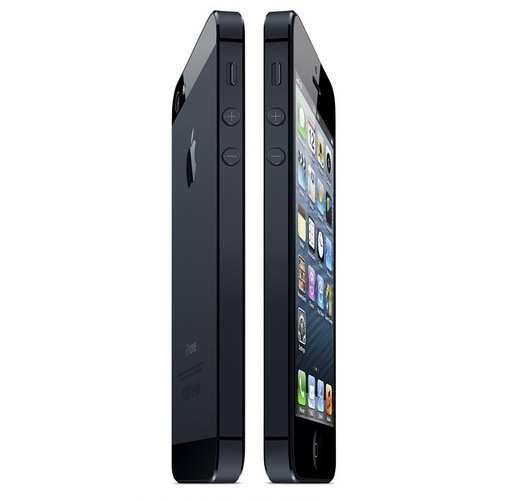
iPhone 5


At 7.6mm thin, the iPhone 5 – which will retail here from $799 – is the world’s thinnest smartphone, according to Apple marketing chief Phil Schiller. It’s 18% thinner than the iPhone 4S and, at 112 grams, is 20 percent lighter.

It has a four inch 326ppi display and 1136×640 resolution. Previous iPhones have had a 3.5in screen. There’s now a fifth row of icons on the Home screen, and apps can display more information. Older apps will be ‘letterboxed’ with black bars on either side.

The iPhone 5 has 4G LTE capabilities, though at this stage we’re unsure if this is compatible with Australian LTE networks. The new phone has better WiFi too, 802.11 a/b/g/n, 802.11n is 2.4GHz and dual channel 5GHz, up to 150 Mbps.

The device is powered by an A6 processor, which is two times faster than the A5, according to the company. It is also 22% smaller.

Apple claims to have exceeded the battery life of the iPhone 4S in the iPhone 5, with eight hours of 3G talk time and browsing, and LTE browsing, 10 hours of WiFi browsing, 10 hours of video, 40 hours of music and 225 hours of standby time.

The iPhone 5′s camera is 25% smaller, and has an 8 megapixel sensor (3264×2448), backside illuminated, hybrid IR filter, five-element lens, and a fast f/2.4 aperture. It also has a new low-light mode, and a sapphire lens cover helps protect your lens and make your images clearer and sharper.

There is also a new Panorama feature in the iPhone 5 that can capture a 28 megapixel panorama photograph in real time.

Apple has improved the video in the iPhone 5 too. It can capture 1080p HD video, has improved stabilisation, face detection for up to 10 faces and the ability to take photos while you’re recording.

The front FaceTime camera has HD 720p HD camera with backside illumination and now allows FaceTime over 3G in addition to WiFi.

There are now three microphones in the iPhone 5, one at the front, one bottom and one on the back. This aims to improve voice recognition. The earpiece is noise cancelling, too.

As expected, Apple has introduced a smaller dock connector with its iPhone 5. The connector has been reduced from the previous 30-pin design to an all-digital 8-signal design. It is 80% smaller than the previous connector and is reversable. Oh, and it’s called ‘Lightning’.

For older accessories that are compatible with the 30-pin connector, Apple has created a 30-pin-to-Lightning adapter.

The iPhone 5 runs iOS 6, Apple’s latest propriety system with Maps, Flyover, improved Siri, Facebook integration, Do Not Disturb, Passbook and more.

With Macworld Australia

Apple masterclass in building pre-event buzz

With under 24 hours to go until Apple’s ‘It’s almost here’ event, where the new iPhone 5 is expected to be launched, it seems the city of San Francisco, the media, and the internet as a whole are ready to party.

Apple is typically tight-lipped in the lead up to this announcement, with no official responses to the multitudinous rumours that circulate before major product announcements, allowing the discussion to become even more varied and hysterical to consumers inside and out the brand’s loyal following, as well as commentators from the tech to business media.

Apple iPhone 5 launch teaser

Therefore the buzz is largely self-perpetuating – or at least appears to be from the outside – with Apple content to tease tech-watchers with even the announcement of the announcement (right) giving away the minimal-required information, and lighting up the venue in the days leading up to the event (below).

Marketing‘s sister publication Macworld Australia was sent the below images by Matthew Mikaelian of IDG Global Solutions. They show the Yerba Buena Centre for the Arts in stunning colours, where Apple CEO Tim Cook will soon take to the stage for the official announcements.

apple iphone 5 event 1

apple iphone 5 event 2

apple iphone 5 event 3

apple iphone 5 event 4

Images: Matthew Mikaelian

Virgin Australia confirms Passbook app will land in Aus

Virgin Australia has confirmed reports Apple’s Passbook app is already functional in Australia, and formally announced its support for the ticketing and loyalty app.

Passbook, which will feature in the upcoming release of Apple’s iOS 6 operating system, is designed to act as a central point for boarding passes, tickets and loyalty cards and touted to be a precursor to a mobile payments system.

Virgin Australia tweeted:

Virgin passbook

“The rumours are true, we’ll be supporting Passbook for iPhone – more to come soon! pic.twitter.com/S0xTzUAo“.

Virgin Australia’s Melissa Thomson provided more detail in an emailed statement.

“Virgin Australia is planning to release mobile compatible technology allowing guests to store boarding passes using Apple’s new Passbook application,” Thomson said. “We believe that we are the first Australian airline to offer this service to our guests. Boarding passes stored in Passbook will be automatically displayed on guests iPhone screen at time of boarding.”

The tweet was in response to a report from the Australian Business Traveller who said a Virgin Australia passenger, Shaun Lorrain, checked in for a flight from Adelaide to Sydney on Friday using the airline’s mobile website; iOS 6 detected the check-in and offered to save the information into Lorrain’s Passbook account.

“Today after checking in last night and adding it to Passbook, I went straight through Adelaide Security to the lounge,” Lorrain told AppleInsider. “Had my breakfast and then proceeded to the gate. They took my iPhone and scanned it the exact same way they would have if I was using the web URL that they text you for a boarding pass.”

Passbook will also aid airline travellers by providing up-to-date information on delays and boarding gates, Marketing understands.

Four airlines are believed to be rolling out Passbook support for their passengers, with Electronista reporting American Airlines, United, Virgin and Delta preparing for iOS 6-carrying customers.


Originally published on Marketing‘s sister site Macworld. Additional content by Marketing staff.