
New Myspace emerges with renewed music focus, Facebook integration

The new Myspace, registrations for which opened today, will allow users to sign in with Facebook, return to its roots as a music-focused service and appears to feature a horizontal Pinterest-style interface.

Fifteen months after the social network was acquired by US-based digital media company, Specific Media, a video has been released introducing users to Myspace’s new layout and functionality of the site.

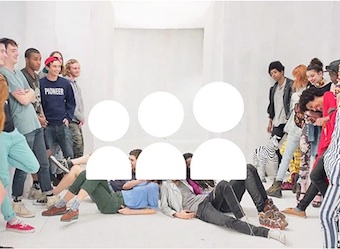
Redesigned by Brisbane agency Josephmark, the service is set to return to its roots in music with the launch video featuring Justin Timberlake, who also has a stake in the relaunching business. From the details shown in the video, it appears Myspace will enable users to connect with artists, browse albums, find popular songs and follow what their friends are listening to.

The video also reveals that it will be possible for users to log in with Facebook or Twitter and import photos or other information from there. The layout takes on a pinboard-style appearance while status updates look similar to the mobile app Path.

Mashable reports that Myspace has entered into a partnership with Panasonic, whose new range of VIERA ConnectT-enabled HDTVs will feature an app called MySpace TV, allowing viewers to see what their MySpace friends are watching and comment through the TV set, smartphones and tablets.

More to follow.

The new Myspace from Myspace on Vimeo.

Dear Google, Don’t be evil. Kind regards, Twitter, Facebook & Myspace

Engineers from Facebook, Twitter and Myspace have responded to Google’s introduction of social search by creating a social search tool of their own.

The rival engineers have shown that Google does in fact have the ability to index search results from other social sources, a capability it failed to include when it launched its new social search feature, Search plus Your World, two weeks ago.

The tool, dubbed ‘Don’t Be Evil’, uses Google’s own relevance measure – the ranking of its organic search results – to determine what social content should appear in the areas where Google+ results are currently hardcoded.

The tool’s website, focusontheuser.org, claims that all of the information comes from Google itself, and all of the ranking decisions are made by Google’s own algorithms, without access to any other APIs.

Consisting of a ‘bookmarklet’ that works in Chrome, Firefox or Safari, the tool changes three parts of Search plus Your World that currently shows information only from Google+:

  • People and Pages results,
  • Google+ site links, and
  • Google+ suggestions in autocomplete.


It was created, as the site says, by engineers at Facebook, Twitter and MySpace, who in turn consulted with other unnamed social networking companies.

As an example of how the tool works, the site shows how social results for the generic search term ‘cooking’ have been manipulated to exclude other social networks.

“When you search for cooking today, Google decides that renowned chef Jamie Oliver is a relevant social result,” the site reads.

“But rather than linking to Jamie’s Twitter profile, which is updated daily, Google links to his Google+ profile, which was last updated nearly two months ago.

“If you search Google for Jamie Oliver directly, his Twitter profile is the first social result that appears. His abandoned Google+ profile doesn’t even appear on the first page of results. When Google’s engineers are allowed to focus purely on relevancy, they get it right.

“So that’s what our bookmarklet does. It looks at the three places where Google only shows Google+ results and then automatically googles Google to see if Google finds a result more relevant than Google+.”

The tool reveals that perhaps Google isn’t as focussed on what’s best for its users as they would have us believe.

Filling the space – Myspace brand profile

This feature first appeared in the December 2010/January 2011 issue of Marketing magazine.


Can the former king of social media turn the tide or is time to swim elsewhere? Sean Greaney investigates.

I haven’t touched myspace in over four years. And that’s precisely what convinced me this brand was worthy of a cover story.

Social media brands have always been Icarus – even as they rise, the fans know the wings are predestined to melt. Myspace was the earliest global social media Icarus, and its descent was pointedly cheered on – and stones thrown as the News Corp parachute deployed.

So, if that is all a fait accompli, why am I interested?

As the brand that took a category to the mainstream, the history of myspace is that of social media and its relaunch is a hope to remain part of that history. Picking day dot for social media is as contentious and ideologically driven as picking Earth’s beginning. The more popularly expounded duality puts it either around the late 90s/early naughties when LiveJournal and Friendster rose, or much earlier with services such as Usenet (either way there’s definitely an element of pioneering elitism in having participated in those early days). If you subscribe to the latter, no matter when it began participating, your brand is 30 years behind the eight ball.

Some of the new media ill will toward myspace is a case of flying with the crows: the brand is owned ultimately by the poster boy of traditional media, Rupert Murdoch. But the start-up myth for which many yearn, and which offers a usefully opaque moral halo, isn’t the way myspace was birthed.

In 2002 Intermix Media (then eUniverse) employees were witnessing the success of Friendster, and thought they could do better. They were able to resource the venture quickly using Intermix Media’s infrastructure and, importantly, seed the service to 20 million of its own users and lists. It held competitions among staff, rewarding those who could sign up the most members. There’s even a belief that Tom Anderson, formerly any Myspace user’s default first friend and at the time president of the company, was really a public relations invention. Newsweek found his age had been lowered to appeal to a younger generation (when he was that generation’s age, Anderson hacked into a Chase Manhattan bank, resulting in his computer being confiscated by the FBI). This was never a garage operation. Despite general perceptions, it wasn’t a rare strike of zeitgeist-lightning for a young entrepreneur.

It’s debatable whether boarding this information up was purposeful and/or beneficial, but it certainly meant that when Murdoch swooped on the then social media darling with his $580 million talons, perceptions changed. This ‘little’ start-up was surely about to lose its soul to the global media conspiracy. It was the beginning of negative sentiment toward the brand and social media schadenfreude as Facebook overtook it. The King was dead, long live the King.

“The [proverbial] hockey stick was still going up when we joined,” says Nick Love, myspace Australia’s managing director. “So Myspace started around July ’06 in Australia in terms of local presence, and I think I ran into Rebekah [Horne, currently senior vice president, international] somewhere, and she said, ‘Right, you’re coming with me.’ I think I was working covertly for my notice period with Soundbuzz for a few months, but officially started in December ’06 running the business development function, which I did until April this year when I got promoted. So it’s been a wild ride. Business has changed quite a lot since the very beginning in those days, and the market has as well.”

Love’s career pedigree has ticked all the boxes on the way to his current position (with the exception of two years as a self-described “very bad” lawyer). There was a strategy role with Electronic Arts, before he was promoted to a role managing and launching its AFL, rugby and cricket lines, followed by “chasing the dotcom dream” in an interactive TV start-up called Ice Interactive, then a commercial role with ARIA (Australian Record Industry Association), with a final stop in an early digital music company called Soundbuzz.

When Love joined, Myspace had only been part of the News Corporation fold for six months. Paid music was still very much in force and streaming free music seemed a little… Napster-ish. Myspace was the most trafficked site in the world and the fastest growing in the world at the time, and backed that up with a delirious amount of ad inventory; it was unsurpassable in terms of digital reach.

“There was no shortage of being able to get a meeting with anyone you wanted back in those early days… I can remember going out with the News Digital Media sales team who rep’d our site early on, and going to media agencies and doing really basic social networking 101 education sessions. Because social networking was pretty small at that stage, and myspace around that time had about two million unique users and growing, primarily teenagers and young adults, and anyone outside of that age group really didn’t know anything about social networking, other than they’d heard of this thing myspace that all the kids were into, and they’d heard of the bands that had been found on myspace. But it wasn’t as ubiquitous as it is today, where you hear people saying, ‘My grandmother’s on Facebook now.’ So a lot has changed in the way people use social networking and general social media in three or four years. It’s night and day.

“We also built customised communities and managed those for brands at a time when brands had no idea how to engage consumers in a community environment, and we were really helping lead a lot of their early trials and experiments with engaging with brands to where the market’s at now, where brands can build their own Facebook or myspace page and not talk to either us or Facebook… The market has grown really, really quickly from that perspective, where here we were being looked to as the guys who provided all the knowledge, at that stage, to brands. And even then, the change in the way advertisers understand it from then to now is unbelievable. Back then it was more a case of how many friends have I got? Or I built a Myspace page and nothing happened, because I just put a page up expecting community to occur naturally without understanding what was required to invest and feed, and really provoke conversation, if you like, to where it stands now. And that’s only four years.”

Keep in mind we’re discussing a brand whose peak is only two years behind it, and founding only eight years.

“A lot of brands actually didn’t even know what engagement metrics were. I can remember dealing with one client, who will remain nameless, who was just more interested in making sure we had contractual obligations around the number of friends that we generated, and they couldn’t tell us, despite asking them, what did they want to do with those friends? And then their final response was, ‘Well, you’re the experts, you tell us.’

“One thing was it’s just about the number of friends and that’s deemed success or not, as opposed to what was provided, how those users were engaged, what was the ongoing communication plan with those guys, was it tactical or long-term – a lot of brands didn’t really even know that and, even then, we had to try and educate, but sometimes it was just too different for a lot of people. But that’s to be understood; it was an industry that was just starting, and had really come from nowhere and had scaled at a rate that really no one else had ever scaled at so quickly, and a lot of marketing departments had to understand it really quickly and mistakes were made on all sides. But it was a crazy time. It seems a very structured and disciplined mature market in comparison now,” smiles Love.

Myspace’s old platform was indicative of the way this medium has been (mis)understood: generate as many users as possible, each creating new pages, content and, therefore, inventory, then sell the eyeballs. As it’s matured and became understood in the terms of just about every other content-driven media, the market has come to understand that engagement as well as demographic varies across platforms and properties. This external understanding came before myspace’s ability to internally realise a coherent offering, instead of its days covering restaurant reviews, horoscopes, weather, job boards etc. Or perhaps it’s really just the old story of a company losing focus on its core offering, which was social networking.

“At that point in time, we were really focused on a lot of tactical promotions and programs and events, like Nick mentioned,” adds Mark Bulgin, marketing director for Australia/New Zealand. “Because our audience was growing, there was nothing we could do to either accelerate or decelerate that growth. It was just happening of its own accord, the momentum was there. Whereas now we obviously face a different challenge, where we’ve had to really go back to our roots and build back up again what our brand stands for and what the site really needs to be able to focus down on and do, and deliver well to the best, most innovative, level that we aspire to now.”

The internal belief driving the brand’s relaunch is the social media realm has matured to the point where people aren’t looking for one platform to rule them all, rather the right mix and identity separation from platforms fulfilling a variety of functions: that Facebook is for connecting to people you know, Twitter for news and gossip and that myspace can be for connecting to those you don’t know through shared entertainment interests. And they’ve gone about confirming this in a Dr Harry Harlow fashion. Chief revenue officer, Nada Stirratt tells me about a 10-day deprivation study the brand inflicted on 50 heavy users.

“In this deprivation setting, when we took Myspace away, that’s where it surfaced that a lot of the myspace social graph, if I’m the [core audience] myspace 25-year-old, a lot of my social graph I don’t know in ‘real life’.

“We got to see where people were going and spending time when they couldn’t be on myspace, and it was actually interesting because they didn’t go to any one particular place. They had to go to some place for entertainment content, another for sports content. They had to go to other places to find new users and new friends, so it was very interesting where they ended up going, when they couldn’t have myspace.”


Communitycations

I arrive at Myspace’s Surry Hills offices 30 minutes early. An immaculate green and white fixie leans against a wall, Polaroid style prints of favourite films and CDs suspended in its spokes. Later, when my PR escort arrives, we share a laugh at its milieu perfection and he explains it belongs to an über cool French employee. While waiting, I get the opportunity to see the unvarnished goings on – something many PRs dread and do their best to cloak with ‘smoke ‘n’ mirrors’ through one of these profiles. The place is young and relaxed with a pregnant tension – bags under the eyes are ubiquitous. What I had dreaded was spin in my conversations leading up to this profile is actually reality… people are excited about the relaunch and are discussing it before first coffees. I couldn’t be coaxed into a conversation about my own lottery win at this stage of a morning.

My timing is both perfect and aggravating. You’ll be holding this magazine in your hand just as you’re able go online and see the new offering (and write condescending emails to me explaining how I was wrong!). But my interviewees are gagged by the US on discussing most of the actual marketing strategy. Problematic given our masthead.

“Yesterday, Sunday martinis at our business development manager’s house, we were just sitting and debating [about whether we could discuss the B2C campaign with Marketing] and we got told to stop talking about work,” laughs Bulgin.

I infer the point of contention is the US isn’t 100 percent convinced on all of the input Oz and the UK have had (Myspace’s largest markets are the US, followed by the UK, Australia/New Zealand and Germany).

“We’ve been in the business pretty much since the international expansion and [under] the original management of Myspace; we really had very little input into that level. We were an afterthought, whereas now the biggest shift I’ve seen from the management is actually being a globally focused – that word ‘focus’ again – internet business, rather than a US one that had these international offices that were kind of an afterthought, which is really refreshing. It validates a lot of the great ideas that come out of this office,” says Love.

So while lips are sealed on the full B2C campaign, the top level strategy seems to be about earning recognition through relationships rather than a focus on bought media. The negativity the brand combats has led to an understandable reticence to speak for themselves. While the changes to the platform are massive, Love believes that the fact they are a reaction to user behaviour (and backed by the extensive behavioural data Myspace collects) means explaining the new system to current users won’t be a big issue.

“They’re starting to understand, because clearly their usage is doing the talking for them, and it validates our strategy. The next step is how you go beyond the group of people that use the site today to either bring back a lapsed user or to attract a user who’s never been to us before. That’s a challenge for us and that’s something that there’s a number of different elements to that strategy… which is obsessively serving those social leaders to tell your story for you, as well as more traditional elements.” says Love.

“We’ve been maintaining a dialogue with a range of different social media [identities] who aren’t necessarily Myspace users. They may be quite well-known in an offline sense versus being an online identity,” explains Bulgin. “But we’ve been engaging with them for quite some time now, just having a very open conversation about what their behaviours are online, and with social media, what their perception is of Myspace. We introduce them to different products as they get released, and we have found that having that dialogue gave us firstly some insightful feedback, and secondly it gave us a great way to be able to communicate our message without it coming necessarily from us. Because we’re a platform that enables other people to connect, it’s an interesting challenge in terms of how you market that, so it doesn’t seem like it’s a traditional brand communicating at you. So one interesting way we’re going to be communicating is certainly by engaging with a larger number of those influencers and social leaders, and really seeding different content and different insights into the brand and into the platform, in hope that they then talk about it among themselves and with their audiences.

“It’s going beyond the technology and the data, as important as they are. It’s going down to a language that will resonate with people on an emotive level, so focusing in on that connection that we make possible between people and what they’re passionate about, making that very clear and making it fun as well; I think that’s going to be really critical, because we are a fun and exciting brand; we don’t want to be vanilla or corporate.”

And the rest of the consumer stuff is mum.

In fighting the ‘It’s not Facebook’ factor in local B2B, the brand ran a trade event, ‘The Next Chapter of Social Media’, with Mike Jones keynoting – but of course inviting many a non-myspacer to present.

“So that was step one,” says Love, “and since then, I’ve lost count of the amount of agency digital team presentations I’ve given. We’ve been out talking with the market, communicating, sharing our vision. So far, it’s been very well-received. Early on, it was getting upfront the difference between us and Facebook. Now, most agencies understand that completely. I think the final step will be whether in the online measurement space we’re classed in the social networking space or in another category all together, because we’re really becoming rapidly different to Facebook to the point where we are such a complementary experience. As you can see, you can sync your Facebook account to your Myspace account now. So if we were arch competitors, we wouldn’t be linking up our accounts with them to help you broadcast content out that you’ve discovered online.

“Probably the launch of Myspace Music in October last year was the first really big ‘aha!’ moment for a lot of advertisers… as we continue to learn from what we did in music, to evolve that into movies and celebrity and general entertainment, [it] was a really important step. It will be a gradual change. There will still be people in media land that think we’re competitive to Facebook… It will be an ongoing process that we’ll need to keep doing, but over time, as long as we keep our focus on product, at a marketing level, that change in perception will continue to happen. But, if you don’t have focus, it’s very hard to change people’s perception of you.

“It’s actually not a big change in the way we sell; it’s actually more a market education process. The bigger challenge for us will be how we communicate that through to a large base of existing and potential consumers over time… rather than communicating the change to the media industry.

“What is important as well, it’s not a light bulb, ta da! It’s really a line in the sand where there’s an ongoing process and that’s another thing that I’ve had to temper people’s expectations internally and externally: it’s not just this brand new Myspace that turns on next week or this week, and that it’s the cure for cancer. It’s actually step one, which is that redesign, revisualisation of the site and an evolution of some existing foundation products, and then moving forward we’ll continue to roll out the stuff. So the marketing plan is kind of reflective of that as well. It’s not like we’re a few days before launching date and don’t have a marketing plan. It’s actually an ongoing phased approach.”


The ‘futura’

Focus. I suspect the word is suspended on a small piece of film floating just over the retina of every myspace employee ensuring it comes up in all conversations.

The new myspace is all about entertainment across music, movies, television, games and celebrities. It’s not about horoscopes, being the only social network in town (rather the opposite) or job boards. It’s about Gen Y and damn the rest of you geriatrics. In focus it trusts.

Unfortunately, my job title means I wasn’t trusted to play around in the new website, but the demo given was impressive. It’s simplified and elegant: indicative is a move from the 117 logo styles, 152 templates and 81 button styles of old to one logo style, seven templates and two button styles.

It tackles the severe user experience and accessibility issues that saw, during the glory days no less, PCWorld.com rank it as the world’s worst website. These issues arose due to the platform’s openness to user customisation – which sounds great, except most people aren’t expert in HTML and CSS, let alone user experience design or web standards compliance. Basically, many current myspace pages mirror their demographic’s bedrooms.

“I like to think that we educated the world on html,” agrees Mike Jones, CEO of myspace. “A few months ago, we began a process where we released a new profile format to the world… The new profile allows rich customisation, so people can still create amazing themes and visuals to represent themselves, but it does have some standard navigation, meaning that I can be as loud as I want on my profile, but I still will have the left-hand nav.”

The new site lays bare the trends users are essentially voting up by sharing content: the current number one song, artist, comedian, TV show etc. It aims to drive users into different areas of the site by featuring the number of other users currently in a section. Members input their interests and become followers of a variety of entertainment sources. Those sources then form your news stream – broken into either relevancy or live streams, and further viewable in a manual fashion, a magazine layout fashion that also highlights social interactions with the content or, and I’ll be interested to see this develop, an automatic lean back video style that plays through all the current content in your stream. Any social interactions in this view are just layered on top in real time. And, importantly, all of those sources informing news feeds can curate content on their pages.

It looks cool.

“The design supports elements of real time, in that you can see who’s on, who’s consuming what type of content when; we can see what’s trending. We give you the ability to really understand the pulse of pop culture and what’s happening on Myspace at any one moment,” says Jones. Mike Macadaan, vice president of user experience and design. explains the platform’s capabilities for brands using the hit TV show Glee as an example. “On this page, a ‘topic page’, this is all of the content coming in from all of our sources on and off Myspace. It’s really optimised for the content of each of these grid items, giving you some nice viral tools to use, as well as live activity around how many views, follows and likes occur, and then anytime there’s [an interaction], it will just appear without you refreshing the page. On the right hand side here, we’re going to highlight who’s at the page… the top trend setters [the people most influential when it comes to Glee] and then we give you a little bit of a breadcrumb trail on who discovered it first, to expose how you become a big trendsetter in the context of this topic.”

The way these topic pages are populated with content is through the aggregation of information from publishers and bloggers, which is then broken into specific areas of a topic page.

Macadaan is also keen to discuss an element that is a glass bonnet on the information engine. “The Trends page is a very engaging way to see the top songs that are currently being listened to on myspace,” he says, “and you can actually see them battle it out and see the number of listens that are happening. And then right below there you’ll see all of the people that are actually listening to that artist. At launch, we’ll have songs and videos; you can actually do this against video watches, and this again is just another very interesting way to discover people and content.”

But let’s stop dancing about architecture. Without having soaked in it, I have to take it at face value – albeit a pretty face that from across the room looks to have a lot going on behind the eyes.

The four behaviours, or ‘core actions’, Myspace says drive the new platform are: discover, create, collect and relate. ‘Discover’ being connecting to a broad array of real-time content, ‘create’ the ability to build a persona through entertainment preferences and customisation, ‘collect’ the curation element and ‘relate’ the social elements. The big thinking behind all of this is aiding a user experience and business outcome of the ‘discovery of content through people and people through content’. Curators and brands will be core to this.

Curators, those users with huge and/or dedicated followings and influence over them, will be able to corral content from both Myspace and outside sources. The platform will reward these actions through virtual badges, access to special tools and privileges and, I’d hazard, offline rewards around the brand’s events. And, yes, I wrote ‘virtual badges’ – it worked for Foursquare, even as those compelled to earn them (aka me) ridiculed the idea. While myspace remains mum on the subject, it does look as though curators will be showcased as site-celebrities on various pages as vehicles to drive users to specific content.

The ‘relate’ element of the plan aims to have algorithms recognise similar behaviours and tastes in entertainment content to connect individuals to individuals or curators… or brands.

“Let’s say you love independent music and, of course, you’ve already connected to all your favourite independent music bands on myspace, but you want to find more. We absolutely have algorithms that help recommend you bands, but we also want to showcase curators to you. And what we found is that if you love independent music, and we connect you to somebody who is a curator, who is an aficionado of independent music, then you actually become highly engaged within myspace, because every time you log in, you get connected to more and more good stuff that drives you to use Myspace more and more, and connect to more and more new things. So through both this topic page system, that’s very much kind of the technical side of the world, and then our human element, curators, we believe that the mix allows us to provide the richest social experience that will create this kind of personal environment for people to engage in,” explains Jones.


Money can’t buy

I have a confession: at the March Myspace Secret Show I snuck into the artist area during the headlining Edward Sharpe and the Magnetic Zeros set and drank Tanqueray Ten and Patron with support act Cloud Control. We then took all the best promo products. Sorry. But drunk musos and journalists stealing from you… now that’s authenticity for your brand extension.

The Secret Shows are promoted online two or three days before they happen via mobile, and entry is on a most-willing-to-sit-on-a-dingy-Fitzroy-street-for-12-hours-to-be-first-through-the-door basis. They’re more intimate, less stadium and if you’re thinking, ‘Who is Edward Sharpe and are these shows solely populated by an über niche of Gen Y hipsters wearing pink pants and hound’s-tooth mackintosh combos?’, show 150 was celebrated in 2008 and other headliners have included: The Cure, Lily Allen, Placebo, Moby, The Killers, Gnarls Barkley, Franz Ferdinand, Powderfinger, Silverchair and Sigur Rós.

The shows were borne “out of the editorial team in the US… Fan culture is a really important part of where the Myspace brand plays in and, like you were saying, translating that offline was a really powerful way for us to take our brands offline and really connect with people in that sense,” says Bulgin.

Love believes the Secret Shows validate Myspace’s claim as a trend spotting engine, citing the recent Bring Me The Horizon Secret Show taking an unknown band to a number one ARIA album in two months.

“That’s a pretty good validation of our ability to spot trends and also to bring that kind of content to our users as well in another platform other than just online,” says Love.

Australian sponsorship partners have ranged from Optus taking a year-long tenure, to the Commonwealth Bank’s debit card associated with music, to Telstra as part of its ‘Party Catchers’ campaign.

“Some brands are happy to have their logo associated, and other brands want quite extensive product sampling opportunities, trial of their products, and varying brands do those things to varying degrees of success,” says Love.

“If you look at Secret Shows and Black Curtains, they’re very much Myspace formats where we have presented by sponsorships, and some varying degrees of customisation around the outside of that, but first and foremost they’re Myspace formats. But we have also created bespoke programs and managed bespoke programs for brands as well that were very much customised for the brands to be part of the campaign as well. So we’ve got quite a lot of expertise in running events and knowing what works to drive an online community offline.”

Stirratt believes these offline executions demonstrate the difference between Myspace and Facebook users. “The Facebook consumer is quite a bit older and they go in and out of Facebook to communicate with people they know,” she says. “On the Myspace side, it’s a younger audience that comes in to consume entertainment content, and to bond with people who they may or may not know, but they’re both rabid fans of that content. And there was a very interesting study – we didn’t do this, it’s called the Chitika study. What they do is they measure all the social media out there and determine why people are going to them and what they’re doing on those sites. Fifty-one percent of the people who come to Myspace come to consume entertainment content, where in Twitter, people go to look at news and Facebook people go to look at people.”


Come together 

None of Myspace’s moves have so signalled the paradigm shift as the integration with Facebook updates. I am sceptical that the arsenal has been lowered in combatting industry comparison, but this one move stuffed a lot of money into the proverbial mouth. At this point, the comparison does belie a misunderstanding of what this space has become – it was once quite fair, but anyone in the know would laugh at a comparison of Foursquare and Facebook, Twitter and LinkedIn or vice versa in either case. Different audiences, different offerings.

“I think we get compared to Facebook a lot because we were the first social network to scale globally and were a lot of people’s first ever interaction with or understanding of social networking. We did a lot of things first that we sometimes forget about at the time, and the market has moved on and the market has moved to a point where Facebook has become this underlying communications platform, because they focused on standing for one thing, which was really a communications utility and doing an amazing job of it, whereas we tried to have a bet in multiple camps. And, when you lack focus, you have people who are focused in certain areas coming through and eating your lunch very quickly. So, in some ways, it’s an unfair comparison, but in other ways, you can understand it given the history and the timing of when Myspace and Facebook emerged,” Love concedes.

The brand plans to encourage its users to use the two platforms as complementary to each other.

“We’ll definitely be talking about Facebook and Twitter as partners, and we’ll also be organically encouraging our users to use the product in the way that we’ve designed it, so that they can see this is a unique product for them, and complements anything else they use,” says Bulgin.

And unofficial sources suggest we’ll see even greater integration between these social media platforms. When pressed, Love at least leaves scraps about the rabbit hole…

“We’re committed to being as open as possible and integrating with as many open platforms as possible. That’s the way of the web. How far we go down that path, I can’t really comment on that today.

“And, if anything, I don’t see Facebook as a competitor. I see Google and Facebook being more competitive if you talk about different ways to search for and discover content… the term social media will probably cease to exist to some degree in coming years, because websites generally have to become more social to keep up with what consumer expectations are and consumer behaviour.

And then there was Ping. A cursory view suggests that Myspace’s formidable partner, iTunes, is ready to stomp on toes. There has been a joyous chorus in the press calling Ping the Myspace killer. Followed by a dirge, when it revealed itself as a social shopping experience, not to mention one difficult to access for unestablished musicians.


A place for friends no longer

With the blood of Gap’s rebrand dripping freshly from their e-lips and specks of the iTunes 10 logo carnage splashed about the whiskers, the online community was given a sneak preview of the new Myspace logo being a ‘my’ followed by a literal space. A sample from @C47’s (sometimes known as filmmaker Joey Daoud) Twitter account: “Only two more characters left and Myspace will forever be deleted from the internet.”

TechCrunch broke the story earlier than Myspace had planned, and that omnipresent schadenfreude the brand has learned to live with is blatant in that article too. “If the iTunes 10 logo and Gap logo fiascos have taught us anything, it’s that people hate logo change, so people are inevitably going to hate this (I can’t wait for the comments section of this post),” warned the blog.

It wasn’t as bad as the journalist had predicted (quite a few comments were fuming with indignation that she’d labelled the font Helvetica when it was clearly font name). A few brave souls actually lauded it, and weren’t attacked for their opinions. My initial reaction was a forehead whack, but I’ve actually come to appreciate it’s at least a move with cojones.

“It’s common. People seem to be a bit taken aback by it at first, but once they see beyond the empty bracket, they start to see what’s sewn into that. They see it as quite bold and creative, and quite forward-thinking and artistic in its approach,” says Bulgin.

The ultimate vote of support has come in an unofficial logo generator springing up already (logomyspace.com). Love loves the logo, and says it’s been an advantageous talking point in starting trade discussions.

“It’s people talking about our brand, which in the past they haven’t been, or haven’t been as much as they once were. And when you’ve got an opportunity to talk to people about something like that, it gives you another opportunity to share what your message and your vision is,” says Love.

While the open bracket will be an outlet for user creativity, I’m confident it will be available in a reserved capacity to advertisers – Myspace remains cagey on the subject.

The problem with the logo is it’s actually an elegant reflection of social media itself: Facebook, Twitter, Myspace, LinkedIn etc would require me to explain their function if they weren’t populated by user content. This logo requires the same. And, had the planned launch date swung around without a leak, I dare say this would have been communicated. I haven’t picked up the green fixie just yet, but some of the excitement in that Surry Hills office has rubbed off on me. Whether the relaunch brings back the halcyon days myspace hopes for or not, we’re about to learn where this medium is in its development.

Just as the logo overtly embraces the idea that consumers own your brand, we’ll soon know whether they’ll give Icarus back his wings.

Google stays a Myspace friend

Myspace and Google have announced a multi-year agreement to renew and expand their long-standing search and advertising relationship.

Under the terms of the new agreement, Google will continue to power Myspace search and search advertising and will also provide additional display advertising services. 

“We’re thrilled about renewing our partnership with Google. Their best-in class technology will continue to provide our consumers with a robust search experience,” said Nada Stirratt, Chief Revenue Officer of Myspace. “We look forward to participating in the Google Display Network and DoubleClick Ad Exchange to increase yield across our display ad inventory.”

“Were excited to deepen our partnership with one of the largest social Web properties in the world, Myspace,” said Henrique de Castro, vice president of global media and platforms at Google. “We’re pleased that our technology will benefit Myspace’s users on its newly redesigned site, and that Myspace has chosen our display advertising solution to increase its returns.”

Myspace mashes up Facebook

Myspace’s newest mantra is if you can’t beat ‘em, mash up with them. 

The new Myspace has now gone fully live in Australia, with new profile templates, a renewed focus on music and entertainment, and an embrace of Facebook users with the new ‘mashup’ function. 

The mashup function is a one-click set-up, where the ‘likes’ and interests of a user’s Facebook profile are ported over to Myspace, so the user’s Myspace stream feeds stories and info they have designated their interest in.

Users also have the ability to program their own streams based on recommendations and trending topics on Myspace, while also engaging with other fans that share the same interests and passions in music, celebrities, TV, and movies.

“We are thrilled to further our collaboration with Facebook through Mashup with Facebook,” said CEO of Myspace Mike Jones. This new feature is a great illustration of our strategy around social entertainment and enabling the real-time stream.

The stream is one of our most popular features on Myspace, and it is now delivering an even richer entertainment experience of relevant content for our users to enjoy. I’m particularly excited because so many people will be able to have the immediate satisfaction of enjoying their own entertainment program that they have customised themselves as well as connecting to all their passions and to the Myspace community at large.”

Check out the December/January issue of Marketing magazine, which features a superbrand profile of Myspace. On shelves Wednesday 24 November.

Social media attracting more spend

Nielsen has released a study suggesting that marketers are allocating more of their budget to digital than TV, radio or outdoor.

The Community Engine 2010 Social Media Business Benchmarking Study also found that 70% of all Australian businesses intend conducting some form of social media activity this year, compared with just 40% in 2008.

The study, commissioned by social networking technology company Community Engine, found that businesses are moving a significant percentage of marketing budgets out of traditional media into social media – the greatest shifts of budgets were out of print media (47%) and direct marketing (33%).

Unsurprisingly, of the 347 organisations surveyed, many struggled with how to measure return on investment (ROI) in social media, with 29% indicating they had either not measured ROI from their social media activity or did not know how to.

In the SME sector, growth in the uptake of social media has been even stronger – in 2008, just 32% of SMEs used social media, which has more than doubled to 67% in 2010.

More than half of large businesses had allocated funds away from traditional media to fund social media – an example the report points to includes Jetstar’s decision to redeploy 40% of its marketing budget to social media.

Although 26.5% of Australian businesses now have a Facebook presence (17% on Twitter, 10% on YouTube and 5% on MySpace), the study revealed a high level of concern about ownership and control issues around third party social media platforms and their impact on customer relationships.

More than a third of big businesses and 27% of SMEs said they would prefer to create their own social network as an extension of their own website.

Melanie Ingrey, research director of Nielsen’s online division, asserted that Australian organisations cannot afford to overlook social media as an effective means of engaging with their customers and stakeholders.

“In the past year, there has been substantial growth in the number of consumers engaging with companies via social media, up from 23% in 2008 to 38% in 2009,” explained Ingrey.

However, the difficulty of measuring ROI or uncertainty on how to establish KPIs for social media were perceived as barriers to entry by 34% of respondents.

Among big businesses, 42% also said the fact that senior management had not yet ‘bought into’ social media was a barrier to their organisation investing in it.

“The really smart companies are recognising that instead of putting all their social media budgets into the likes of Facebook and MySpace, they should be allocating funds to establishing their own proprietary social networks to provide them with the best possible insights, and a more connected environment with their customers and other stakeholders,” said Community Engine managing director, Piers Hogarth-Scott.

5 reasons why etailers shouldnt use social media

Very few things divide opinion as much as social media.

To the evangelists, it’s the ‘great white hope’, the future of interactive marketing. To others, it’s the ultimate in snake oil sales. To online retailers, social media represents a fantastic opportunity to spam a willing target audience of millions. However, tread this path at your peril!

The reality of social media is not quite as straightforward. Truth be told, most online retailers are involved in social media for all the wrong reasons and as a result are seeing little or no reward from it.

So here are my top five reasons why online retailers should not use social media.

1. Because it’s free

There’s no such thing as a free lunch, so the saying goes, and this truism is certainly the case with social media. Just because a Facebook page or Twitter feed costs nothing to set up and run at the point of use does not mean it won’t require investment.

Strategy, understanding, positioning and brand awareness, are all critical parts of a good social media output, with execution only being relevant in their context.

Our overseas office recently ran a campaign for Lexus engaging bloggers on the hybrid car debate. This involved setting up their own discussion hub then integrating with a number of existing social media platforms and hiring expert bloggers (Bob Geldof being one of them) to start the debate. This was not a free exercise, but because it was strategically and properly thought through and executed, it exceeded every one of Lexus’s targets and KPIs.

2. Because everyone else is doing it

Nothing in life is more powerful and more dangerous than peer pressure. The clamour for brands to be involved in social media is deafening, with marketing managers across the globe all stating that they need to do ‘something on Facebook’ with no clear picture of what that something is, but more critically, what it is intended to achieve.

Just as you wouldn’t commission a web agency to just build you ‘some sort of website’ but rather work closely to a defined brief, also you need to have a clear idea of what you want social media to achieve before you head off and start doing it.

Until you have that, then it’s probably better to do nothing at all.

3. Because it’s a new way to advertise my products

Social media is not a broadcast channel. Let me repeat that: social media is not a broadcast channel.

No one is going to want to subscribe to a Twitter feed, for example, that simply spits out broadcast messages telling everyone how great your products are.

Social media is about engagement, listening to consumers, responding positively to their views and comments, good and bad. It’s about adding value to consumers lives, whether through content, freebies or customer service – not simply pushing your wares.

What’s amazing is that this really hasn’t seemed to sink in to brands yet. I guess old habits die hard. Just type any brand you know into Facebook and find their fan page. See how bland they are and lacking in engagement. Find one that does it well and the difference is startling.

4. Because it has a global reach

Does your business have a global marketing strategy? How are you perceived in other countries? What does your brand mean to internationals, if anything? How can you meet and satisfy global consumer demands?

If the answer to any of these is anything but crystal clear, then don’t kid yourself that creating a Twitter feed is going to open your brand up to the world. Also, remember that social media is becoming increasingly localised, with the trend moving towards more geo-locational search and interactivity. New services, like Foursquare, are using social media to encourage real-world interaction with the user’s local areas and are set to be a powerful trend in how we relate to social media over the coming year.

5. Because it will increase sales

I have to be careful here, as social media, like any effective PR or marketing strategy should, at its heart, be about increasing sales.

However, much like marketing and PR, this can be quite subtle and indirect. For example, a couple of years ago we built a local store extranet (sort of Facebook but for their network of offline stores) for one of our clients. This had limited direct commercial functionality other than to help the stores promote their events and give staff a platform to speak about the products they were passionate about.

Did it increase sales? Pretty hard to say directly, but it was hugely popular with both staff and customers and we can only assume the good will it generated was a positive asset for the businesses growth.

This is how social media can help, not by how many people click on a link on Twitter to buy a product but how it can help you position your business as an open, intelligent, trusted and knowledgeable beacon of hope in a sea of cynical commerce.

Progressing with social media: owning the data

Are you using social media to push your company’s message, gain a thought leadership position or generate new product ideas? If the answer is yes then thats great – consider yourself ahead of the curve. But if you are now wondering how to measure the effectiveness of your activity or if you have spotted that a lot of information is slipping through the cracks then it may be time to be rethinking your strategy.

Know what you want

The first priority is to define a goal. That goal may be as simple as generate new leads – or you may want to manage your brand reputation, segment your marketplace to communicate with them more effectively, or generate long term customer loyalty by forming an effective customer service channel. Think carefully about what stage your business is at and what goal is most important. Remember effectively utilising social media takes time so it is not possible to do everything. Focus on one goal and then set a realistic timeframe.

Know your tools

Once you have defined your goal you need to measure what is happening. Before meaningful KPIs can be set it helps to know how to define the metrics. The way to do this is understand the tools that do the measuring. They can be categorised into three groups.

  • Web analytics – One of the most important tools you, or your supplier, will need to utilise is web analytics. Google analytics is an extremely good free option but there are many others depending on what it is you are actually trying to do. Make sure you do your research and know what option is right for you.
  • Social media monitoring – There are a number of ways to monitor what is happening in the social media space. There are some free tools available but some of these lack precision as the technology is not consistently invested in or not enough effort is put into collecting the data. A well developed tool is worth the investment. Good monitoring tools can give you extremely detailed information: what people are saying about your brand, who is saying it, details of the demographics of your social media following and even what people are saying about your competition. The right data allows you to snare the low hanging fruit.
  • Data mining tools – To dig deeper into data it may be necessary to employ more advanced tools. You may need text mining to get an overview of what words or themes seem to be surrounding your brand or geo-locating comments to identify potential new markets may be essential.

Good choices require your knowing what type of data is available and how to best get your hands on it.

Choose your platforms

There are thousands of social media platforms operating in the market place. Facebook, LinkedIn and Twitter are three of the best known ones but there are many many others. These social media platforms are brands designed, like any other, to meet a specific need. What matters then is finding out what your customer needs are, then choosing the platforms that fit them best.

It is also well worth remembering that social platforms like Facebook and LinkedIn make their money through targeted advertising. This means that their most valuable asset is the users data – what they like, who they talk to, what stage they are at in life and so on. While this may make your advertising on these platforms cost effective it may also mean that you have limited access to the raw data. 

If your market is big enough you may need to set up your own social network so you can own the data and use it to define new products, segment your market and really understand what people are talking about. There are many ways to approach this, from blogs and forums to fully fledged social platforms with user profiles and interest groups. Dont get caught up in the technology, its your customers needs that are important.

Get going

Of course you will need to define how KPIs are going to be set, who is going to be managing the communities and how your reports are presented. But knowing what data is available and how to read it is vitally important. In some cases just collecting the data and really understanding your customers may be a goal the is adequate enough. 

Your customers are openly discussing their likes and dislikes, what they saw on TV and what they think of the news. There is also a good chance they are talking about you. If you want to get on the front foot and respond to that then get moving – start to collect data and make decisions based on what it is telling you. 

If knowledge is power then data is its generator.

Is your social media policy letting you down?

Social media has become ingrained in our daily lives. So much so that according to Hitwise, our beloved Google’s number one ranking was recently taken out by Facebook. 

Despite widespread usage, many Australian businesses have no social media guidelines. And while some have developed policies surrounding the use of social media on company time, they have been slow to develop adequate guidelines surrounding other (much more concerning) issues – what I like to call ‘the dark side’ of social media. This ‘side’ being the confidentiality, loyalty and privacy issues which are bred from these outlets which left unaddressed can incite user revolts, create multi-million dollar lawsuits and result in the discharge, or even prosecution, of employees (some famous examples include Kyle Doyle’s fake sickie and Domino’s PR disaster).

The fact of the matter is, employees are largely aware of their contractual obligations. But social media started off as just that: social. And the line between liability and freedom of speech is blurred by the various contexts in which social media are now used. Like most people these days, almost all of our staff have a Twitter, Facebook and LinkedIn account, which they use both socially and professionally. 

Looking at social media from a more positive perspective (after all, social media does have its perks for business: increasing brand awareness, showcasing thought leadership and driving traffic to your website, just to name a few), by setting guidelines organisations can harness the positive energy and enthusiasm of their workforce, and capitalise on it to spread positive word of mouth. Since we embraced this fact we have encouraged our employees to develop their social networks and discuss their work online we’ve seen really positive results (although I have to admit my initial reaction was to ban social media at work too). 

While there were initially some bumps in the road (before we put guidelines into place), and I certainly won’t proclaim myself an expert on the matter, we’re well on our way.

What’s worked best:

  • Revisiting brand communications and business guidelines,

  • Allowing employees to be themselves and have an opinion, and

  • Encouraging open and honest dialogue.

Whether you’re one of the lucky few brands with cult followings and/or great organisational culture or whether you’re one of the many still working to achieve consistency in communications, setting guidelines can only serve to strengthen your marketing efforts. Furthermore, adequate guidelines can equip employees with knowledge on how to handle negative feedback (and help avoid situations like this), empowering them to take ownership of the brand and engage in advocacy. 

Neilsen’s ‘Social Media Report 2010’ recently identified that 86% of Australian internet users look to fellow users for opinions and information about products, services and brands. The reality is, with or without guidelines, people are going to talk. We spend the majority of our lives working a minimum of eight hours a day, five days a week (for many of us much more than that), so the subject is bound to come up in conversation. The difference is, a comprehensive social media policy can protect your brand when it does.

My advice? Revisit your social media policy today. If you’re not sure where to start, a good place to develop a framework from is IBM’s Social Computing Guidelines. Looking forward, benefits you can expect to achieve may very well include competitive advantages for first movers, stronger organisational culture, improved consistency in communications and greater brand equity and brand loyalty. And if no action is taken? The competition will get in first, and you could miss out on valuable market share and very well lose face.

Company policies regarding social media are nowhere near where they should be. Social media has been around for a while now, and while the number of blunders that have hit the papers the past few years have made for a good laugh at the water cooler, we need to move past them. If we are going to take social media seriously we need to take social media policy seriously too.
Your thoughts?

State ad campaign takes aim at social media

The Victorian Government will launch an advertising campaign warning young people of the penalties of carrying knives.

According to police minister Bob Cameron, the campaign entitled ‘Knives scar lives’, was just one aspect of the Government’s approach to tackling weapons-related crime and would support recent measures to strengthen Victoria’s anti-weapons stance.

“We are taking strong action to drive down stabbings and tackle knife crimes head on. This campaign carries a strong but simple message: If you carry a weapon unlawfully, you’re in trouble.”

It will include out of home and print execution, however Cameron indicates that it will heavily push the campaign on social media and digital platforms such as Facebook and MySpace.

“This campaign carries a strong but simple message: if you carry a weapon unlawfully, you’re in trouble,” Cameron said.

Social networking safety crisis meeting called

The Internet Industry Association (IIA) has called a crisis meeting with a number of social networkers to push for tighter controls on offensive user content.

Facebook, MySpace and YouTube representatives attended the meeting following the defacing of memorial pages set up in tribute to two children who were murdered.

It was also revealed that while Facebook had a number of advertising staff in its Australian office, it had no cyber security employees.

According to a report in The Australian, internet safety on social networking platforms such as Facebook has been looked at by government and industry groups, including the issue that the Australia Communications and Media Authority and police are unable to do anything about cyber security on the platforms.

“The social networking members are very committed to child safety. The overwhelming conclusion is we need to engage as an industry to help the users of social networking sites,” explained IIA chief executive Peter Coroneos.

Why social media and marketing dont mix

The reason why social networking websites are so popular

You’ve seen the news, been to the conference and watched the YouTube video. You can’t hide from it; social media is huge. In fact Facebook has almost 8 million users in Australia alone and Twitter is growing at a rate of more than 1000% per year. Face it – your grandmother is probably on some sort of social network by now — just cross your fingers you don’t end up coming face to face with her on chat roulette one night.

But why are social networks so popular?

Social networks are the new town halls, the village greens, the community noticeboards; the piazzas of 2010. They allow people to communicate with each other, but just as importantly, they allow people to create an online extension of their personality. It’s that simple. In fact, it’s where the name ‘MySpace’ comes from. The creators allowed people (kids mostly) to create their own personal space on the web.

Once upon a time people had secret diaries, bedroom walls covered in polaroids, a box of love letters hidden under the bed and a little black book of friends names, phone numbers and birthdays. Everything was on paper, and people shared information with their friends by handing it to them in person. Now all that personal stuff is stored digitally and people share it via email, or by uploading it to their favourite social network.

And people share rather a lot of stuff.

In fact, the average internet user spends almost 20% of their working day sending and receiving email (according to Radicati), more than five hours a month on Facebook, about two hours a month on Google and an hour and 20 minutes each month on YouTube (according to Nielsen).

And those are the figures for the average user. There are plenty of Facebook and YouTube fans who spend more time on those sites than they do sleeping.

It’s no wonder then that marketers are so keen to get their messages into these mediums.

Where marketers have been going wrong

The problem is, people don’t like sharing their personal space with marketers. Ask anyone who’s ever been called at 8 am on a weekend by their phone company, had a Jehovah’s Witness at their door or been offered a penis enlargement solution. People accept that they’ll see advertising on TV, and in the right-hand column on Facebook, but once brands start trying to infiltrate conversations outside the space where they have permission too, people get annoyed.

Shopping centre giant Westfield ran a promotion in the lead-up to Christmas last year. The idea was that if you changed your Facebook status to “All I want for Christmas is a $10,000 Westfield Gift Card” you went in the running to win one. It certainly wasn’t a terrible idea at face value. It generated a lot of publicity for the brand with more than 200,000 people changing their status, but inevitably, the novelty wore off quite quickly and a dozen popular anti-Westfield groups sprung up, including one titled IF ALL YOU WANT FOR CHRISTMAS IS A WESTFIELD GIFT CARD, I DONT WANT TO KNOW, which attracted more than 4,600 fans — only marginally less than the official application, which at last count had 6,778 fans (and keep in mind they were in it to win something). Other groups included THE LAST THING I WANT FOR CHRISTMAS IS A WESTFIELD GIFT CARD, and my personal favourite, Hey Westfield – stick your stupid f%#king gift card up your f%#king arse!!!

Despite actually working with Facebook on the campaign, Westfield also managed to fail on a couple of technical fundamentals as well. The entry mechanism was clearly against Facebook’s Terms of Service which stated that:

“In the rules of the promotion, or otherwise, you will not condition entry to the promotion upon taking any action on Facebook, for example, updating a status, posting on a profile or Page, or uploading a photo.”

And, as Damien Damjanovski explains in his Refined Geek blog, there were some other pretty basic things they could have done to create more buzz, like getting people to become fans of the brand rather than just updating their status.

Fashion brand Witchery recently provided one of the most notorious examples of a brand abusing the trust that exists in social networks. You’ve probably already heard the story, but in a nutshell, they posted a video on YouTube showing a paid actor holding a very prominently displayed jacket which had been left behind by a cute male owner. The video was her ‘plea’ to the public to help find him. The tale attracted widespread media attention, no doubt because of its similarity to the ‘NY Girl of My Dreams’ story which thrilled the world two years earlier, and the actor even went on live breakfast television claiming the story was true. It was, of course, completely made up and Witchery copped an enormous amount of flack for blatantly lying to the public.

The agency behind the campaign, Naked Communications, claimed the campaign was successful and cited independent research which backed their strategy up. But the raw data showed that 60% of people who were aware of the campaign were either unphased, sceptical or felt negatively about it. The sudden departure of the agency’s CEO straight after the debacle didn’t exactly send a message of success either.

Facebook advertising – just because you have permission to talk doesn’t mean they’ll listen

Trying to surreptitiously infiltrate social networks is one clear example of where marketers are going wrong, but sadly, even if you have permission to reach people via social network advertising, the chances of actually getting through to them are slim.

According to industry blogs and Facebook’s own forums, advertising click through rates (CTR) in the network average around 0.01-0.1%. If you can get more than 1 person in 1000 clicking your ad, you’re apparently doing well. Compare this to the average click through rate of Google’s AdWords program, which is around 1-5%, and you’ll quickly understand the difference between advertising something to a consumer who is actively searching for your product or service, and someone who mentioned something vaguely related to your product or service a year ago when they created their Facebook profile.

That’s not to say Facebook advertising doesn’t work. More often than not it’s just not the best place to be looking for prospects because they’re probably not in the mood.

Going ‘Viral’ on YouTube (and how much money you need to spend to make it happen for free)

So what about YouTube then? According to their official stats:

  • Every minute, 20 hours of video are uploaded to YouTube
  • 51% of users go to YouTube weekly or more often
  • 52% of 18-34 year-olds share videos often with friends and colleagues

Given that more than half the US population watch more than 100 videos on YouTube each month (according to ComScore), Youtube is more popular than any television network in the world. Considering it’s free to put a video on the site, you’d be forgiven for thinking that YouTube sounds like a marketer’s wet dream. It’s not.

According to Business Insider, more than half of all videos on YouTube are viewed less than 500 times and 30% of them get less than 100 views. A mere 0.33% are viewed more than a million times. 

While there are some great examples of corporations getting their clip to go ‘viral’, there is no magic formula to make it happen.

Producing entertaining content helps and making people laugh is a sure fire way to attract a little bit of attention (at least from friends of your friends), but there’s absolutely no way to predict how many people will end up seeing your video and that makes it incredibly hard to justify the production costs to whoever holds the purse strings.

You can’t make a video go ‘viral’ and given that 90% of videos are viewed less than 5,000 times, unless your production costs are close to zero, hoping your clip will spread over the internet like a rash is a costly gamble.

Tourism Queensland recently provided one of the best examples of how to use YouTube in the marketing mix. Beginning with a series of classified ads in the job sections of newspapers around the world, they advertised a position for an ‘Island Caretaker’ on the Great Barrier Reef – a 6 month contract paying $150,000 to basically have a tropical island holiday and blog about it.

It was a slow news week and news outlets from around the world quickly picked up on the quirky story. The total global advertising budget was rumoured to be in the millions, but the free exposure the organisation got was worth hundreds of times more than that in advertising value equivalency (an antiquated public relations term which means ‘the amount of money you’d have to pay to get the same amount of coverage via advertising’).

The result was around 250,000 views of the centrepiece video on YouTube – which is not a small number, but testament to the fact that if you want to guarantee more than a few thousand people see your YouTube video, you need an integrated global advertising and PR campaign, a big wad of cash and a generous slice from a lucky pie chart. In fact, as Tourism Queensland digital marketing manager Sarah Whyte explained to me, “the media publicity was a fundamental element underpinning the campaign — certainly in propagating the viral in the first instance.”

Social media as a customer service platform

Thinking back to that stats I mentioned earlier, you’ll remember that social media is big. People are used to communicating with each other online. It’s convenient, they can do it 24/7 and if companies are prepared to provide an online channel for their customers to use, they’ll respond happily.

Big companies, from Google to ABC Childcare, now use online forums as a way for their customers to get in touch with them 24/7. Company representatives keep an eye on the questions, but more importantly, so do other loyal customers, who often chime in with a helpful answer first.

People love to feel important and letting them speak proudly about a company they love is probably the best way to create brand ambassadors.

Optus and Telstra have also had huge success using Twitter as a customer service platform. Dedicated customer service teams monitor messages from the public and are committed to getting back to them quickly and professionally.

However, opening up your customer service to an online audience is fraught with risk.

When they’re upset people love to complain loudly and they love it even more if they know they have an audience. Once you give them a platform to yell, they will. And if potential new clients are using the same forum (or Twitter account), seeing a long list of gripes from existing customers isn’t exactly going to make you look awesome. And if you can’t get back to people as quickly as they think they deserve an answer, you’re going to make yourself look like you don’t care.

Once you start communicating on a social media channel you can’t change your mind and then shut it down again either. You’ll look like you’re crazy, or you don’t care. It’s like talking to your mum on the phone. If you suddenly stop calling one week she’ll think you’re on drugs. That being said, if you happen to work in the social media customer service department of a large company and forget which account you’re updating, people are going to think you’re on drugs anyway, as Westpac found out last week:

So what’s the moral to the story? How can you successfully use social networks to flog stuff, I mean, market things?

Social networks are spaces for individuals to communicate with each other, to hang out and to document their lives. It’s a place for friends (in fact, that’s MySpace’s strapline). If you want to get attention you’ve got to go about it the same way you would if you were trying to make a new friend: be interesting, be funny, talk about stuff they like and don’t be overbearing. Having a reputation that precedes you doesn’t hurt either – it’s much easier to make friends with a friend of a friend, and in the same way, if your social media strategy is backed up with a solid PR and above the line campaign, you’re more likely to make an impact.

Want more examples of how to do it right?

Stay tuned for my next column and we’ll go through a detailed list of Australian companies doing awesome things with social media at all levels – from small businesses, right through to the biggest banks. If you can’t wait, check out James Duthie’s great list of Australian businesses and brands on Twitter. It’s a year old now, so it’s probably a bit out of date, but it’s a great place to see some examples in action.