
Coke and Leo Burnett bring peace to the world through vending machines

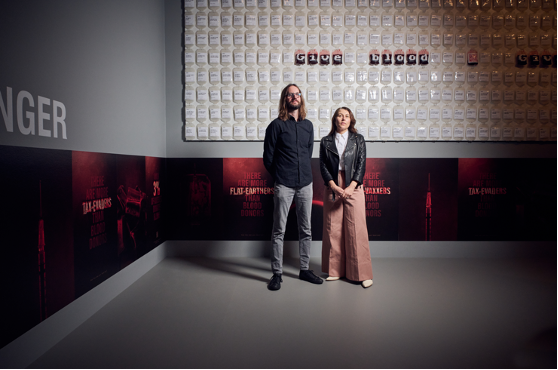
Coke and Leo Burnett have launched a new initiative called ‘Small World Machines’ which provides a live communications portal through a Coca-Cola vending machine for Indians and Pakistanis to interact with and engage across country borders.

The ‘Small World Machines’ experience was created to provoke happiness in the world through human connections between the two warring countries.

The vending machines were placed in two different locations back in March, one in India and another in Pakistan. People were encouraged to put their differences aside and complete a friendly task together – wave, touch hands, draw a peace sign or do a dance – in order to receive a Coke.

The idea was dreamt up by Leo Burnett, Sydney and brought to life by the combined efforts of Leo Burnett Chicago and Coke.

The ability to virtually unite people via the live portal machines are the first of its kind. to make this possible Coke and Leo Burnett created 3D touchscreen technology to project a streaming live video feed onto the vending machine screen while simultaneously filming through the machine to capture a live emotional exchange.

This technology resembled the act of looking into a full-length webcam, face-to-face with another person. At the same time, people were encouraged to interact with touchscreen animation including peace signs and smiley faces drawings that could be traced together with hand-to-hand connection. Once the shared tasks were completed, a celebration screen emerged which triggered the vending machine to dispense a free Coke for each person.

One Pakistani remarked, “It’s great to connect with the average Indian who probably knows nothing about the average Pakistani.”

A man of Indian descent says of the machines, “It’s something to really bring the countries together,” and “It’s fantastic that you’re allowing people to see the other side as well, to not let it be a mystery anymore.”

More than 10,000 cans of Coke were estimated to be given away during the experience.

Chief creative officer, Leo Burnett Sydney, Andy DiLallo, says being on the ground in India during the Small World Machines experience has been the highlight of his career so far.

“To be able to take two countries that have been divided and to unite them through the world’s most iconic brand, and see the purity of the experience was amazing,” he says.

“After spending a year on this project with all the challenges we encountered, when Small World Machines started it was massive relief for me. And then joy, and then just awe to see the people connecting. Coca-Cola’s message has always been one of happiness. I see this activation as a small step in the right direction. Hopefully it works as a symbol of how people can overcome differences and come together with a simple act of joy.”

“Small World Machines is a real-world example of the power of creativity,” he adds.

Deciphering digital: choosing a technology

Recently I was asked to evaluate technologies for a particular execution of a campaign. The key objectives being:

  • It must be easy to distribute based on geography (eg. people in a particular establishment will receive the communication while people outside the venue do not),
  • communication should be pushed to users without interaction or the need to accept permission,
  • budget is very important,
  • mobile data reception and WiFi are not always going to be available,
  • the data will change frequently, and updates should be easy to make,
  • it should display different information depending on which venue the user is at, and
  • no prior setup should be needed before reaching the venue.


What’s the best technology that meets all of these requirements? A printed flier. It ticks all the boxes and can be distributed easily without an internet connection.

Choosing the best technology for a campaign is often akin to a chicken and egg quandary. If you rigidly define the requirements prior to involving your technology people, chances are you won’t achieve a good outcome. Alternately the technology team has a differing dilemma: they will try to do something new just because they’ll get to play with updated technologies, even though it doesn’t fit into the project’s needs. If what you’re doing has no strategic purpose for the brand it’s just as disappointing and it becomes a gimmick.

The best thing to do is to involve the technology people as early and as often throughout the creative process as possible. They can jump in and offer effective solutions exactly when needed. They can also offer thought starters with specific executions during the brainstorming phase. They can shape the creative from a different perspective if they are fully involved.

Often I’m asked, ‘Is it possible to do X?’

A better question would be, ‘Can we do X well?’ Just because something is possible does not mean that it’ll be a good experience for your audience.

So how do I actually choose a technology for a project? There are five very broad areas I look at:

Proximity of feature set: How closely matched is this technology to what we’re planning to do? Are there any features we need that would require major work to implement?

Stability: How long has this technology been around? Is it well funded? Has it proven itself for what we want to do with it? Will it grow and evolve with our newly created platform or stagnate and restrict us later?

Speed of execution: How performant is this technology in general? Are there bottlenecks that could be a problem for the project? Will it scale to meet our needs easily?

Speed of development: How difficult is it to create software using this technology? Will it take us shorter or longer than we’re used to?

Familiarity: How well do we know this technology? How likely is it we’ll hit new types of problems while using it? Do we have in-house expertise we can leverage? Is it a revolutionary new way of doing things or simply an evolution on top of what we’re already used to?

It’s important to note that you shouldn’t be trying to maximise all of these areas. Use them as metrics to evaluate the technology, and the priorities will change per project. For example, if one of your specific goals on a project is to learn a new technology, already being familiar with that technology is a downside.

Bringing it all together, I will say this in summary: involve your technical team early and continuously. When you’re curious as to why a particular technology was chosen for a project, ask what the other choices were and how the one that was chosen compares for each of the five areas above. It’ll help you understand how closely the technical team’s understanding of the campaign priorities matches reality.


Leo Burnett toasts small business with branded cider

The Sydney arm of global creative agency Leo Burnett is leaning on its heritage to lead a marketing campaign that, interestingly, aims to reward small business, if not target them. ‘Help from Leo’ commends start-ups who have pushed through tough economic times to establish brands, reminiscent of the agency’s depression-era origins.

Designed to give one new Australian business the opportunity to win up to $100,000 in creative and strategic advice from Leo Burnett, the competition features a ‘specially-brewed’ cider as its hook.

Leo's Cider - Bottle Image_LR“By creating, designing, marketing and distributing our own product, we have a much deeper understanding of our client’s businesses and the challenges they face,” says Andy DiLallo, chief creative officer.

Todd Sampson, CEO of Leo Burnett Australia, explains the campaign is simply a case of giving a leg-up to the up-and-comers and rewarding them for effort.

It has little to do with establishing a new market among start-up businesses, Sampson says: “No, we are not specifically looking to focus on start-ups but for this idea we are.”

“If we can help, even in a small way, someone realise their dream – well that’s a good thing to be a part of.”

Further, DiLallo and Sampson are both eager to gain insight, and perhaps inspiration, from emerging creative potential in the marktetplace.

“It may also give us the opportunity to get in on the ground floor of some of Australia’s newest and most interesting start-up ventures,” says DiLallo.

With the campaign engineered by a melding of history and progression, Leo Burnett pays respect to its 1935 Great Depression origins surrounding the allegory of the common apple, which its founder placed at the front desk as a defiant symbol of hope.

“We wanted to do something that highlighted our entrepreneurial heritage and to give back to those willing to put themselves out there and have a go,” says Sampson.

The ‘Help from Leo’ promotion is open now and entries close 3 May 2013. Entry requirements for the competition include a short written statement of up to 250 words describing the business’ vision, or a video lasting up to 90 seconds.  Australian small businesses that registered for an ABN as of 2 April 2013 can enter the promotion.


Cider poster

Aussie creatives win big on global stage at IAB MIXX Awards

Australian creative agencies have proven their might on the global stage, taking out three golds, four silver and one bronze award at the eighth annual IAB MIXX Awards in New York overnight.

Whybin\TBWA\Tequila had the best showing taking home all three of the gold awards and one silver, for its NRMA Car Creation execution for Insurance Group Australia, at the event which celebrates creativity in digital advertising.

Leo Burnett Melbourne, George Patterson Y&R Sydney and Droga5 also picked up gongs taking home two silver, one silver and one bronze respectively.

CEO of the IAB Australia, Paul Fisher, says it was immensely satisfying to see so many Australian campaigns presented as finalists and for eight out of 10 of them to win was brilliant. “It was a fantastic showing by Australian digital creative on a truly global stage at one of the world’s most prestigious awards nights.”

Australian campaign entries made up 10 of the 111 finalists from 30 countries across the 27 award categories this year.

The full list of Australian finalists and winners are as follows:

Branded Content – Single execution:

- Australian Bureau of Statistics, Leo Burnett, Spotlight – finalist

Cross-Media Integration – Campaign:

- Insurance Australia Group, Whybin\TBWA\Tequila,  NRMA Car Creation – GOLD

Digital Out-Of-Home – single execution:

- Insurance Group Australia, Whybin\TBWA\Tequila, NRMA Bus Shelter – SILVER

Public Service/Not For Profit:

- NGIA, VML Australia, Improve your plant/life balance – Finalist

- St Vincent de Paul Society, George Patterson Y&R Sydney, Signed Finds – SILVER

- Mars Petcare, Whybin\TBWA\Tequila, The Pedigree Adoption Drive – GOLD

Direct Response and Lead Generation – Campaign

- Insurance Group Australia, Whybin\TBWA\Tequila, NRMA Car Creation – GOLD

Online Commercial – Single Execution

- Kraft’s Boost, Droga5 Australia, Moreing – BRONZE

Experimental and Innovative – Campaign

- Giant Bicycles, Leo Burnett Melbourne, Everyday rider Sponsorships – SILVER

Social Marketing – Campaign:

- 7-Eleven Slurpee, Leo Burnett Melbourne, BYO Cup Day – SILVER

Campaign and single execution winners in the 27 categories were announced after a competitive process judged by a panel made up of ad agency executives, marketers and major media brand leaders.

The MIXX Awards is the only competition in the US that evaluates all key facets of interactive marketing – including strategy, creative development and execution, media placement and integration, effectiveness and ROI.


Aussie agencies scoop SpikeAsia awards, DDB agency of the year

Clemenger BBDO Melbourne, Host Sydney, JWT Melbourne, DDB Sydney and 303Lowe Sydney were among the Grand Prix winners at the SpikesAsia awards in a night dominated by Aussie agencies.

Presented last night in Singapore, the program involved over 1800 delegates from 27 countries who took part in three days of presentation, networking events and the awards, in Asia’s answer to Cannes.

The night belonged to DDB Sydney who picked up agency of the year and the print Grand Prix for ‘Bikers-Police’ for Volkswagen. BBDO was presented with the Network of the Year trophy with DDB coming second followed by Leo Burnett in third.

The Independent Agency of the Year was awarded to PARTY, Tokyo with Taproot, Mumbai in second and The Monkeys, Sydney in third.

The inaugural Spikes Palm award, given to the best Production Company, was taken by Exit Films, Melbourne. Revolver, Sydney came in second and Finch, Sydney third.

The Media Agency of the Year trophy was awarded to Mindshare, Mumbai with Cheil Worldwide, Seoul taking second place and in third, Whybin\TBWA Group, Sydney.

During the awards, the prestigious Advertiser of the Year accolade was presented to P&G Asia in honour of their commitment to engage their consumers by not only embracing but also expecting creativity in their product communications around Asia.

Host, which was sorely disappointed to only win bronze at Cannes for its Kiwi Sceptics mini-series for Air New Zealand, won the branded content grand prix.

Australian agency Grand Prix winners:

  • Branded Content & Entertainment Grand Prix: Host Sydney, Australia, Air New Zealand, ‘The Kiwi Sceptics’
  • Creative Effectiveness Grand Prix: Clemenger BBDO Melbourne, Australia, Nab, ‘Break Up’
  • Direct Grand Prix: JWT Melbourne, Australia, Melbourne Writers Festival, ‘Wi-Fiction’
  • Print Grand Prix: DDB Sydney, Australia, Volkswagen, ‘Bikers-Police’
  • Promo & Activation Grand Prix: 303Lowe Sydney, Australia, Ikea, ‘Ikea Catalogue’

Other Grand Prix winners:

  • Mobile Grand Prix: Party Tokyo / Dentsu Tokyo, Japan, Sony, ‘Make TV’
  • Outdoor Grand Prix: Ogilvy Shanghai, China, Coca-Cola Company, ‘#Cokehands’
  • Design Grand Prix: Iyamadesign Tokyo, Japan, Kamoi Kakoshi, Mt Ex Taipei
  • Digital Grand Prix: Dentsu Tokyo, Japan, Honda Motor, ‘Connecting Lifelines’
  • Film Grand Prix: Cheil Worldwide Seoul, South Korea, Samsung Electronics, ‘What Does Your Mind See’
  • Media Grand Prix: Mindshare Mumbai, India, Hindustan Unilever, ‘Where What You Grow Is What You Eat’
  • Print & Poster Craft Grand Prix: Ogilvy Shanghai, China, Coca-Cola Company, ‘#Cokehands’
  • Radio Grand Prix: JWT Singapore, Singapore, Unilever Singapore, ‘Radio Prank’
  • Film Craft – No Grand Prix
  • Integrated – No Grand Prix
  • PR – No Grand Prix

The full list of gold, silver and bronze winning entries can be viewed on SpikeAsia’s website.


IAB Awards 2012 winner – Spotlight

Winner: Best in Show; Brand Awareness & Positioning; Brand Destination Site; Rich Media & Digital Video

Execution: Spotlight (spotlight.abs.gov.au)

Client: Australian Bureau of Statistics

Agency: Leo Burnett

Its a winnerBackground

The Australian Bureau of Statistics (ABS) carries out a national Census every five years. The data that it collects is critical in guiding future decisions pertaining to education, healthcare, transport and the environment. It therefore needs to collect as much and as accurate data as it is able to in order to make a real difference when it comes to shaping future government decisions that affect each and every Australian.

The ABS realised that many citizens saw the Census as little more than an irritating obligation affecting participation rates and consequently the quality of the data. This was particularly noticeable among Gen Y, who not only shared the general population’s apathy, but more worryingly were choosing not to participate at all. One of the biggest problems was that people didn’t understand how the data collected by the Census relates to and affects their own lives.

Objectives

The ABS wanted a solution that would demonstrate to the general population, but specifically targeted at Gen Y, that the Census is more than just a bureaucratic exercise. The key requirement was for the campaign to illustrate how engaged participation in the Census could have personal benefit to the individual. The goal was to make data feel tangible and relevant to everyone and thereby drive interest in the Census.

As the campaign target was the previously disengaged and largely apathetic Gen Y, it also needed to use both tone of voice and a platform to connect with its main audience and move away from traditional government awareness campaigns.

Strategy

The idea behind Leo Burnett’s campaign was a simple one. It sought to engage people by showing them how their Census data could influence decisions that would shape their community and the future of Australia.

As with all simple ideas, however, it was the execution that really set the campaign apart. Leo Burnett knew that the target audience had little appetite for more facts and figures about why they should participate in the Census and that they would be difficult to target, especially via traditional means.

So, instead of telling people about the benefits of participation, it chose to create an experience that was tailored for them. This took the form of ‘Spotlight’, a personalised interactive film using existing Census data to create a story about each visitor to the site. This provided an engaging visual illustration as to how the data collected by the Census relates to the individual and how it is used to make a real difference to government decisions that affect their lives.


Execution

The heart of the campaign was a Spotlight m-site, personalised film and related social media activity. The film uses real data from the 2006 Census to create the highly personalised animated film. Customised infographics within the film tell the story of ‘you’ – depending on the information you provide as to how old you are, what you do, where you live and where you come from. It has 20 different points of customisation, so provides a truly personal and variable experience for each visitor.

In order to drive awareness in the target audience after Spotlight was launched, social media was heavily relied on for building traffic to the site.

Spotlight was seeded with influential bloggers, appropriate sites and on Twitter, as well as through the Census’ own social channels. A bespoke sharing mechanism was built into the site, so that after users completed their Spotlight experience, a unique selfportrait infographic of their Census data was created, which could be shared across Twitter and Facebook, attracting more visitors to the site and building momentum for the campaign.

Key to the success of the campaign was the tone of voice used. It was important to both the client and the successful execution to keep it as far as possible from feeling like a standard government communication. The film was voiced by well-known comedian and TV presenter Shaun Micallef and employed both humour and a touch of edginess to fully engage with its audience. Raw data was presented as more relatable scenarios illustrated with quirky and fun animation.

The experience was also made fully accessible for all users by concurrently developing an alternative version that made the same content available to the highest accessibility standards.

Spotlight infographic

Results

Within weeks, and with no paid media support, the government website about statistical data was visited by more than a quarter of a million people, each spending on average more than four and a half minutes with the content. More than 37,600 personalised infographics were generated and shared online with over 61,500 views and 4500 likes. Although at the time of judging the 2011 Census data itself was yet to be released, more than half of the visitors to the site were from Gen Y, suggesting a much improved level of engagement.

In the Brand Awareness and Positioning category, the way the campaign focused on the experience of the individual and not about the Census itself was admired. As one judge noted it was a, “fantastic way to make a dry subject matter very relevant for the target audience”. The traction to the site and engagement with it on the back of little or no media spend was also lauded.


Did you know: you can see all of Marketing’s highly-transparent case studies first and with stunning high-resolution glossy photography by becoming a subscriber? It’s only AU$45 for a whole year, delivered straight to your door. Find out more »

Deriving value from social media

If I had any doubts about whether social media is here to stay, they were well and truly dispelled when I caught in passing a segment on ABC’s Landline rural issues program. Farmers and graziers are concerned about the disconnection between city and country and, at the Beef Australia 2012 expo in Rockhampton, Meat and Livestock Australia was running seminars on social media. Weathered men and women in dusty jeans, RM Williams boots and big hats were walked through the basics of Facebook, YouTube and Twitter.

Last year, Australia’s beef industry learned the hard way about the power of social media. After Four Corners showed the brutal treatment of Australian cattle in Indonesian abattoirs, animal rights groups used social media platforms like Twitter, YouTube and Facebook to pressure the Federal Government. The problem is, by focusing just on the channels, the farmers are missing the point. While the campaign was relentless and it worked, it wasn’t the social media that caused the problem – it was the idea that the brutal mistreatment of animals is wrong that connected with people emotionally. This idea could then be spread rapidly across various social media platforms.

The lesson for your business is that if you are to derive value for your brands through social media, then you need to start thinking about ideas that are inherently social in nature. Ideas that will engage on a social level. You also need to understand the roles of the different channels and what they offer over traditional media. Finally, you need to be able to stay up-to-date with all the changes that are happening in the social ecosystem. For example, in the last couple of years I have lost count of the changes to the Facebook platform alone.

So how do you create ideas that are social in nature for your brand? Start by thinking about the role your brand plays in your customers’ lives. What is the human purpose of your brand that makes their lives better? Then think how you can legitimately play a role within their social network – be it friends or colleagues.

Another key ingredient is to understand how people can then engage with these social ideas. We like to think about three key elements and endeavour to get a balance between them in our campaigns. These elements are ‘play’, ‘share’ and ‘buy’. How is the idea you are creating enabling people to engage with it – does it make them laugh or does it make their lives easier? What mechanisms have you included to get people to share the idea? How do you enable the desire to show off this thing your customers have found and liked? Third, and critically, how are we linking the idea to actual purchase of the item. None of us are going to derive any value from social media unless we include this too.

Luckily, few of us will be unfortunate enough to face a challenge to our industry’s very existence like the farmers, but there are strong trends out there that firmly suggest social engagement will become a new trading currency. Indeed, it is already evident that media (online and offline) is increasingly being based on social engagement and influence as opposed to just eyeballs. Media agencies are now even relooking at the media planning and buying based on the social currency of programming or content.

The reason for this is quite simply technology; it’s increasingly becoming a world of three screens (TV, PC, smartphone/tablet) and continuous partial attention. Technology has put the consumer in control. Just think of what you do when an advertisement comes on TV. I watch them out of professional interest, but most people channel surf, go to the bathroom, make a cup of tea, check Facebook or Twitter on their tablet or smartphone, or fast forward through it. If TiVo and the like didn’t have the ad skip function disabled, I’m sure most people would skip the ads. The challenges to print and radio are no less threatening.

On top of declining effectiveness, all the old channels are expensive to buy compared to social media. Creating a profile on one of the hundreds of social media sites costs absolutely nothing; however, developing and maintaining a site does cost an organisation time. Our clients are increasingly recognising the value of social media with some of the smaller ones investing between six and 11 hours per week in maintaining their social channels. The biggest clients have multiple staff dedicated full-time. But, just as there is nothing lamer than a website that hasn’t been updated for over a year, social media requires the discipline of regular, engaging updates. So, like managing any marketing campaign, social media will take time and you will pay for it whether you do it yourself or hire someone else. With social media, at least you won’t be paying for the advertising channel itself.

The final area to look at in deriving value is the ever-changing nature of digital channels. It is increasingly difficult for brand managers, marketing managers and the like to keep across the constantly evolving social and digital landscape. For that reason it’s surprising that more companies aren’t outsourcing. According to IBM’s ‘Australian Business Process Outsourcing Research 2012’, the number of businesses outsourcing traditional marketing functions is expected to jump over the next 12 to 24 months from nine percent currently to 21 percent. What is most interesting is the report rates traditional marketing as the fourth most outsourced business process, ahead of digital marketing, which is currently outsourced by a surprisingly low six percent of businesses.

Given that it is difficult to stay up-to-date with social media – and it’s easy to make a wrong bet, Second Life or MySpace anyone? – I’m surprised so few companies outsource their social media to companies that are tooled and skilled up to handle it. Companies whose very existence is built on the need to stay up-to-date with these changes.


IAB Awards: Leo Burnett shines for taming ‘confusing mass’ of Census data

Leo Burnett Sydney’s ‘Spotlight’ campaign for the national Census scooped the pool at last night’s IAB Awards, taking home three gongs as well as the prestigious ‘Best in Show’ title.

‘Spotlight’, commissioned by the Australian Bureau of Statistics to increase participation rates in last year’s Census, picked up top prize in the ‘Brand Awareness & Positioning’, ‘Brand Destination Site’ and ‘Rich Media & Digital Video’ categories, as well as the best in show honour.

The judges praised the campaign for answering the brief with a creative solution that made the “confusing mass of Census data relevant and interesting to a very hard to impress audience”.

View: Marketing’s case study of ‘Spotlight’s’ interactive film that personalised Census data to engage the public in the process.

Click to subscribe

Twelve other agencies were announced as winners at the Sydney Town Hall awards ceremony last night, including Ikon Communications who snared two awards – ‘Social Media Marketing’ for its Coca-Cola ‘Share A COKE’ campaign and the ‘Mobile Platform or App’ award for its efforts on the ‘FANTA Playzone’ campaign – 303Lowe who snared the ‘Direct Response & Lead Generation’ award for its IKEA ‘Rent’ campaign and Soap Creative, who won the ‘Product Launch’ award for its Cornetto ‘Enigma’ campaign.

Whybin\TBWA\Tequila, ZenithOptimedia, The Monkeys, UM Australia, FirstClick Consulting, Nomad and George Patterson Y&R Sydney were all also recognised as category winners on the night.

Soap Creative was named the winner of the ‘Creative Showcase Grand Prix’ award for its Lynx Anarchy Invisible Ad campaign, dazzling judges with the world’s first invisible ad that allowed people to experience product first hand. Judges praised the campaign for its innovative approach and success in creating buzz while still driving a clear message to its audience.

Commenting on the pool of entries, CEO of IAB Australia, Paul Fisher, boldly predicted that in five years all media will be digital. Tongue in cheek, Fisher said, “Let’s be generous and share our skills, our ideas and our experience with those in the media industry who are less fortunate than you – those that have never worked in digital. Take pity on those that suffer each day as they battle the limitations of 30 seconds, column centimetres, inside back covers, sides of buses, popcorn buckets and the back of shopper dockets.”

Spotlight, along with Soap Creative’s Grand Prix winning campaigns, will go on to seek more honours abroad by being entered into the US MIXX 2012 Awards. The campaign has already attracted international attention, winning a Gold Cyber Lotus at Adfest 2012, Silver and Bronze awards at the Spike Asia awards and a Bronze World Medal for online design at the New York Festivals International Advertising Awards 2012.

The night’s winning campaigns will also be presented at inaugural IAB Awards Case Study Showcase events in Sydney and Melbourne in August, as well as featured in Marketing magazine’s August issue.

News Australia Sales was the major sponsor of the 2012 awards, which were also supported by AD2ONE, AdapTV, BBC.com, eBay, Facebook, Fairfax Media, Google, Gruden, MediaMotive, Mi9, realestate.com, Telstra Advertising Network and TressCox.

2012 IAB Australia Awards Winners

Category:  Brand Awareness & Positioning
Category: Brand Destination Site
Category:  Rich Media & Digital Video
Category:  Best of Show

Leo Burnett, Sydney – Spotlight; Australian Bureau of Statistics

http://www.thanksforclicking.com.au/spotlight/

Category: Direct Response & Lead Generation
303Lowe- Rent; IKEA

http://www.ikea.com/ms/en_AA/about_ikea/rent/index.html

Category: Product Launch
Soap Creative with Mindshare & Ensemble -Cornetto Enigma; Unilever

http://www.cornetto.com.au/

Category: Brand Loyalty & Retention
Whybin\TBWA\Tequila\- The Pedigree Adoption Drive; Mars Petcare

http://www.pedigreeadoptiondrive.com.au/

Category: Cross-Platform Integration
ZenithOptimedia with Holler Sydney – Kick For Your Country; Heineken

http://itunes.apple.com/au/app/heineken-rugby-clubhouse/id450375998?mt=8

Category: Branded Content
The Monkeys- The Ship Song Project; Sydney Opera House

http://www.youtube.com/theshipsongproject

Category: Search Marketing – Paid Search
UM Australia and Reprise Media – Beating the Big Four; ING Direct

Category: Search Marketing – Organic Search
FirstClick Consulting- Mission Migration; CMC Markets

Category: Social Media Marketing
Ikon Communications with Ogilvy, Wunderman & Naked Communications – Coca- Cola “Share A COKE”; Coca- Cola

http://www.shareacoke.com.au/home.jsp

Category: Mobile Platform or App
Ikon Communications with Webling, Ogilvy & Naked Communications – FANTA Playzone; Coca-Cola

http://itunes.apple.com/au/app/fanta-playzone/id476574314?mt=8

Category: Tablet Marketing
Nomad with Deepend – Wilderquest – Animal Discovery; NSW National Parks and Wildlife

http://www.wilderquest.nsw.gov.au/#/intro

Category: NFP / Public Service Category
George Patterson Y&R Sydney – Signed Finds; St Vincent de Paul Society

http://www.facebook.com/signedfinds?sk=app_222077057836752

Radio Lions: Three gongs for Aus, mosquito repelling frequency wins Grand Prix

Australia’s showing in the Radio Lions at Cannes was down on last year, despite an increased number of entries in the category.

Of 90 radio executions submitted for a prize, only three were successful – Eardrum Australia’s ‘Bully’ spot for Earphone Bully won gold and Leo Burnett Sydney’s ‘Butterfly’ and ‘Pig’ for Diageo brand Bundaberg Red won a bronze each.

Shortlisted entries from JayGrey and Whybins missed out, leaving Australia with a disappointed showing, down on last year even though 18 more entries were submitted.

The Grand Prix winner – Brazil’s Talent Sao Paulo for ‘Repellent Radio’ for client Go Outside Magazine – was lauded for its innovative use of a radio frequency to repel mosquitoes, shown below.

Creative Effectiveness Lions: Leo Burnett scores only Australian gong

Leo Burnett Sydney was the only winner from Australia, and one of only six campaigns to win a Creative Effectiveness Lion at Cannes overnight.

The winning entry, developed for Diageo brand Bundaberg Rum, saw the company create a commemorative bottle for the 2011 Queensland flood, called ‘Watermark’, with proceeds donated to the flood relief efforts.

Commenting on the win, CEO of Leo Burnett Sydney, Todd Sampson, says, “While it’s always nice to be recognised on the global stage some awards have more meaning than others. To win Australia’s first global Cannes effectiveness award is a brilliant honour. It’s great for us and it’s great for Australia to finally win one at this level. This is going straight to the pool room.”

BBH London took out the Grand Prix with its ‘Axe Excite – Returning to Universal Truths to Create Global Hits’ campaign for Unilever’s Lynx.

Having only launched last year and with an involved entry process, the Creative Effectiveness Lions, failed to attract the same number of entries as other categories, with just 92 campaigns were entered.

Promo & Activations Lions: Leo Burnett, Euro RSCG, GPY&R score Aussie Gold

Out of the three Cannes Lions categories awarded in the first round of awards overnight, Australia fared the worst in the Promo & Activation category, but still managed to bag five Lions.

The tally of five is up from last year’s result of three in the category, but behind the number secured in the PR and Direct categories. GPY&R’s ‘Mobile Medic’ campaign for the Australian Defence Force, which won gold in the Direct category, won two golds. The only other agencies to score a prize were Euro RSCG, with two silvers for its ‘Sponsor the White House’ campaign for Vanish Napisan, and Leo Burnett Melbourne, with a silver for its ‘BYO Cup Day’ for 7-Eleven.

Of the 2667 entries submitted in the Promo & Activation category, a 26% increase versus last year, 251 were shortlisted from which 86 were selected as winners by the international jury. The Grand Prix was awarded to Crispin Porter + Bogusky’s ‘Small Business Gets an Official Day’ for American Express.

Leo Burnett Melbourne’s ‘BYO Cup Day’ for 7-Eleven:

GPY&R takes sole Aussie Direct Gold Lion

The first of four awards ceremonies to honour the winners of the Cannes Lions International Festival of Creativity saw Australia pick up eight awards in the Direct category.

GPY&R Melbourne won Australia’s only Gold in the category for its Mobile Medic campign for the Australian Defence Force.

Out of a field of 85 winners, Australian agencies took home eight awards, a strong increase on last year’s bag of two. Whybin TBWA Tequila Sydney’s ‘Grazed on Greatness’ campaign, which won two gold in the PR Lions, took home a silver and a bronze, and the agency’s ‘Car Creation’ campaign for NRMA Insurance also won a silver.

‘Share a Coke’ by Ogilvy Sydney and ‘BYO Cup Day’ by Leo Burnett Melbourne, both won bronze.

2357 entries were submitted into the Direct Lions category, an increase of 27% compared to 2011. 227 went on to make the shortlist of which 15 Gold, 25 Silver and 44 Bronze Lions were awarded. The Grand Prix was awarded to Crispin Porter + Bogusky’s ‘Small Business Gets an Official Day’ for American Express.

The prestigious Direct Agency of the Year award was won by Serviceplan Munich with Wieden+Kennedy Portland coming in second and DDB Brasil São Paulo taking third.

GPY&R’s Mobile Medic campaign: